

Every export project eventually hits the same tender question: the single-line diagram says 13.8 kV, the buyer's specification references IEEE C37.20.2, and the manufacturer's type test reports reference IEC 62271-200. Are they the same equipment? The short answer is no. IEC and IEEE switchgear standards differ in voltage class structure, rating philosophy, test duty, and safety classification, and a certificate under one system does not automatically satisfy the other. For EPC contractors and procurement engineers working across markets, understanding where the two families diverge is the difference between a smooth factory acceptance test and a rejected submittal. This guide maps the two standard families, explains the differences that matter commercially, and sets out how to specify equipment for dual-standard projects.
Two Rating Philosophies
The IEC 62271 series rates switchgear by rated voltage (Ur), the highest system voltage for which the equipment is designed, on a 50/60 Hz basis. Standard medium voltage classes run 3.6, 7.2, 12, 17.5, 24, 36, and 40.5 kV. The IEEE C37 family, dominant in North America, rates equipment by rated maximum voltage in classes of 4.76, 8.25, 15, 27, and 38 kV, traditionally associated with nominal system voltages of 4.16, 7.2, 12.47/13.8, 24.9, and 34.5 kV on 60 Hz networks. A North American 15 kV class assembly is therefore the closest counterpart to IEC 12 kV equipment, and a 38 kV class assembly corresponds roughly to IEC 36/40.5 kV. Close, however, does not mean interchangeable, as the insulation levels and test duties below make clear.
Mapping the Two Standard Families
| Equipment / topic | IEC standard | IEEE / ANSI counterpart |
| Common ratings and general requirements | IEC 62271-1 | IEEE C37.04, C37.06 |
| AC circuit breakers | IEC 62271-100 | IEEE C37.04, C37.09, C37.54 |
| Metal-enclosed switchgear above 1 kV | IEC 62271-200 | IEEE C37.20.2 (metal-clad), C37.20.3 (metal-enclosed) |
| Internal arc testing | IEC 62271-200, Annex AA (IAC) | IEEE C37.20.7 (Type 1 / 2 / 2B / 2C) |
| Switches and switch-fuse combinations | IEC 62271-103, IEC 62271-105 | IEEE C37.20.4 |
| Low-voltage assemblies | IEC 61439 series | UL 1558, IEEE C37.20.1 |
Where the Ratings Actually Differ
Insulation Levels
IEC 12 kV switchgear is commonly specified at 28 kV power-frequency withstand and 75 kV lightning impulse, with a 95 kV impulse option. The IEEE 15 kV class standardizes 36 kV power-frequency withstand and 95 kV BIL. A nominal-equivalent IEEE assembly thus carries higher dielectric test levels than the base IEC offering, and an IEC design at 75 kV impulse cannot be offered into a 95 kV BIL specification without redesign and retest.
Current Ratings and Temperature Rise
IEC normal currents follow the R10 series: 630, 800, 1250, 1600, 2000, 2500, 3150, 4000 A. IEEE switchgear standardizes on 1200, 2000, 3000, and 4000 A main bus ratings. Temperature-rise limits are also expressed differently: IEC 62271-1 defines absolute temperature limits for contacts and connections against a 40 degree C ambient, while IEEE practice works in degrees of rise over ambient. The two approaches produce broadly similar thermal designs, but the test certificates are not convertible, and nameplate values from one system read as non-standard ratings in the other.
Breaker Duty Cycle and Endurance
IEC 62271-100 defines the standard operating duty as O-0.3s-CO-3min-CO, while IEEE breakers are rated on a CO-15s-CO reclosing duty suited to North American feeder practice. Mechanical endurance also diverges: IEC defines classes M1 (2,000 operations) and M2 (10,000 operations), whereas IEEE specifies total operation counts without an identical class system. For applications with frequent switching, such as capacitor banks or arc furnace feeders, the duty and endurance declaration deserves the same scrutiny as the interrupting rating.
Internal Arc: IAC Versus Type 1/2B/2C
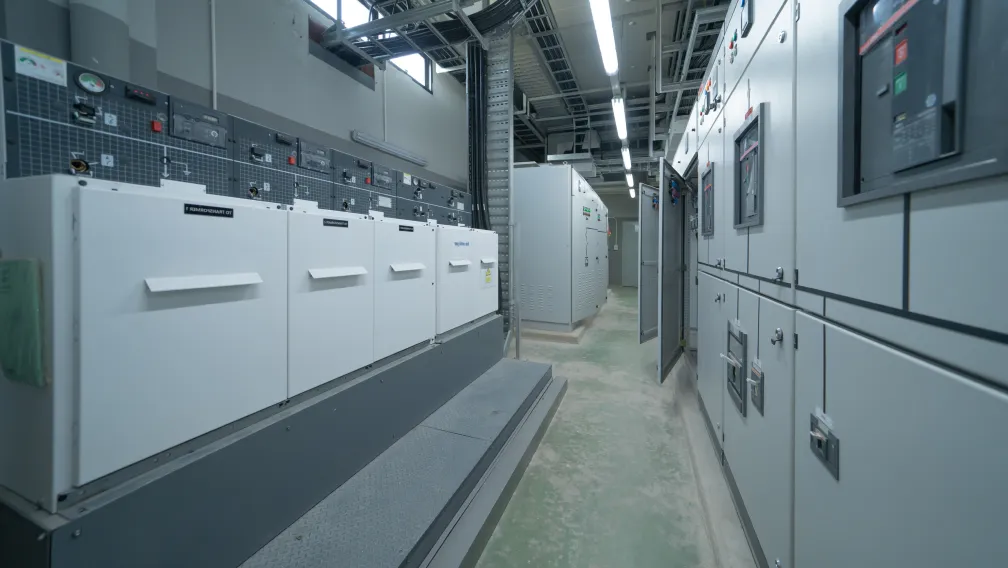
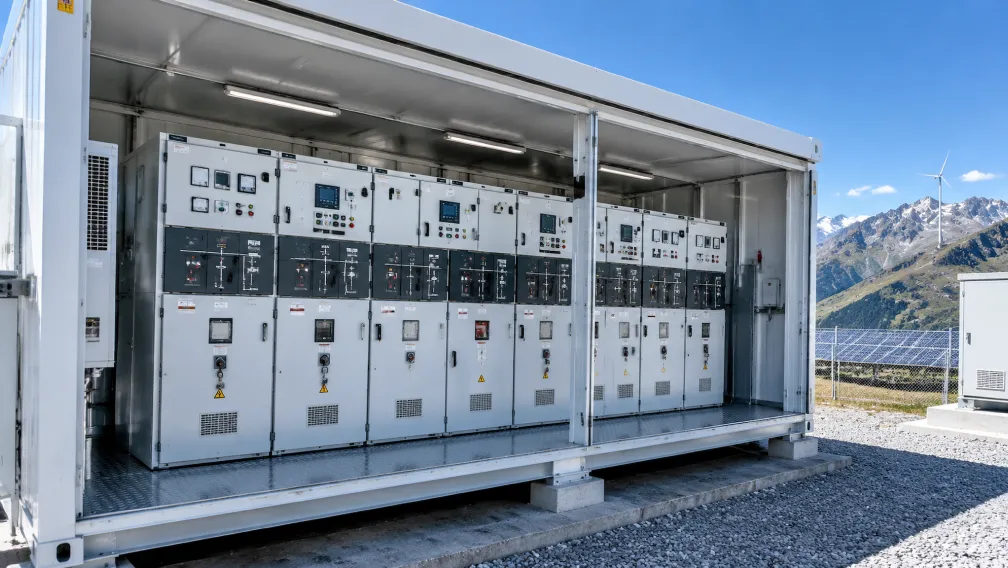
Internal arc protection shows the practical differences most clearly. IEC 62271-200 classifies an assembly by accessibility (A for authorized personnel, B for public), tested faces (F front, L lateral, R rear), and the tested current and duration, producing nameplate markings such as IAC AFLR 31.5 kA 1 s. The same standard formally defines Loss of Service Continuity categories (LSC1, LSC2A, LSC2B) and partition classes (PM metallic, PI insulating), concepts with no direct IEEE equivalent. Our 12 kV arc-resistant metal-clad switchgear, for example, is declared in this IEC notation with the tested arc duration stated on the rating plate.
IEEE C37.20.7 classifies arc-resistant construction as Type 1 (front only), Type 2 (front, sides, rear), Type 2B (Type 2 maintained with the low-voltage compartment door open), and Type 2C (protection maintained with all doors open). Test durations are typically 0.5 seconds. The pass criteria also differ: under IEC 62271-200:2021, cotton indicators must not ignite within 1 second, while the IEEE test allows 2 seconds. An assembly certified only to C37.20.7 can therefore fail the stricter IEC criterion even when both tests ran at the same current.
Why Certificates Are Not Interchangeable
The differences above compound into a simple commercial rule: a type test report issued under one standard family is evidence for that family only. Indicator distances, arc ignition methods, test durations, and insulation levels all differ between the two systems, so a single test campaign rarely satisfies both simultaneously. Buyers should also treat marketing equivalence claims with caution: a datasheet that lists 13.8 kV on an IEC-designed assembly does not make it IEEE 15 kV class switchgear, because the IEEE rating carries its own BIL, duty, and construction requirements under C37.20.2, including mandatory compartmentalization and withdrawable breaker provisions for metal-clad designs.
Specifying Equipment for Dual-Standard Projects
Dual-certified equipment does exist. Major manufacturers now offer platforms tested to both families, and Eaton's compact gas-insulated line, for instance, is marketed as meeting both IEEE C37.20.9 and IEC 62271-200. For procurement teams, the workable approach is a five-step checklist:
- State both standards explicitly in the specification, with the clause that the more stringent requirement applies where they differ.
- Require separate type test certificates for each standard, issued by an accredited laboratory and referencing the current standard edition.
- Confirm that arc tests for both certificates ran at the same current and duration; campaigns are often conducted at different values.
- Verify insulation levels numerically against the project's BIL requirement rather than by voltage class name.
- Agree on nameplate and documentation conventions with the end user, since IEC-market operators expect IAC notation that IEEE-trained operators will not recognize without explanation.
In short, the correct specification for an international project names the governing standard family first, then the voltage class, insulation level, short-time withstand, internal arc classification, and breaker duty in that family's own notation. Equipment medium voltage switchgear offered across markets, including withdrawable and 40.5 kV metal-clad platforms, should be evaluated against the destination standard on test evidence, not on catalog voltage equivalence.
Frequency, Auxiliary Systems, and Documentation
Three secondary differences regularly delay cross-market projects. Frequency comes first: IEC equipment is commonly type-tested at 50 Hz, while North American networks run at 60 Hz. Rated breaking capacity is frequency-dependent, so a 50 Hz test certificate does not automatically validate 60 Hz service, and manufacturers normally address this with a combined 50/60 Hz test campaign or a documented equivalence assessment. Auxiliary systems come second: IEC-market panels typically use 220 V DC or 110 V DC tripping supplies, while North American practice favors 125 V DC station batteries, and CT secondary ratings differ between 1 A or 5 A practice and the 5 A standard of IEEE markets. Documentation comes third: IEC submittals follow type test report conventions with declarations of performance, while North American submittals expect UL or cUL listing marks, seismic qualification to IEEE 693 where specified, and CSA C22.2 No. 31 alignment in Canada. None of these differences is technically difficult, but each one found late in a project costs weeks.
Conclusion
IEC 62271 and IEEE C37 describe the same physical equipment through different rating structures, test duties, and safety classifications. Treating them as interchangeable creates submittal rejections, retesting costs, and schedule damage; treating them as parallel systems, and specifying with that discipline, makes cross-market procurement routine.
Elecstellar manufactures metal-clad, gas-insulated, and vacuum switchgear from 12 kV to 40.5 kV with IEC 62271 type test documentation, and supports dual-standard project specifications for North American and international tenders. To align a metal-clad switchgear configuration with your project's governing standard, contact our engineering team.
-

STELLAR
Switchgear & Power Transformer ManufacturerSTELLAR designs and manufactures switchgear, transformers, and complete power distribution equipment from our China facility, serving utilities, contractors, and distributors in 50+ countries. Every technical article on this site is reviewed by our in-house engineers to ensure accuracy against IEC standards and real project practice.