search
Search

Search for equipment models, voltage specifications, or project references.

Amorphous Alloy Transformer

Amorphous Alloy Transformer

STELLAR Amorphous Alloy Transformer Manufacturer

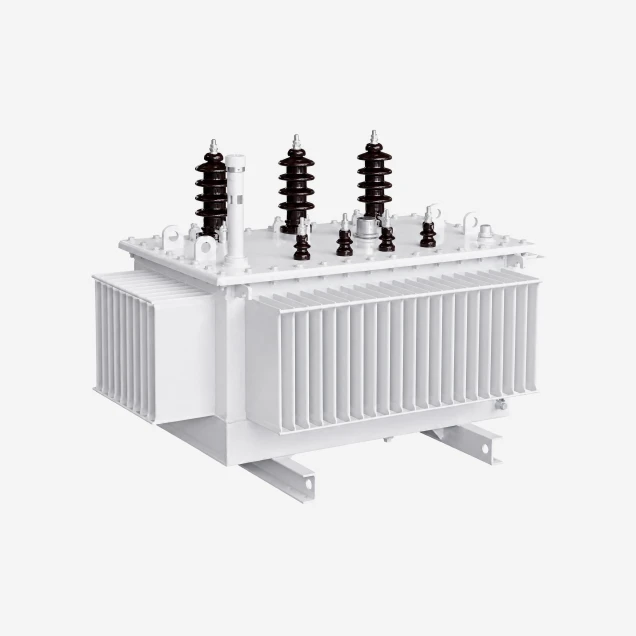
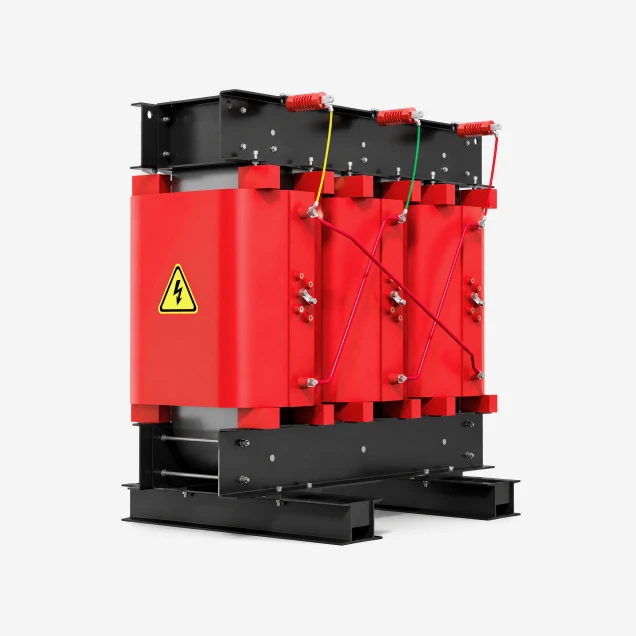
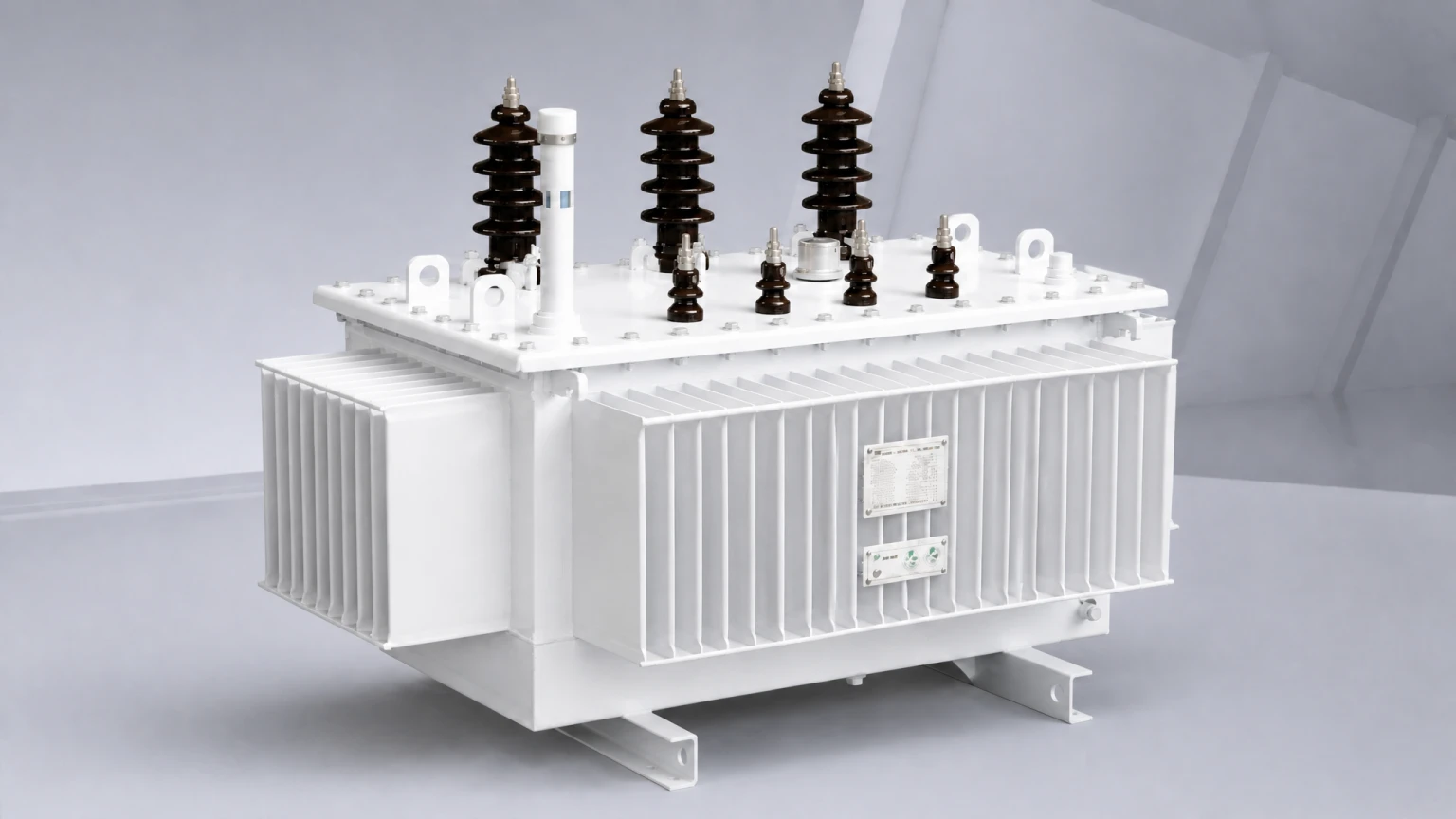
STELLAR builds amorphous alloy transformers for distribution up to 35 kV, in both oil-immersed (SH15) and dry cast-resin (SCBH15) forms. What sets them apart is the core: instead of grain-oriented silicon steel, the core is wound from a thin amorphous metal ribbon, a non-crystalline iron alloy that magnetises with far less wasted energy. That cuts the no-load loss, the power a transformer draws just to stay energised, by around 70%.

Because no-load loss runs constantly, day and night, an amorphous core saves the most on lightly loaded and standby networks, where it pays back its higher first cost over the transformer's life. The amorphous core drops into a standard oil immersed transformer or dry type transformer, so the cooling, sealing, and ratings are the same; only the core material changes. Units meet GB 20052 efficiency grades and IEC 60076.

Amorphous Metal Core

A non-crystalline alloy core magnetises with far less energy than silicon steel.


Far Lower No-Load Loss

No-load loss falls by around 70%, every hour the unit is energised.


Oil or Dry Form

Available oil-immersed (SH15) or dry cast-resin (SCBH15).


Energy-Saving Distribution

Pays back on lightly loaded and standby distribution grids.


Amorphous Alloy Transformer Series

SeriesFormNo-Load LossHV / LVRated Power
SH15Oil-immersed, amorphous core~70% below silicon steel≤35 kV / 400 V30–2500 kVA
SCBH15Dry cast-resin, amorphous core~70% below silicon steel≤35 kV / 400 V30–2500 kVA

Cores are wound from amorphous metal ribbon (Metglas-type 2605SA1). Vector groups Yyn0 or Dyn11; copper windings standard. The oil form (SH15) is built to GB/T 25446 and IEC 60076; the dry form (SCBH15) to IEC 60076-11 and GB 1094.11. All units meet the GB 20052 energy-efficiency grade. The amorphous core is physically larger than a silicon-steel core of the same rating, which is reflected in the tank or enclosure size.

Amorphous Alloy Transformer Product Range


The Core Is Amorphous Metal, Not Silicon Steel

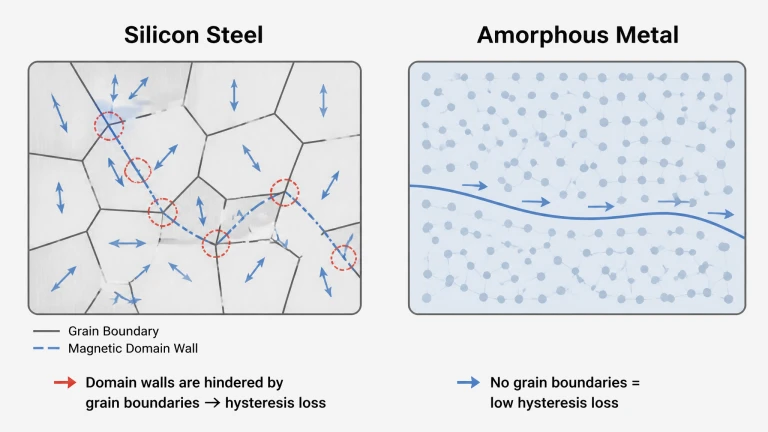
The core is wound from a thin ribbon of amorphous metal, an iron-based alloy frozen into a non-crystalline structure. With no crystal grain boundaries to fight, the core magnetises and demagnetises with very little hysteresis loss, and the thin ribbon keeps eddy currents low too. The result is a core that wastes far less energy than grain-oriented silicon steel, at the cost of a larger and more delicate core that needs careful handling.

· Non-crystalline iron alloy ribbon
· Low hysteresis and eddy-current loss
· Larger core than silicon steel of the same rating


No-Load Loss Falls Sharply, Around the Clock

No-load loss is the power a transformer draws simply by being energised, and it runs every hour of every day whether the load is heavy or zero. An amorphous core cuts that standing loss by around 70%, so the saving accumulates around the clock. On a feeder that sits lightly loaded for much of the day, that lowers the energy bill and the carbon footprint enough to pay back the higher purchase price over the unit's life.

· No-load loss runs constantly, day and night
· Around 70% lower standing loss
· Pays back where load factor is low


Oil or Dry, Built to Your Grid

The amorphous core fits either construction. In oil-immersed form, the SH15, it sits in the same sealed oil tank as a standard oil immersed transformer. In dry form, the SCBH15, it sits in the same cast-resin body as a standard dry type transformer. You pick the form by where the unit is installed; the energy saving comes from the core either way.

· SH15 oil-immersed for outdoor and utility use
· SCBH15 dry cast-resin for indoor use
· Same ratings and fittings, amorphous core inside

About STELLAR

STELLAR is a Singapore-headquartered manufacturer of switchgear, transformers, and complete power distribution equipment, serving utilities, contractors, and distributors in 50+ countries. From single-line diagram to commissioning support, we deliver project-configured electrical systems built to IEC and GB standards.

About Us Facility Solutions

FAQs

What is an amorphous alloy transformer?

An amorphous alloy transformer is a transformer whose magnetic core is made from amorphous metal rather than silicon steel. Amorphous metal is an iron-based alloy cooled so fast that its atoms never form a crystal structure, which gives it much lower core loss. Everything else about the transformer, the windings, the cooling, and the tank or enclosure, works the same way; only the core material is different.

How much energy does an amorphous transformer save?

The saving is in no-load loss, the power the transformer draws just to stay energised. An amorphous core cuts that by around 70% against a silicon-steel core. Because no-load loss runs constantly, the saving adds up every hour, day and night. The lighter the average load, the bigger the share of the bill that no-load loss represents, so the more an amorphous core saves.

Is it available in oil immersed and dry type?

Yes, both. The oil-immersed version is our SH15 series, which sits in the same sealed oil tank as a standard oil immersed transformer. The dry version is the SCBH15 series, in the same cast-resin body as a standard dry type transformer. You choose oil or dry by the installation, and the amorphous core gives the energy saving in either.

What are the trade-offs of an amorphous core?

An amorphous core has a lower saturation point than silicon steel, so it has to be physically larger for the same rating, which makes the transformer bigger and a little heavier. The amorphous ribbon is thin and brittle, so it costs more and needs careful manufacturing, and the unit can run a little louder. These are offset by the lower running loss, which is why the choice is an economic one based on load.

When is an amorphous transformer worth the extra cost?

It is worth the extra cost wherever the transformer spends much of its time lightly loaded, so that no-load loss dominates the energy bill: rural and suburban distribution, standby and backup supplies, lightly loaded industrial feeders, and renewable connections that only export part of the day. On a unit that runs near full load most of the time, the payback is slower.

Amorphous Alloy Transformers Explained

An amorphous alloy transformer is a transformer built around a core of amorphous metal instead of conventional silicon steel. The point of the design is energy efficiency: the amorphous core loses far less energy to magnetisation, which lowers the no-load loss the transformer draws around the clock. Amorphous transformers are used mainly in distribution, where many units sit lightly loaded for long hours and that standing loss adds up across a whole grid.

Amorphous Metal vs Silicon Steel

Ordinary transformer cores use grain-oriented silicon steel, a crystalline material. An amorphous metal core, by contrast, is made from an iron-boron-silicon alloy, such as Metglas 2605SA1, that is cooled from the melt so quickly, about a million degrees per second, that the atoms freeze in a random, non-crystalline arrangement, like glass. The ribbon this produces is extremely thin, around 0.025 mm, roughly a tenth the thickness of silicon-steel laminations. That thinness and the lack of crystal structure are what cut the loss.

Why No-Load Loss Falls

No-load loss, also called core or iron loss, comes from two effects as the core's magnetic field reverses fifty times a second: hysteresis loss and eddy-current loss. The amorphous structure has very low coercivity, so it takes little energy to reverse the field, which cuts hysteresis loss. The very thin ribbon and its higher electrical resistance choke off eddy currents. Together these drop the no-load loss to roughly one-third of a silicon-steel core, a reduction commonly quoted as 70%, and up to 80% in the best designs.

The Energy-Saving Case

No-load loss is fixed: it does not change with load, and it runs every hour the transformer is connected, even at midnight with nothing drawing power. Many distribution transformers operate at only 20% to 30% of their rated load on average, so over a year the constant no-load loss can outweigh the load-dependent copper loss. Cutting no-load loss by 70% therefore makes a real dent in lifetime energy use. The amorphous unit costs more to buy, but on a low-load feeder the saved energy pays that back, and it keeps saving, and cutting carbon, for the decades the transformer is in service. This total-cost-of-ownership logic is why energy rules such as China's GB 20052 push distribution toward amorphous and other high-efficiency designs.

Oil and Dry Forms: SH15 and SCBH15

The amorphous core is a core, not a whole transformer, so it goes into either standard construction. The oil-immersed amorphous transformer, the SH15 series, puts the amorphous core in the same sealed oil tank as a normal oil immersed transformer, for outdoor and utility distribution. The dry amorphous transformer, the SCBH15 series, puts it in the same cast-resin body as a normal dry type transformer, for indoor use where fire safety matters. The choice between oil and dry is made the same way as for any transformer; the amorphous core simply lowers the loss in whichever form you pick.

Trade-Offs of an Amorphous Core

The advantages come with engineering costs. Amorphous metal saturates at a lower flux density than silicon steel, around 1.56 T against roughly 2 T, and its stacking factor is lower, so the core must be made physically larger to carry the same rating. The ribbon is thin, hard, and brittle, which makes the core slower and costlier to build, and the material itself costs more per kilogram. Amorphous cores also tend to hum a little more from magnetostriction. None of this changes the electrical performance the buyer sees; it shows up as a larger, more expensive unit, justified by the running-cost saving.

Where It Pays Back

An amorphous transformer earns its premium where the load factor is low and the unit stays energised. That covers rural and suburban distribution networks, standby and backup transformers, lightly loaded commercial and industrial feeders, and renewable plants that only generate part of the day. On these duties the standing loss dominates, so a 70% cut in it is worth a great deal over twenty or thirty years. On a transformer that runs near full load continuously, where copper loss dominates, the case is weaker, and a high-efficiency silicon-steel unit may be the better economic choice.

Standards, Ratings, and Voltage Classes

Our amorphous range covers 30 kVA to 2500 kVA for the 10 kV, 20 kV, and 35 kV classes, stepping down to 400 V. The oil-immersed SH15 is built to GB/T 25446 and IEC 60076; the dry SCBH15 to IEC 60076-11 and GB 1094.11; and both meet the GB 20052 energy-efficiency grade that distribution transformers are measured against. Vector groups are typically Yyn0 or Dyn11. For the construction details of each form, see the oil immersed transformer and dry type transformer pages.