Dry Type Transformers Explained
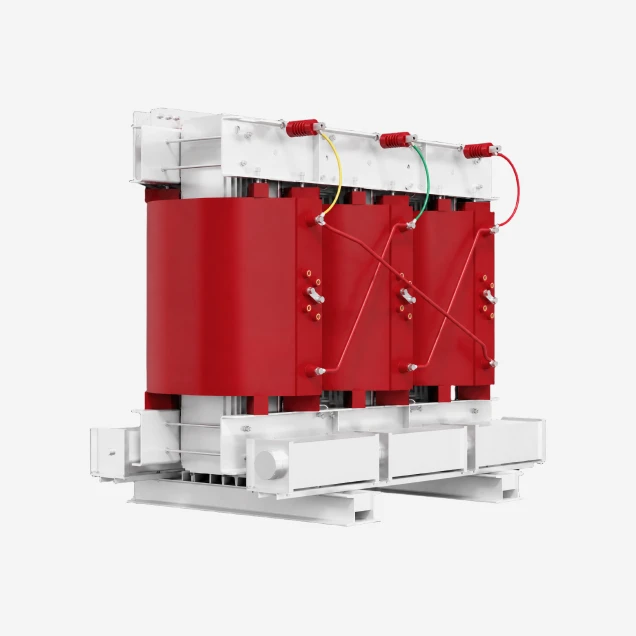
A dry type transformer is a transformer with no oil: the core and windings are insulated by solid resin or open high-temperature insulation, and cooled by air rather than by oil. The transformer works on the same principle as any other, coupling two windings through a magnetic core, but the solid insulation and air cooling change where and how it can be used. With no oil to leak or burn, dry type is the standard choice for transformers installed inside buildings and close to people.
Why Choose Dry Type
The main reason is fire and environmental safety. Cast-resin dry type windings are flame-retardant and self-extinguishing, give off little smoke, and cannot feed an oil fire, so the unit can sit in a basement, a high-rise electrical room, or a hospital without a fire wall or an oil bund. There is no oil to leak into soil or water, and routine maintenance is light. The trade-offs are a higher purchase price, less short-term overload capacity, and a slightly larger and louder unit than an oil transformer of the same rating.
Types of Dry Type Transformer
Dry type transformers are grouped by how the windings are insulated:
| Type | Construction | Best for |
| Cast resin (cast coil) | Windings vacuum-cast and sealed in epoxy resin | Humid, dusty, coastal, or critical sites |
| VPI | Open windings impregnated with resin under vacuum pressure | Clean, dry indoor rooms on a budget |
| Open ventilated | Open windings cooled by natural air | Basic indoor distribution |
Cast resin and VPI are the two that buyers usually weigh against each other. Cast resin costs more, often 30% to 50% more than VPI for a 1000 kVA 10 kV unit, but its sealed epoxy gives much better resistance to moisture, dust, and pollution, and stronger fire performance. VPI is cheaper and ventilates well, but its open structure is more exposed to a harsh environment.
Cast Resin (SCB) in Detail
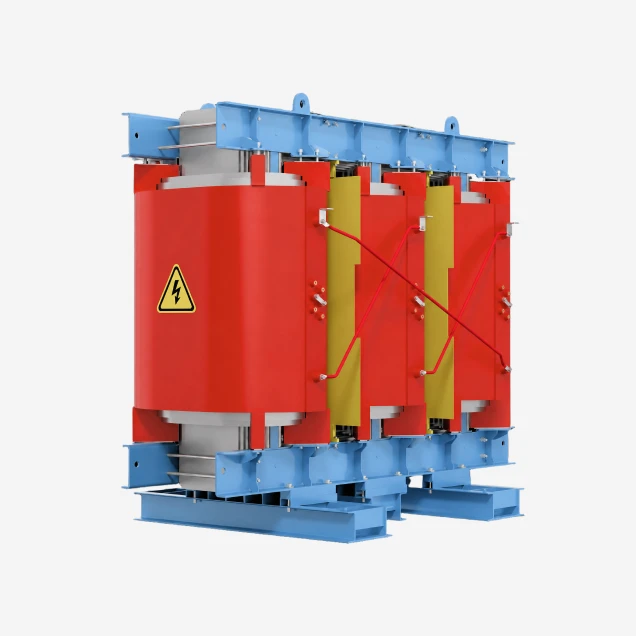
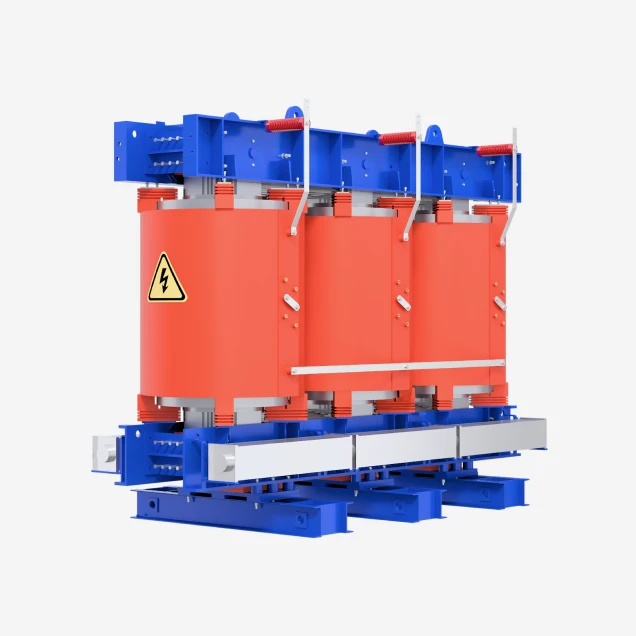
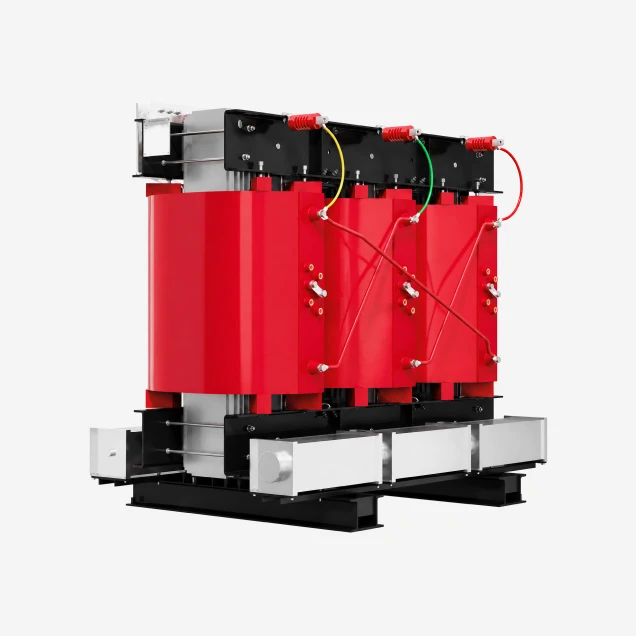
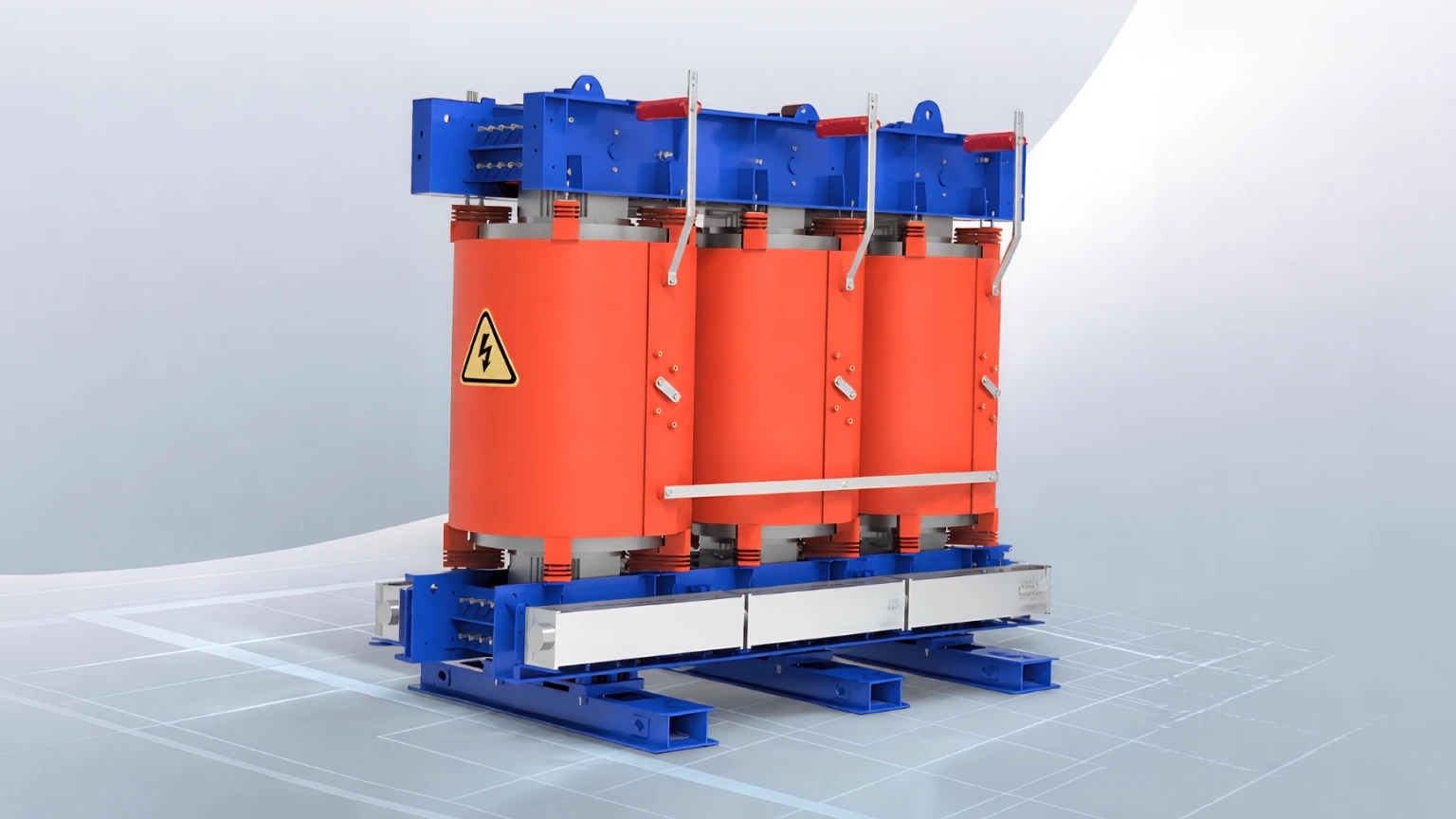
In a cast-resin transformer, each winding is placed in a mould and the epoxy resin is cast around it under vacuum, so there are no voids and no path for moisture. The cured resin is a tough, sealed shell that holds the winding firmly against short-circuit forces and keeps partial discharge low, usually under 10 pC. Cast-resin units carry IEC 60076-11 environmental class E2 and fire behaviour class F1, meaning they tolerate condensation and pollution and are self-extinguishing. Our SCB10 and SCB13 series are cast-resin units, with the SCB13 tuned for lower loss.
VPI in Detail
A VPI, or vacuum-pressure-impregnated, transformer takes open wound coils and draws resin or varnish into them under vacuum and pressure, coating the conductors rather than encasing the whole winding. The windings stay open to the cooling air, which helps heat dissipation and keeps the unit light and lower in cost. VPI suits clean, dry indoor environments; in dusty or humid conditions it needs more regular cleaning and insulation checks, and its service life depends more on the operating environment.
IEC 60076-11 and Insulation Class
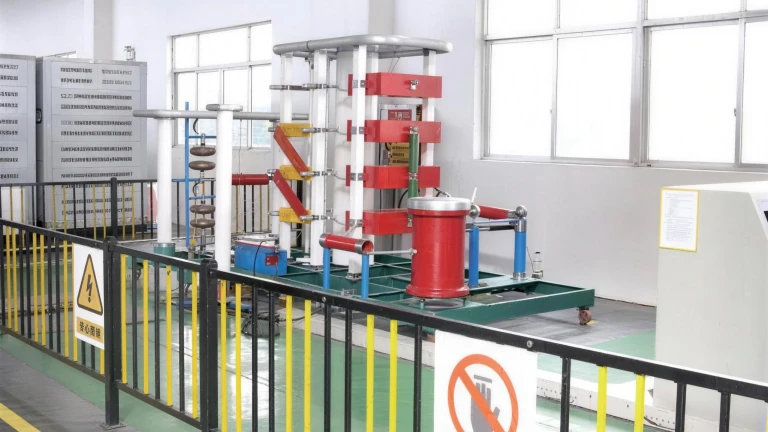
Dry type transformers are designed and tested to IEC 60076-11, mirrored by GB 1094.11 and GB/T 10228. The standard sets three classifications that matter for dry type: an environmental class (E0 to E2) for condensation and pollution, a climatic class for temperature, and a fire behaviour class (F0 to F1) for flame retardance. The winding insulation is rated by thermal class, most often Class F at 155 °C or Class H at 180 °C, with the higher class allowing a hotter, more compact design or a longer life at a given temperature.
Cooling and Monitoring
Most dry type units use natural air cooling, written AN, where air rises through the windings by convection. Adding fans gives forced air cooling, AF, which can lift the continuous rating of the same core by around 40%, useful for peak loads. Because there is no oil to buffer temperature, a dry type transformer relies on winding temperature sensors, usually PT100 probes in the low-voltage winding, feeding a controller that runs the fans and trips on over-temperature.
Dry Type vs Oil Immersed
The choice between dry type and oil comes down to location and rating. Dry type wins indoors and wherever fire safety or the absence of oil is the priority, and it needs no containment. Oil immersed transformers cool far better, so they carry more overload, reach higher voltages and ratings, suit outdoor substations, and cost less per kVA as size grows. A large utility substation is usually oil; a transformer inside an occupied building is usually dry type. Many sites use both.
Amorphous Core Dry Type
Where a transformer runs lightly loaded for long hours, the no-load loss it draws just to stay energised becomes the main cost. An amorphous transformer replaces the silicon-steel core with an amorphous metal core, cutting no-load loss sharply. Amorphous cores are available in cast-resin dry form, as our SCBH15 series, combining the indoor safety of dry type with the standing-loss saving of an amorphous core.
Ratings, Sizes, and Voltage Classes
Our dry type range covers 30 kVA up to 2500 kVA, the sizes that suit building services, industrial plants, data centres, and renewable connections, with common ratings such as 500 kVA, 1000 kVA, and 1600 kVA in regular demand. High-voltage classes are 10 kV, 20 kV, and 35 kV, with low voltage usually 400 V, and both step-down and step-up configurations are available. Every unit is type-tested to IEC 60076-11, equivalent to GB 1094.11 and GB/T 10228.