

The phase-out of sulfur hexafluoride (SF6) in medium voltage (MV) switchgear is an active regulatory mandate reshaping power distribution engineering. With a Global Warming Potential (GWP) 23,500 times greater than CO2, SF6 has drawn strict legislative action, most notably through the revised European Union F-Gas Regulation and tightening environmental guidelines globally. For electrical engineers, EPC contractors, and substation designers, specifying SF6-filled equipment today introduces severe long-term compliance risks, reporting overhead, and inflated end-of-life disposal costs. The transition requires evaluating commercially available, fully compliant alternatives. Two primary technologies dominate the replacement landscape: Solid Insulated Switchgear (SIS) and Eco-Gas Insulated Switchgear. Both eliminate the greenhouse gas liability while maintaining the compact footprint required in modern urban and renewable energy substations. This analysis breaks down the regulatory timeline, the engineering mechanics of solid and eco-gas insulation, and parameters for specifying compliant switchgear.
Understanding the Global Regulatory Landscape
Regulatory bodies are enforcing definitive deadlines for SF6 phase-outs. The EU F-Gas Regulation (EU) 2024/573 sets uncompromising limits, banning the use of SF6 in new medium voltage switchgear up to 24kV by 2026, and extending the prohibition to equipment up to 52kV by 2030. In North America, state-level legislation, led by the California Air Resources Board (CARB), is implementing phased bans on SF6 gas purchases and mandating strict leak reporting protocols. The reporting threshold functions as a recurring operational penalty. Utilities and industrial facility managers must maintain exhaustive logs of gas inventory, routine top-ups, and accidental discharges. Consequently, specifying legacy SF6 equipment means acquiring an asset that will become a stranded financial liability long before its 30-year mechanical design life concludes. End-of-life reclamation of SF6 requires specialized handling companies and extensive documentation. Transitioning to SF6-free switchgear eliminates these reporting taxes, ongoing gas monitoring overhead, and costly decommissioning protocols, permanently altering the Total Cost of Ownership (TCO) calculation.
The Engineering Challenge: Replacing SF6 Dielectrics
SF6 dominated the medium voltage sector due to its exceptional dielectric strength and thermal conductivity. It effectively quenches electrical arcs and allows for minimal phase-to-phase clearances, establishing the highly compact Gas Insulated Switchgear (GIS) standard. Replicating this geometric footprint without SF6 requires separating the arc-quenching medium from the insulating medium. Traditional Air-Insulated Switchgear (AIS) relies on ambient air, requiring significantly larger clearances. This renders AIS unsuitable for space-constrained environments such as wind turbine towers, underground mining vaults, or compact prefabricated substations. The engineering objective is to match the compact GIS footprint without utilizing high-GWP gases. Modern manufacturers achieve this by utilizing vacuum interrupters for arc quenching, while managing the phase-to-ground and phase-to-phase dielectric clearances through either solid epoxy encapsulation or alternative gas mixtures with negligible environmental impact.
Alternative 1: Solid Insulated Switchgear (SIS)
Solid Insulated Switchgear replaces insulating gas entirely with cast epoxy resin. The vacuum interrupter and primary conductive circuits are embedded directly into a solid dielectric block. This manufacturing process, utilizing Automatic Pressure Gelation (APG) technology, creates a void-free insulation layer that completely isolates the high-voltage components from external environmental factors. The definitive advantage of SIS is the total elimination of gas pressure monitoring. There are no pressure gauges, no degradation of tank seals, and zero risk of gas leakage. This renders the insulation system virtually maintenance-free. Furthermore, the solid epoxy provides robust mechanical strength, resisting external vibration and shock, making it highly effective for heavy industrial environments, compact substations, or transportable modular skids. For installations subjected to high humidity, coastal salt fog, or heavy particulate dust, SIS provides a hermetically sealed barrier. Engineers specifying equipment for these harsh conditions frequently deploy units like the 12kV solid insulated medium voltage switchgear to secure a compact profile without the vulnerability of gas handling.
Alternative 2: Eco-Gas Insulated Switchgear
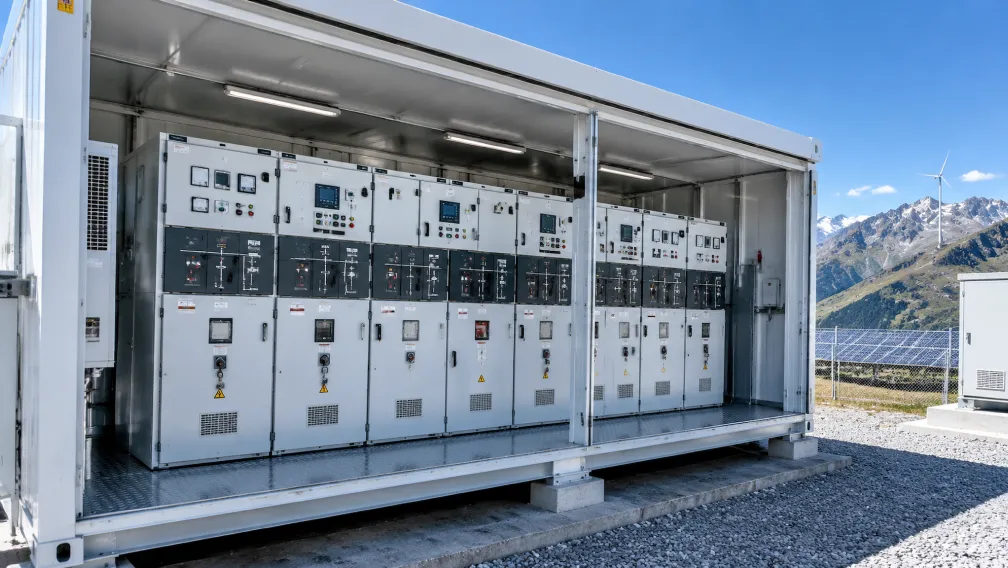
For substation designs where operators prefer the established operational architecture of GIS but require strict environmental compliance, Eco-Gas Insulated Switchgear is the specified solution. These systems utilize alternative gas mixtures to provide the dielectric medium. The two dominant approaches are dry air (a purified mixture of nitrogen and oxygen) and fluoronitrile-based mixtures (such as C4-FN). Dry air inherently possesses a GWP of zero. Fluoronitrile mixtures maintain a GWP of less than 400, representing a massive reduction from SF6's 23,500, positioning them well below legislative reporting thresholds. Eco-gas switchgear maintains the exact operational logic, physical footprint, and single-line diagram configurations of legacy SF6 GIS. This geometric parity is critical for retrofit scenarios or capacity expansions in existing switchrooms where floor space is strictly defined. Arc quenching is executed by vacuum interrupters, while the eco-gas provides phase insulation within a sealed, laser-welded stainless-steel tank. Specifying a compliant unit such as the 12kV SF6-free gas insulated medium voltage switchgear allows EPC contractors to replicate familiar GIS layouts while achieving total compliance with 2026/2030 environmental mandates.
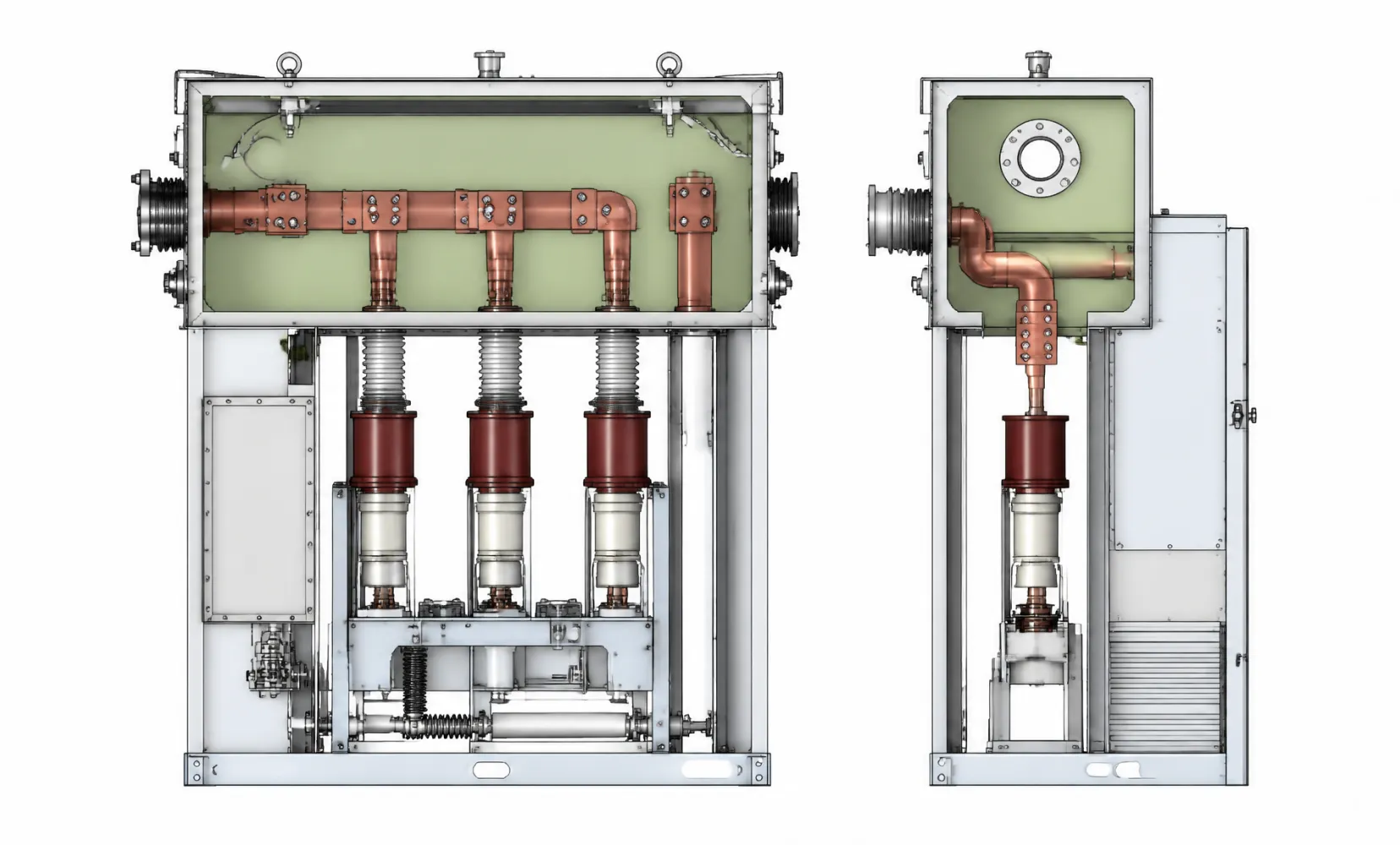
Dielectric Properties and Material Integration
The core of the SF6-free transition relies on the precise integration of the vacuum interrupter with the new insulating medium. Vacuum technology delivers superior dielectric recovery rates and enables high-frequency switching without degrading the surrounding insulation. The engineering complexity lies in insulating the exterior of the vacuum envelope and the connected busbars. For Eco-Gas systems, maintaining adequate dielectric strength requires optimized electric field designs. Manufacturers utilize advanced 3D electrostatic simulations to eliminate sharp geometric edges where electric fields could concentrate and cause flashovers, compensating for the slightly lower dielectric strength of dry air compared to SF6. For Solid Insulation, epoxy material science is the critical factor. The coefficient of thermal expansion of the casting resin must precisely match that of the embedded copper conductors and the ceramic envelope of the vacuum interrupter. If these expansion coefficients diverge, the thermal cycling experienced during heavy electrical loads will induce micro-cracking within the resin. These microscopic fractures initiate partial discharge (PD), eventually leading to catastrophic insulation failure.
Comparative Analysis: SIS vs. Eco-Gas
Selecting between solid and eco-gas insulation requires evaluating site-specific operational parameters. Footprint: Both technologies offer highly compact dimensions. Eco-gas units generally offer a direct one-to-one dimensional match for replacing older GIS and metal-clad switchgear panels, simplifying brownfield retrofits. Maintenance: SIS holds a distinct advantage in maintenance. Lacking a gas tank, it requires zero pressure checks, gas refilling, or seal inspections. Eco-gas systems, while environmentally benign, still rely on a pressurized vessel and require periodic pressure verification to ensure dielectric integrity. Environmental Extremes: SIS performs exceptionally in highly corrosive or humid environments because the primary conductive parts are permanently cast in solid resin. Eco-gas systems enclose the busbars in a controlled tank environment, isolating them from humidity, but the external tank itself remains subject to ambient environmental stress. Scalability: Both technologies universally utilize vacuum technology for fault clearing, ensuring high electrical endurance across distribution networks.
Total Cost of Ownership (TCO) in an SF6-Free Era
The initial capital expenditure (CapEx) for SF6-free technologies can be marginally higher than legacy equipment due to advanced manufacturing processes. However, the Total Cost of Ownership (TCO) analyzed over a standard 30-year lifecycle heavily favors SF6-free alternatives. The hidden lifecycle costs of SF6 include mandatory personnel training for hazardous gas handling, procurement of specialized recovery equipment, recurring administrative hours dedicated to emissions reporting, and heavily regulated end-of-life disposal fees. Furthermore, as global production of SF6 declines due to strict regulations, the cost of replacement gas for maintaining legacy systems will surge exponentially. By specifying solid or eco-gas switchgear at the project inception, facility managers eliminate these recurring operational expenditures (OpEx) and immunize the electrical asset against future regulatory penalties, particularly in long-term renewable energy substation investments.
Conclusion
The transition away from SF6 in medium voltage switchgear is a permanent, legislatively driven evolution. Solid Insulated Switchgear and Eco-Gas alternatives provide proven, reliable, and highly compact solutions that meet the rigorous operational demands of modern power distribution without the associated greenhouse gas liability. Understanding the distinct mechanical, dielectric, and maintenance profiles of these technologies empowers electrical engineers to optimize substation designs for compliance, safety, and long-term cost efficiency. Elecstellar engineers and manufactures compliant medium voltage solutions tailored directly to project specifications and international standards.
-

STELLAR
Switchgear & Power Transformer ManufacturerSTELLAR designs and manufactures switchgear, transformers, and complete power distribution equipment from our China facility, serving utilities, contractors, and distributors in 50+ countries. Every technical article on this site is reviewed by our in-house engineers to ensure accuracy against IEC standards and real project practice.