

Transformers sit at every step of the power system, and the word covers a huge span of machines, from a part smaller than a coin inside a charger to a unit the size of a truck in a grid substation. For anyone specifying equipment for a power or distribution project, only a handful of types actually matter. This guide sorts transformers the way engineers really classify them and shows which type fits which job.
There is no single way to divide transformers up. The same unit gets described several ways at once: by what it does, how it is cooled, how many phases it serves, and what its core is made of. We take each angle in turn, then narrow down to the choice a buyer actually makes.
Types of Transformers at a Glance
Before the detail, here is how the main classifications line up and what each one tells you about a transformer.
| Classification | Main types | What it tells you |
| By application | Power, distribution, instrument | Its role in the grid |
| By cooling | Oil-immersed, dry-type | Where it can be installed |
| By phase | Single-phase, three-phase | The supply it serves |
| By core | Silicon-steel, amorphous | Its standing energy loss |
| By winding | Two-winding, autotransformer | How the windings connect |
By Application: Power, Distribution, and Instrument Transformers
The clearest way to tell transformers apart is by the job they do in the grid. Three families cover almost everything in a power network.
Power transformers
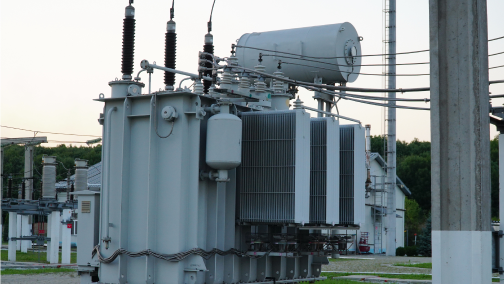
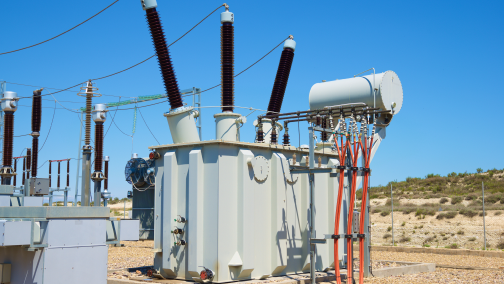
Power transformers handle the high-voltage, high-capacity end of the system. They step voltage up at generating stations and down again at transmission substations, working at 66 kV and above and at ratings measured in MVA. They are built to run near full load with high efficiency and form the backbone of transmission.
Distribution transformers
Distribution transformers are the last transformer before the load. They take medium voltage, commonly 11 kV, 20 kV, or 33 kV, and step it down to 400 V or 230 V for homes, businesses, and plants, in ratings up to around 2500 kVA. This is the transformer most projects actually buy, and it comes in the oil and dry forms covered below.
Instrument transformers
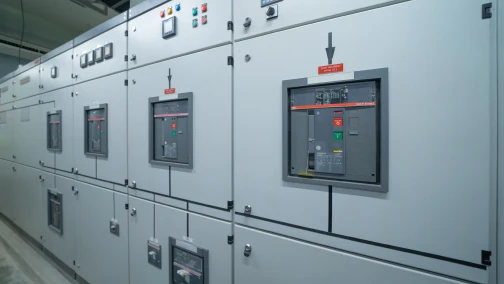
Instrument transformers do not deliver power; they measure it. A current transformer (CT) steps a large current down to a small, safe value, and a voltage transformer (VT or PT) does the same for voltage, so that meters and protection relays can read the circuit without touching full current or voltage. They sit inside switchgear and substations alongside the power equipment.
The quick test: a power transformer moves bulk energy across the transmission grid, a distribution transformer delivers usable voltage to the end user, and an instrument transformer just measures the circuit for metering and protection.
By Cooling and Insulation: Oil-Immersed vs Dry-Type
Once the application is set, the next split decides where the transformer can be installed: how it is cooled and insulated. There are two families, plus a core option that cuts energy loss in either.
Oil-immersed transformers
In an oil-immersed transformer the core and windings sit in insulating oil that both insulates the live parts and carries their heat to the tank. Oil cools far better than air, so these units handle more load and overload, reach higher voltages and ratings, suit outdoor substations, and cost less per kVA as they get larger. The trade-off is the oil itself, which needs containment and adds a fire consideration. See the oil immersed transformer range for the S11, S13, and S20 series.
Dry-type transformers
A dry-type transformer carries no oil. The windings are insulated by cast epoxy resin or open high-temperature insulation and cooled by air, so the unit can be installed indoors, in basements, and near people with far less fire and environmental risk. The trade-off is a higher price and less overload headroom at the same rating. See the dry type transformer range, including cast-resin SCB units.
Amorphous-core transformers
Either form can use an amorphous metal core instead of silicon steel, which cuts the no-load loss, the power drawn just to stay energised, by around 70%. On lightly loaded networks that saving pays back the higher cost over the unit's life. See the amorphous alloy transformer range in both oil and dry forms.
The short version: oil-immersed for outdoor, high-power, and lowest cost per kVA; dry-type for indoor and fire-safe sites; an amorphous core where the transformer sits lightly loaded for long hours.
By Phase: Single-Phase vs Three-Phase
Transformers are also split by the supply they serve. A single-phase transformer works with one alternating waveform and is common in residential and light commercial supply, and on pole-mounted distribution in markets such as North America. A three-phase transformer handles three waveforms offset by 120 degrees and serves industrial, commercial, and grid loads. One three-phase unit is more efficient and economical than three single-phase units of the same total rating, which is why most distribution and power transformers are three-phase.
By Core and Construction
Inside, transformers differ by core material and how the core and windings are arranged. Most power and distribution units use a grain-oriented silicon-steel core, which is the proven, economical standard. An amorphous metal core lowers no-load loss sharply but is larger and costlier. The core can be built core-type, with windings around the limbs, or shell-type, with the core surrounding the windings, and the windings themselves are copper as standard or aluminium where cost leads. For the power transformers in this guide, these are engineering details set by the maker; the buyer mainly chooses silicon-steel or amorphous by weighing first cost against running loss.
Special-Purpose Transformers
Beyond the main power and distribution types, a few special transformers serve specific jobs:
• Autotransformer: uses a single tapped winding instead of two separate ones, which makes it smaller and more efficient for small voltage changes, but it gives no electrical isolation between the two sides.
• Isolation transformer: has a one-to-one ratio and exists to give galvanic isolation between circuits for safety, with no change in voltage.
• Earthing (grounding) transformer: provides a neutral point on a system that does not have one, for earthing and fault protection.
• Furnace and rectifier transformers: high-current units built for arc furnaces, electrolysis, and other heavy industrial processes.
These sit outside the path of most distribution projects, but it helps to know the names when they come up in a specification.
Which Transformer Does Your Project Need?
For a power or distribution project, work through these in order:
• What grid level? Transmission and high voltage point to a power transformer; taking medium voltage down to usable low voltage points to a distribution transformer.
• Where is it installed? Outdoor substations and high ratings favour an oil-immersed unit; indoors, in buildings, or anywhere fire safety rules favour a dry-type unit.
• What is the load profile? A transformer that sits lightly loaded for long hours earns back the cost of an amorphous core through lower standing loss.
• What supply? Three-phase for almost all industrial, commercial, and grid loads; single-phase only for light or specific distribution duties.
For medium voltage distribution, STELLAR builds the oil-immersed, dry-type, and amorphous transformers that cover these choices, up to 2500 kVA and 35 kV. Where a project needs the transformer, the medium voltage switchgear, and the low voltage panel together on a small site, a compact substation packages all three in one factory-tested enclosure.
Get the Right Transformer for Your Project
STELLAR designs and builds medium voltage distribution transformers to IEC 60076 and GB standards, configured from your single-line diagram, with the cooling, core, vector group, tap range, and rating set to your requirement. Send us the rating, the voltage ratio, and the site conditions, and we will confirm the right type and quote your exact specification.
Frequently Asked Questions
What are the main types of transformers?
By application, the main types are power transformers for transmission, distribution transformers for supplying end users, and instrument transformers (CT and PT) for measurement and protection. The same units are also classified by cooling (oil-immersed or dry-type), by phase (single or three-phase), and by core (silicon-steel or amorphous).
What is the difference between a power transformer and a distribution transformer?
A power transformer works at high voltage and high capacity to move bulk energy across the transmission grid, and it is built to run near full load. A distribution transformer is smaller, steps medium voltage down to 400 V or 230 V for the end user, and runs at varying load through the day. Distribution transformers are the type most building, industrial, and utility projects buy.
What is the difference between oil-immersed and dry-type transformers?
An oil-immersed transformer uses oil to insulate and cool, which gives better cooling, higher ratings, and lower cost per kVA, and suits outdoor use, but the oil needs containment and adds a fire consideration. A dry-type transformer uses air and resin, carries no oil, and is the safer choice indoors and near people, at a higher price and with less overload capacity.
Which type of transformer is most efficient?
Larger transformers are generally more efficient, and at the same rating an oil-immersed unit usually has a slight edge over a dry-type one. The biggest single efficiency gain comes from an amorphous metal core, which cuts no-load loss by around 70% in either form, which matters most on lightly loaded networks that run for long hours.
What is the difference between single-phase and three-phase transformers?
A single-phase transformer serves one alternating waveform, used for residential and light loads and on pole-mounted distribution in some markets. A three-phase transformer serves three waveforms together and is used for industrial, commercial, and grid loads. One three-phase unit is more efficient and economical than three single-phase units of the same total rating.
What is an instrument transformer?
An instrument transformer steps high values down to safe ones for measurement and protection. A current transformer (CT) reduces a large current, and a voltage transformer (VT or PT) reduces a high voltage, so meters and protection relays can read the circuit safely. They are built into switchgear and substations to measure the circuit, with no role in delivering power.
-

STELLAR
Switchgear & Power Transformer ManufacturerSTELLAR designs and manufactures switchgear, transformers, and complete power distribution equipment from our China facility, serving utilities, contractors, and distributors in 50+ countries. Every technical article on this site is reviewed by our in-house engineers to ensure accuracy against IEC standards and real project practice.