

After the rating and the voltage, the next decision on a transformer is the type: oil-immersed or dry. Both step the voltage the same way and reach the same accuracy, but they differ in fire safety, cooling, cost, maintenance, and where they can be installed. STELLAR builds both, so this comparison is even-handed: the goal is to show where each one is the right choice, not to favour one technology.
Oil vs Dry at a Glance
The full comparison in one view, before the detail.
| Factor | Oil-immersed | Dry-type |
| Insulation and cooling | Oil (ONAN / ONAF) | Air plus resin (cast resin or VPI) |
| Fire safety | Flammable oil; needs containment | No flammable liquid; fire-safe |
| Cooling and overload | Superior; about 150% for 2 h | Lower; about 120% for 2 h |
| Efficiency | Slightly higher at load | Slightly lower |
| Voltage range | Up to 765 kV and beyond | Usually up to 35 kV |
| Initial hardware cost | Lower | Higher |
| Site preparation | Containment, fire suppression | None |
| Maintenance | Planned; oil testing | Low; cleaning and inspection |
| Service life | 25 to 40 years | 15 to 25 years |
| Environment | Spill risk; oil disposal | No spill; recyclable |
| Best for | Outdoor, high-power, utility | Indoor, fire-sensitive |
The Core Difference: Oil vs Air and Resin
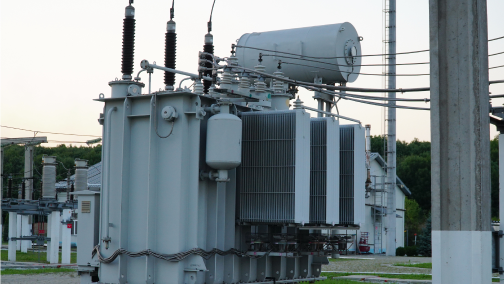
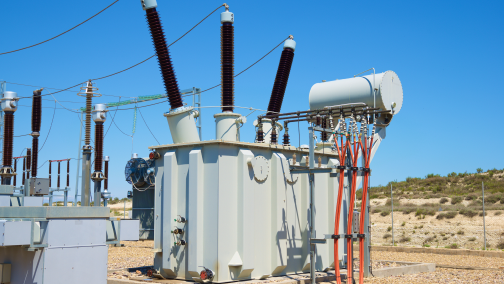
Everything follows from how the transformer is insulated and cooled. In an oil-immersed transformer the core and windings sit in a sealed tank of insulating oil, mineral oil or natural ester, which both insulates the live parts and carries their heat to the tank and radiators. In a dry-type transformer there is no liquid; the windings are insulated by cast epoxy resin or vacuum-impregnated varnish and cooled by air. Oil cools and insulates in one medium and is sealed away; air and resin keep the unit liquid-free and open to the room. From that one difference come the trade-offs below. For the products, see oil immersed transformers and dry type transformers.
Fire Safety: The Decisive Factor Indoors
Fire safety is the single factor that settles most indoor decisions. Oil is combustible, so an oil-immersed transformer brings a fire and spill risk and, indoors, needs a fireproof vault, an oil-containment pit, fire suppression, and clearances. A dry-type transformer has no flammable liquid, so it can sit inside an occupied building with far less fire risk and none of that containment. This is why dry-type is the default for hospitals, data centres, shopping centres, high-rise buildings, and tunnels, anywhere a fire near people or critical operations cannot be allowed. An oil unit can be used indoors, but the cost of the vault, containment, and suppression usually pushes the choice to dry-type instead.
Cooling, Overload, and Efficiency
Oil is the better coolant, and that gives the oil-immersed transformer real advantages under load. It carries heat away faster, so it holds more overload, commonly around 150% for two hours against roughly 120% for a dry-type unit, and it keeps a little more efficiency at high load because the windings run cooler. The oil's thermal mass also smooths out short load peaks. A dry-type unit cools by air, which is less effective, so it has less overload headroom and slightly higher losses at heavy load. For steady distribution duty both perform well; the gap shows up when the load is high, spiky, or the ambient is hot.
Cost: The Hardware vs Lifetime Paradox
Cost is where buyers most often reach the wrong conclusion, because the answer depends on what you count. There are really four numbers, not one.
• Hardware: the oil-immersed unit is cheaper to buy for the same kVA, because its construction is simpler and oil is a cheap cooling medium.
• Site preparation: the oil unit needs a containment pit, and indoors a vault and fire suppression, which the dry-type unit does not.
• Maintenance: the oil unit needs planned upkeep, oil sampling and dissolved-gas analysis, filtration, and leak checks, while the dry-type unit needs little more than periodic cleaning and inspection.
• Total cost of ownership: add hardware, site work, and decades of maintenance together, and the cheaper unit on the day of purchase is not always the cheaper unit over its life.
The practical result: for an outdoor utility or industrial installation with cheap site work, the oil-immersed transformer is usually the lower total cost. For an indoor or safety-critical site, the vault and ongoing oil maintenance often make the dry-type unit cheaper overall, even though it costs more to buy. Compare total cost of ownership over twenty to thirty years, not the quoted price.
Maintenance, Lifespan, and Environment
These three run together. The oil-immersed transformer needs planned maintenance, and done properly, with regular oil testing, it reaches a long service life of around twenty-five to forty years, because the oil keeps the windings cool and the insulation ageing slow. The dry-type transformer needs much less attention but typically lasts around fifteen to twenty-five years. On the environment the dry-type unit has the clear edge: there is no oil to leak into soil or water, and the core and windings recycle easily, whereas an oil unit carries a spill risk and its used oil must be disposed of under regulation. Natural-ester fluids reduce, but do not remove, that concern for oil units.
Voltage and Capacity Limits
Reach is the other hard limit. Oil cooling supports the highest voltages and ratings, up to transmission levels of 765 kV and into the hundreds of MVA, which is why large power and transmission transformers are almost always oil-immersed. Dry-type units are generally built up to about 35 kV and more modest ratings, which covers distribution and building supply but not bulk transmission. Within medium voltage distribution, both types are available and the choice comes down to the factors above; STELLAR builds both up to 35 kV and 2500 kVA. For the lowest standing loss in either type, an amorphous core is an option.
When to Choose Oil vs Dry
Neither type is better in the abstract. Match it to the installation:
Choose oil-immersed when
• The transformer is outdoors, in a substation, plant yard, or renewable site.
• The rating or voltage is high, where oil cooling is needed.
• The load is heavy or peaky and needs the overload headroom.
• Site work is cheap, so containment adds little to the total cost.
Choose dry-type when
• The transformer is indoors or near people, hospitals, data centres, malls, high-rise, or tunnels.
• Fire codes or the client rule out oil.
• Low maintenance and no spill risk matter for the operation.
• The voltage is within the dry-type range, up to about 35 kV.
Many sites use both, oil outdoors feeding the site and dry-type inside the buildings. Where a complete substation is needed on a small footprint, a compact substation packages either transformer type with the switchgear in one enclosure, and outdoor renewable plants commonly pair oil-immersed step-up units with the switchgear in a renewable energy substation.
Get the Right Transformer for Your Site
STELLAR builds both oil-immersed and dry-type medium voltage transformers to IEC 60076 and the equivalent GB standards, up to 35 kV and 2500 kVA, configured from your single-line diagram. Because we make both, we can advise on the type that fits your location, fire code, load profile, and budget without a bias toward one technology. Send us the rating, the voltage ratio, and the site conditions, and we will recommend oil or dry and quote your specification.
Frequently Asked Questions
What is the difference between oil-immersed and dry-type transformers?
An oil-immersed transformer uses insulating oil to insulate and cool, which gives better cooling, more overload, higher ratings, and lower hardware cost, but the oil is flammable and needs containment. A dry-type transformer uses air and resin, carries no oil, and is fire-safe and low-maintenance for indoor use, at a higher purchase price and with less overload capacity.
Which is better, oil-immersed or dry-type?
Neither is better in general; it depends on the site. Oil-immersed is the usual choice outdoors and for high-power and high-voltage duty because of its cooling and lower hardware cost. Dry-type is the usual choice indoors and in fire-sensitive places because it carries no oil and needs little maintenance.
Why are dry-type transformers used indoors?
Because they have no flammable oil. A dry-type transformer poses far less fire and spill risk, so it can sit inside an occupied building without a fireproof vault, containment pit, or fire suppression. That makes it the standard for hospitals, data centres, malls, and high-rise buildings.
Can an oil-immersed transformer be installed indoors?
Yes, but it needs extra protection: a fireproof vault, an oil-containment pit, fire suppression, and ventilation. The cost of those measures is why most indoor projects choose a dry-type transformer instead and avoid them altogether.
Which transformer lasts longer and which is more efficient?
Oil-immersed transformers usually last longer, around twenty-five to forty years with planned oil maintenance, and run slightly more efficiently at load because the oil keeps the windings cooler. Dry-type units typically last around fifteen to twenty-five years. For the lowest standing loss in either type, an amorphous core helps.
Which is cheaper, oil or dry?
It depends on what you count. Oil-immersed units are cheaper to buy for the same rating, but they need containment and planned maintenance. Dry-type units cost more to buy but need no containment and little maintenance. Outdoors, oil is usually cheaper overall; indoors, the dry-type unit often wins on total cost of ownership.
-

STELLAR
Switchgear & Power Transformer ManufacturerSTELLAR designs and manufactures switchgear, transformers, and complete power distribution equipment from our China facility, serving utilities, contractors, and distributors in 50+ countries. Every technical article on this site is reviewed by our in-house engineers to ensure accuracy against IEC standards and real project practice.