search
Search

Search for equipment models, voltage specifications, or project references.

Ring Main Unit

Ring Main Unit

STELLAR Ring Main Unit Manufacturer

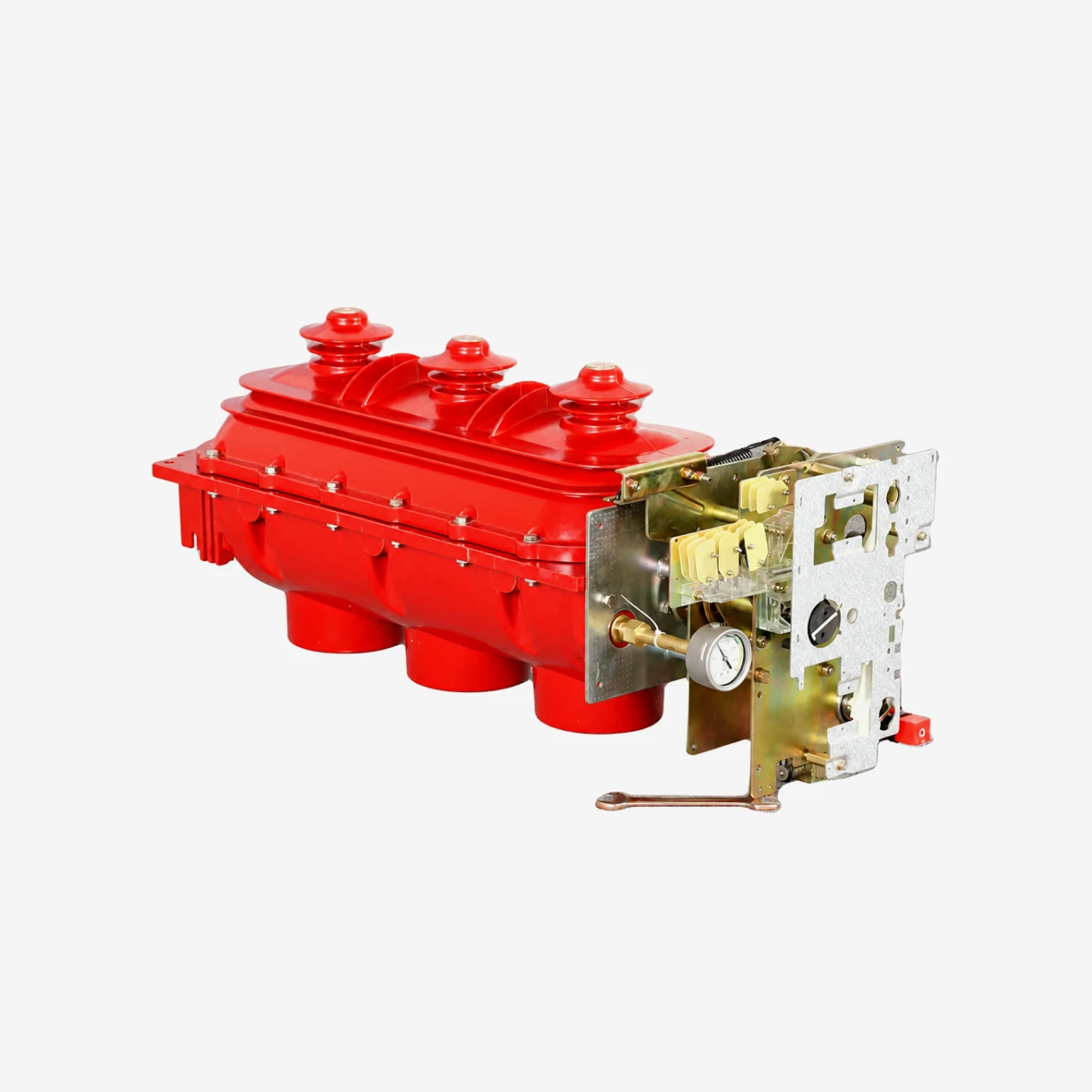
STELLAR builds ring main units (RMU) for 12 kV to 24 kV cable distribution: the GTRM-12 solid-insulated type, the XGN15-12 SF6 type, and the HXGN-12 air-insulated type. An RMU sits on a ring main, the loop of cable feeding an area, and connects a distribution transformer to it through load-break switches and a fused or breaker tee-off. It is the compact, sealed branch of medium voltage switchgear made for the distribution ring.

Because power can reach the unit from either side of the ring, one cable fault does not drop the load. Each RMU is pre-assembled and tested at the factory, arrives ready to set and connect, and is built to IEC 62271-200 and GB 3906. We configure the number of ways, the insulation, and the tee-off protection from your network layout.

Ring Topology Redundancy

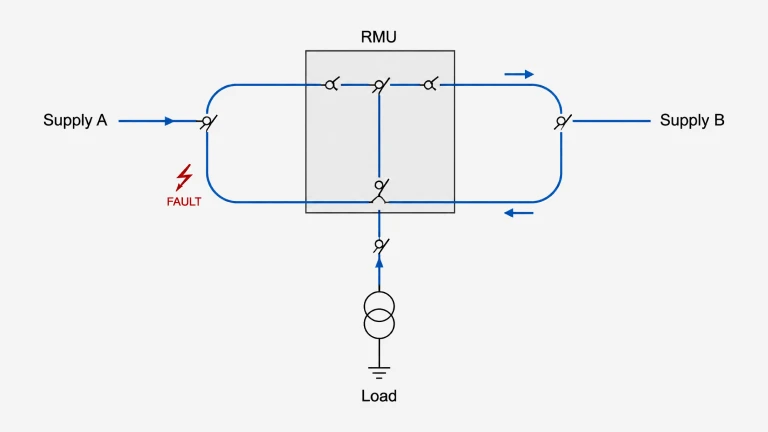
Two ring switches feed power from either side, so one cable fault does not drop the load.


SF6, Solid, or Air

Three insulation options to match your network, climate, and SF6 policy.


Compact, Sealed, Pre-Tested

Factory-assembled and tested, arrives ready to set and connect.


Indoor and Outdoor

Indoor cabinets and weatherproof outdoor kiosks for pad-mounted transformers.


Ring Main Unit Series Specifications

ModelInsulationRated VoltageRated CurrentShort-Time WithstandWays
GTRM-12Solid (epoxy)12 kV630 A20 / 25 kA (1 s)2 to 5
XGN15-12SF6 gas12 kV630 A20 / 25 kA (1 s)2 to 5
HXGN-12Air12 kV630 A20 / 25 kA (1 s)2 to 5

Ring switches are three-position load-break switches (on, off, earth). The transformer tee-off takes a fuse-switch or a circuit breaker. Making current to 50 kA peak. 24 kV versions and extensible configurations available on request.

Ring Main Unit Product Range


Built for the Ring, Power From Either Side

An RMU connects to a ring main, the cable loop that feeds a district from both ends. Two ring switches link the unit into the loop, so if one side faults, the load keeps drawing power from the other side. You can build the unit from two ways up to five, mixing ring switches and transformer tee-offs to match the network node.

· Two ring switches for either-side supply
· Redundant ring keeps the load up during a cable fault
· Two-way to five-way configurations


SF6, Solid, or Air Insulation, Your Choice

Pick the insulation that fits the site and your gas policy. SF6 panels are the most compact and shrug off damp and salt. Solid-insulated (epoxy) panels give a sealed, SF6-free option in a small footprint. Air-insulated panels keep things simple where space and climate allow. SF6 ring-network types are a form of gas insulated switchgear.

· SF6, solid epoxy, or air insulation
· Sealed designs for coastal, humid, and dusty sites
· Solid type for networks moving away from SF6


Load-Break Ring Switches With a Protected Tee-Off

The ring switches are three-position load-break switches, on, off, and earth, sized to make and break normal load current. The branch feeding the transformer takes a fuse-switch for small transformers or a circuit breaker with relay where the feed needs full protection. An integral earth switch makes the circuit safe before anyone works on the cable.

· Three-position load-break ring switches
· Fuse-switch or breaker tee-off to the transformer
· Integral earthing and full anti-error interlock

About STELLAR

STELLAR is a Singapore-headquartered manufacturer of switchgear, transformers, and complete power distribution equipment, serving utilities, contractors, and distributors in 50+ countries. From single-line diagram to commissioning support, we deliver project-configured electrical systems built to IEC and GB standards.

About Us Facility Solutions

FAQs

What is a ring main unit (RMU)?

A ring main unit is compact medium voltage switchgear made for ring distribution networks, where a cable loop feeds an area from both ends. The RMU links a distribution transformer to that loop through load-break switches and a protected tee-off. Because power can come from either side, a single cable fault does not cut supply to the connected load.

What does RMU stand for, and how does it work?

RMU stands for Ring Main Unit. Inside, two ring switches connect the unit into the cable loop, and a third path, the tee-off, feeds the transformer through a fuse-switch or a circuit breaker. The ring switches make and break normal load current and isolate a faulted cable section; the tee-off protects the transformer. A three-position switch gives on, off, and earth in one device.

What insulation types and configurations do you offer?

We offer SF6 gas, solid epoxy, and air insulation, in configurations from two ways up to five. SF6 panels are the most compact; solid panels give a sealed option without SF6; air panels keep it simple. SF6 ring-network units are a type of gas insulated switchgear. Tell us the node layout and we set the number of ring switches and tee-offs.

What is the difference between the ring switch and the tee-off?

The ring switch is a load-break switch that connects the unit to one side of the cable ring; it carries and switches normal load and isolates a cable section for fault or maintenance. The tee-off is the branch that feeds the transformer. It uses a fuse-switch for small transformers, or a circuit breaker with a relay where the feed needs full overcurrent protection.

Can the RMU be installed outdoors and made smart-ready?

Yes. We supply weatherproof outdoor kiosks for pad-mounted transformers as well as indoor cabinets. Units can be fitted with fault passage indicators, sensors, motor operators, and a communication interface, so they report status and switch remotely as part of a distribution automation or smart-grid scheme. See the medium voltage switchgear overview for the wider range.

Ring Main Unit (RMU) Explained

A ring main unit, or RMU, is a compact, sealed assembly of medium voltage switchgear built for ring distribution networks. It connects a distribution transformer to a ring of cable through load-break switches and a protected tee-off, and it comes pre-assembled and factory-tested as a single unit. RMUs are the standard switching point in underground cable networks feeding city districts, hospitals, airports, malls, and industrial parks.

What "RMU" Means and What a Ring Main Is

RMU stands for Ring Main Unit. A ring main is the cable loop itself: instead of running one cable out to a transformer and stopping, the network runs a loop, so every connection point can draw power from two directions. If a cable section faults, the ring switches on either side isolate that section and the load keeps running from the other side. The ring main unit is the switchgear that ties the transformer into this loop, which is where the name comes from.

How an RMU Works

A basic RMU has three functional units, often written as a 2+1 layout: two ring switches and one tee-off. Each ring switch is a three-position load-break switch, on, off, and earth, that carries normal load current, breaks it when needed, and can earth the cable for safe work. The two ring switches link the unit into the cable loop. The tee-off is the branch to the transformer; it uses a fuse-switch combination for small transformers or a circuit breaker with a protection relay for larger or fully protected feeds. All the live parts share a common busbar inside the sealed enclosure.

Ways and Configurations

RMUs are described by the number of ways, meaning functional units. The common forms are:

  • Two-way: two ring switches, for a simple sectionalising point with no local transformer.
  • Three-way (2+1): two ring switches plus one transformer tee-off, the most common building block.
  • Four-way and five-way: extra ring switches, tee-offs, or a bus coupler for busier nodes, for example two incomers, two feeders, and a coupler.

Units come as combined (built to a fixed layout in one tank) or extensible (modular, so ways can be added on site). Combined units suit standard nodes; extensible units suit networks that will grow.

Insulation Types: SF6, Solid, and Air

RMUs are grouped by how the live parts are insulated. SF6 gas is the most common: the parts sit in a sealed gas tank, which makes the unit compact and immune to dust and damp, and SF6 ring-network panels are a form of gas insulated switchgear. Solid (epoxy) insulation casts the live parts in resin, giving a sealed, SF6-free unit in a small footprint, which suits networks moving away from SF6. Air insulation is the simplest and lowest-cost, used where space and the environment allow. STELLAR builds all three: GTRM-12 solid-insulated, XGN15-12 SF6, and HXGN-12 air-insulated.

RMU and the Transformer

The tee-off is where the RMU meets the transformer. For a small distribution transformer, a fuse-switch combination is enough: the load-break switch carries the current and HRC fuses clear a transformer fault. For larger transformers or feeds that need adjustable protection, the tee-off is a circuit breaker with a relay instead. Sizing the fuse or breaker to the transformer rating is part of the configuration we set from your single-line diagram, alongside metal-clad or metal-clad switchgear where the upstream substation needs breaker-based feeders.

Indoor, Outdoor, and Smart RMU

Indoor RMUs go in substation rooms and plant rooms. Outdoor ring main units are built into weatherproof kiosks or pad-mounted enclosures for street-side and cable-network use, feeding pad-mounted transformers directly. A smart RMU adds fault passage indicators, voltage and current sensors, motor-driven operators, and a communication interface, so the unit reports its status and can be switched remotely. That turns a passive distribution point into a node a utility can monitor and control as part of a distribution automation or smart-grid system, cutting outage times by locating faults fast.

Voltage, Ratings, and Standards

Most RMUs run at 12 kV and 24 kV, the common medium voltage distribution classes, with ring switches and busbar rated at 630 A and short-time withstand around 20 to 25 kA for 1 second, set by the network fault level. Making current runs to about 50 kA peak. Panels are type-tested to IEC 62271-200, equivalent to GB/T 3906-2020, with the load-break switches and fuse combinations meeting their own IEC parts. For breaker-based feeders, higher currents, or other switchgear types, see the medium voltage switchgear overview.