search
Search

Search for equipment models, voltage specifications, or project references.


Home > NXAirS LP 12kV Arc-Resistant Metal-Clad Medium Voltage Switchgear

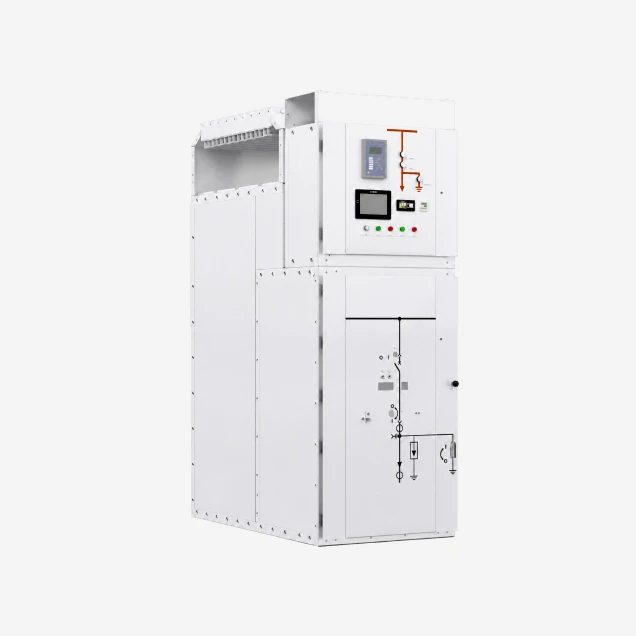
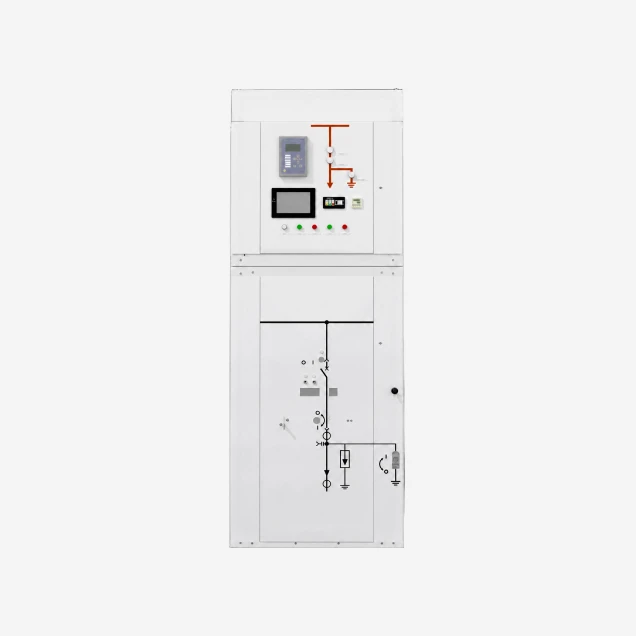
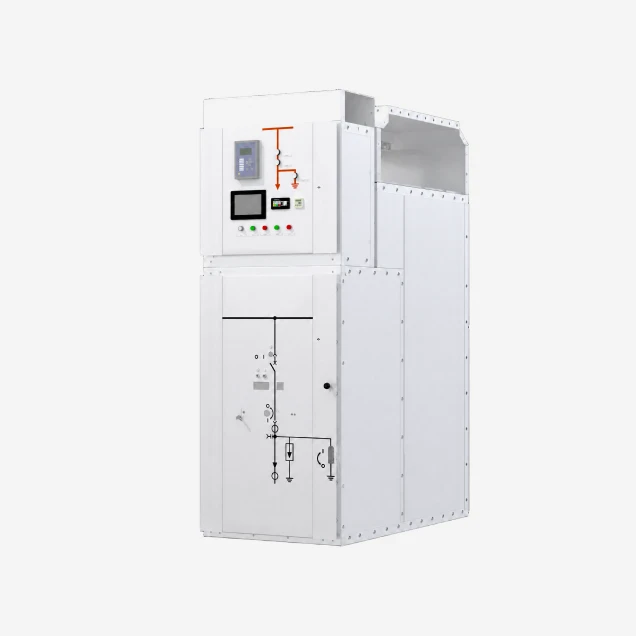
NXAirS LP 12kV Arc-Resistant Metal-Clad Medium Voltage Switchgear

NXAirS LP 12kV Arc-Resistant Metal-Clad Medium Voltage Switchgear

Product Description:
STELLAR 12kV arc-resistant metal-clad medium voltage switchgear is a mature European-origin air-insulated MV switchgear platform, first introduced in 1998 and continuously enhanced across two and a half decades for different industries and utility markets. This assembly is the current-generation member of a unified MV distribution family — engineered around operator safety, mechanical reliability and long-term serviceability, and now upgraded with the digital layer that current substation asset-management programmes require.
The current-generation design is manufactured under a qualified partner-manufacturer certification (2024), with type-test and certification passed. Core components retain the same structure as the European original design, and this design has been in domestic field service for more than ten years — the mechanical failure rate, insulation ageing profile and spare-parts standardisation are already validated across a long operational history. Typical application segments include data centers, port terminals and renewable energy plants.
Available Configurations
• Rated voltage: 12kV
• Rated frequency: 50 Hz
• Rated current: 630 – 4000 A
• Short-time withstand: 25 – 40 kA / 4s
• Peak withstand: 63 – 100 kA
• Internal arc fault withstand: 31.5 kA / 1s
• Enclosure IP4X
• Top-mounted arc absorption duct — direct upward venting of arc gases
• Closed-door manual charging and operation of the circuit breaker
• Sequential (program-based) mechanical interlock with an emergency unlock function
• Trolley secondary plug mandatory insertion before service-position racking
• Weight per panel: 850 – 1300 kg
• Digital sensor package for remote monitoring
• Consistent with European original design, more than 10 years of domestic field service
Ordering Information
Send us your single-line diagram, target rated and fault current, incoming direction, destination market (data center / port / renewable / other), and any specific interlock or arc-classification requirement. Our engineering team will return a customised panel layout and general arrangement drawing for your approval before production.

Technial Parameters

TECHNICAL PARAMETERS (BASIC DATA)UNITSVALUE / PARAMETERS
Rated voltagekV12
Rated power frequency withstand voltage (1min)kV42
Rated lightning impulse withstand voltagekV75
Rated frequencyHz50
Rated short-time withstand currentkA / 4s25 ~ 40
Rated peak withstand currentkA63 ~ 100
Busbar rated currentA630 ~ 4000
Internal arc fault withstand currentkA / 1s31.5
Weightkg850 - 1300
Protection class/IP4X
Arc pressure-relief pathway/Top-mounted arc absorption duct
Operation mode/Closed-door manual charging and switching
Interlock system/Sequential mechanical interlock with emergency unlock

Product Details

Top-Mounted Arc Absorption Duct for Operator Safety

The cabinet top carries a dedicated arc absorption duct that directs the high-temperature high-pressure gases from an internal arc event straight upward and out of the switchgear room via the plenum. Compared with side-vented or rear-vented arc pressure relief, top venting keeps the operator zones on all four sides of the panel clear of the pressure blast and thermal plume during an internal arc fault. On a busbar with 31.5kA / 1s internal arc fault withstand, that pressure event releases substantial energy — the top-duct geometry is what keeps that energy directed away from the maintenance access aisle.

Closed-Door Manual Charging and Operation

The circuit breaker can be manually charged and operated with the cabinet door fully closed. On conventional designs, manual charging (used for commissioning, maintenance and emergency operation without station DC) requires the front door to be opened first. This design routes the charging shaft and operating lever through the door, so the same tasks are performed with the front door in place. The switchgear can therefore be commissioned, tested and locally operated without exposing the operator to any live-parts compartment — a real safety improvement on the routine tasks that account for most operator switchgear-adjacent time.

Sequential Mechanical Interlock with Emergency Unlock

The interlock system is program-based (sequential): every switching operation follows a fixed physical sequence enforced by the mechanical interlock — the operator cannot rack the breaker in or out unless the correct precondition is satisfied at the earthing switch, the isolator and the door state. The interlock is a mechanical assembly rather than a software function, so it works with station DC supply down or absent. For the operational edge cases where a live-line intervention is authorised — for example an emergency isolation with an incomplete precondition — an emergency unlock function is provided, engaged only under the specified emergency procedure. This is the reference interlock architecture for utility-grade MV distribution.

Trolley Secondary Plug — Mandatory Insertion Before Service-Position Racking

The breaker trolley cannot be racked from Test position to Service position unless the secondary plug (the low-voltage control connector between the trolley and the cabinet) is physically inserted into the receptacle. This is a mechanical enforcement of the electrical precondition: the breaker cannot be brought into service unless the control, protection and status wiring is properly connected. On distributed operations or unmanned substations where the racking task is performed by different personnel across shifts, this eliminates a specific mis-operation path — bringing a breaker to service with no protection wiring — that is otherwise controlled by procedure only.

European-Origin Design with 10+ Years of Domestic Field Service

The mechanical structure and the main components retain the same design as the European original. This design has been in domestic field service for more than 10 years before the current localisation, so the mechanical failure rate, insulation ageing profile, spare-parts standardisation and third-party maintenance ecosystem are already validated across a long operational history. Procurement engineers evaluating a new switchgear supplier for a data center, port or renewable-plant project can reference this operational baseline directly, without a new-product risk premium.

4000A Busbar with 40kA / 4s Short-Time Withstand

Busbar rated current runs 630 to 4000 A. Short-time withstand current reaches 40 kA for 4 seconds, matched with peak withstand up to 100 kA. Together with the 31.5 kA / 1s internal arc classification, this delivers the fault-level headroom required at the main incomer of a data center campus, at a port terminal main distribution point or at a renewable energy plant collector substation.

Digital Layer for Remote Monitoring

The switchgear is instrumented for remote monitoring. Sensor packages read breaker mechanical characteristics, cabinet temperature and switch position, feeding into the site substation-automation platform. On the target application segments — remote data center campuses, port terminals with limited on-site electrical staffing, unmanned renewable plants — the digital layer converts scheduled inspection cycles into condition-based visits triggered only when data indicates an emerging issue.

Applications: Data Centers, Port Terminals, Renewable Energy Plants

Three application segments drive most current demand for this platform. First, data center MV distribution — where operator safety on the breaker maintenance cycle is a hard specification requirement written into most hyperscale procurement standards. Second, port container terminals — where the main MV distribution room sits close to operational areas with active vehicle traffic, and the switchgear needs closed-door operation for practical safety compliance. Third, renewable energy plants — wind farms, PV plants, hybrid plants — where the collector substation is typically at the edge of the plant boundary with limited routine staffing, and a sequential mechanical interlock with emergency unlock is the correct architecture for shift-varied operating teams.

FAQs

What voltage system and applications is this 12kV switchgear designed for?

The assembly is designed for three-phase AC 50Hz, 12kV metal-clad air-insulated distribution. Rated current runs 630 to 4000 A, short-time withstand is 25 to 40 kA / 4s and internal arc withstand is 31.5 kA / 1s. Typical applications include data center MV distribution, port terminal main distribution rooms, renewable energy plant collector substations (wind, PV, storage), industrial plant main distribution and utility substations.

How does the top-mounted arc absorption duct protect operators during an internal arc event?

The cabinet top carries a dedicated arc absorption duct that directs the high-temperature high-pressure gases from an internal arc event straight upward. Compared with side-vented or rear-vented designs, top venting keeps the operator zones on all four sides of the panel clear of the pressure blast and thermal plume — the operator maintenance access aisle stays safe during the fault event. At the 31.5kA / 1s internal arc rating, that pressure release contains substantial energy, and the top-duct geometry is what ensures the energy is directed away from any location an operator would occupy.

Why does closed-door manual charging matter for substation operators?

Manual charging is used for commissioning, maintenance and emergency operation without station DC supply. On conventional designs, manual charging requires the front door to be opened first, exposing the operator to the live-parts compartment. This design routes the charging shaft and operating lever through a closed door, so the same tasks are performed with the front door in place. Since routine commissioning, testing and local emergency operation account for most operator switchgear-adjacent time, this is a real reduction in cumulative exposure rather than a marginal design detail.

What is the sequential mechanical interlock and how does the emergency unlock function work?

The interlock system is program-based (sequential): every switching operation follows a fixed physical sequence enforced mechanically, so the operator cannot rack the breaker in or out unless the earthing switch, isolator and door are in the correct state. The interlock is mechanical, so it works with station DC supply down or absent. The emergency unlock function is provided for authorised edge cases where an intervention with an incomplete precondition is required — engaged only under the specified emergency procedure, and physically distinct from the normal operation lever so it cannot be triggered accidentally.

What is the design difference between this platform and a standard 12kV metal-clad panel?

Three main differences. First, arc pressure relief is top-vented via a dedicated arc absorption duct rather than side- or rear-vented — this keeps all four maintenance access sides safe during an internal arc. Second, closed-door manual charging and operation are supported, so routine commissioning and local operation happen with the front door in place. Third, the interlock is a program-based mechanical sequence (rather than a set of independent interlocks), with an emergency unlock function for authorised edge cases. These three together are the reference architecture for utility-grade MV distribution where operator safety is a hard specification requirement.

What input do you need to prepare a customised offer?

Send us your single-line diagram, target rated and fault current, incoming direction (cable or overhead), destination market and application (data center / port / renewable / other), and any specific interlock, arc-classification or certification requirement. Our engineers return a panel layout, general arrangement drawing and section view for your approval before we release the order to production.