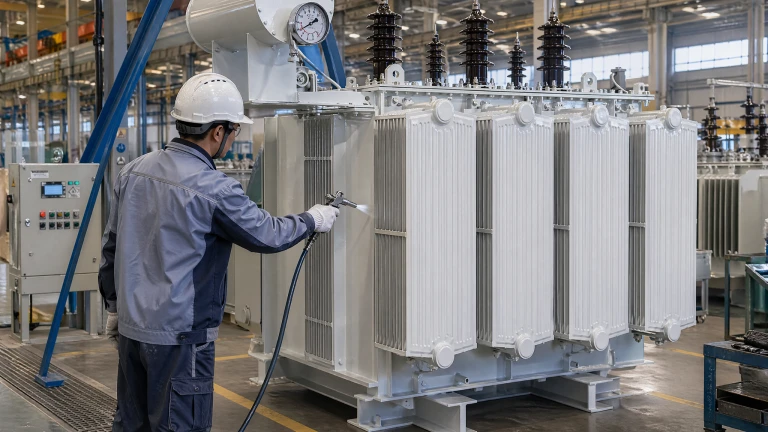
Oil Immersed Transformers Explained
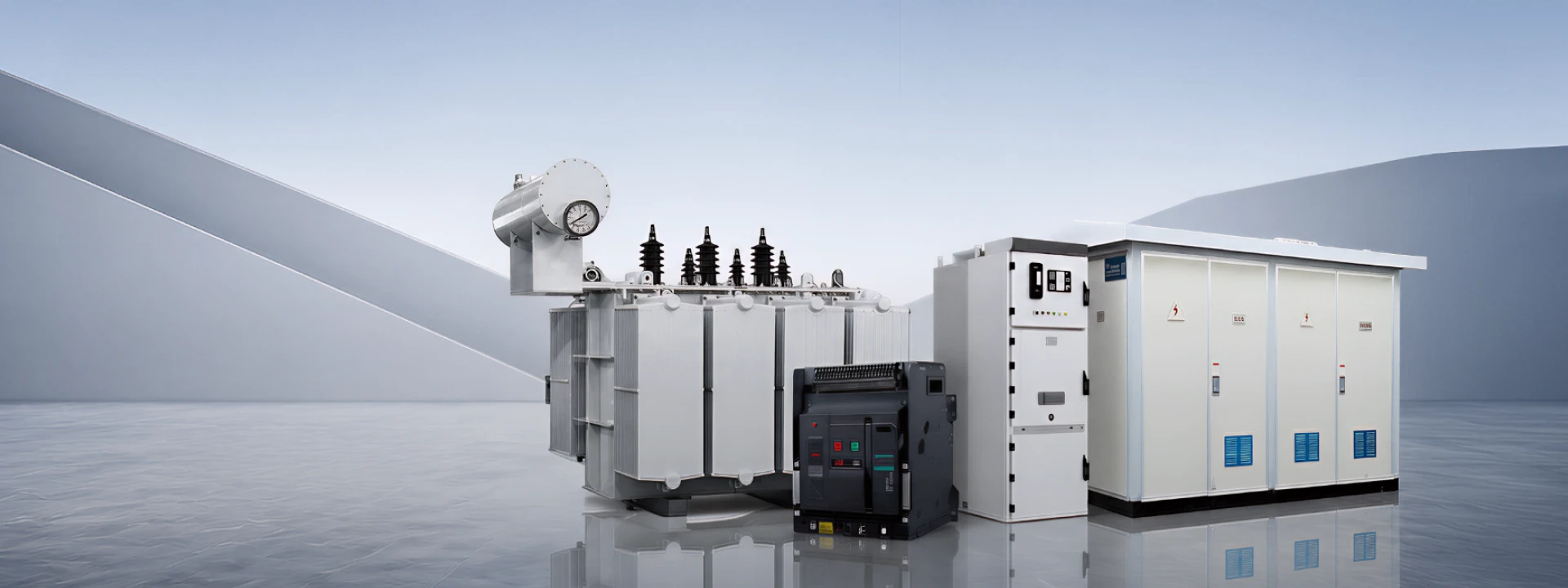
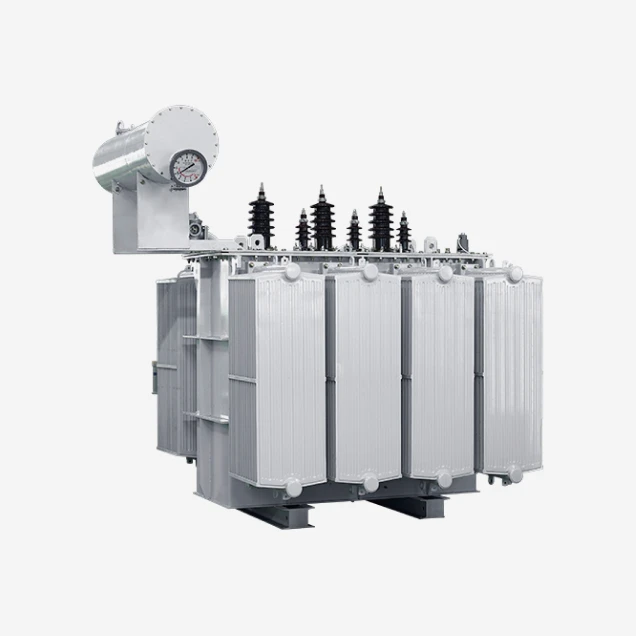
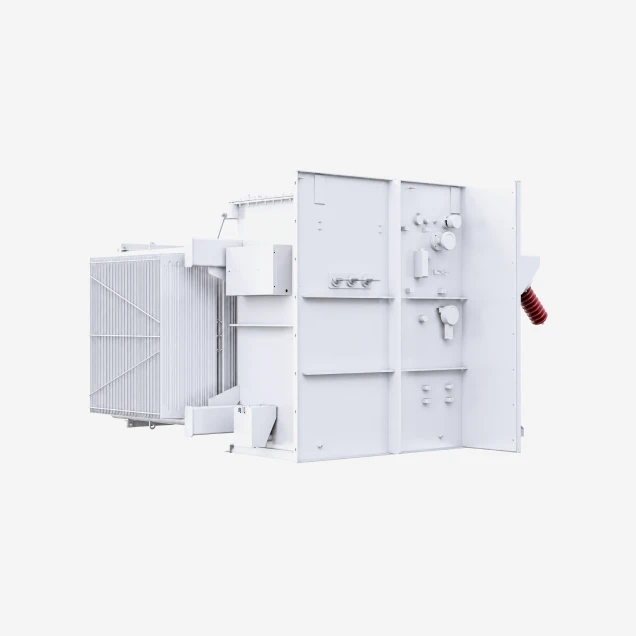
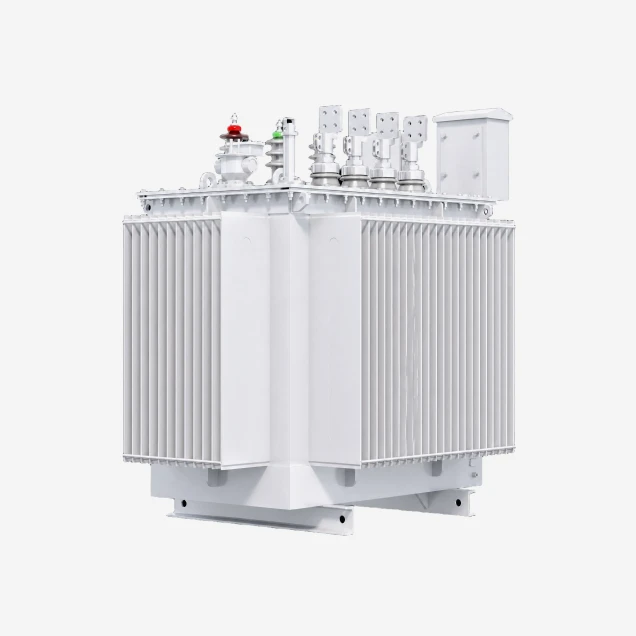
An oil immersed transformer is a transformer in which the magnetic core and the high- and low-voltage windings are submerged in insulating oil inside a sealed steel tank. The oil is the heart of the design: it insulates the live parts from each other and from the tank, and it carries the heat they generate out to the tank surface, where it passes to the surrounding air. Oil immersed transformers, also called oil-filled transformers, are the most widely used type for distribution and power across utilities, industry, and infrastructure.
What the Oil Does
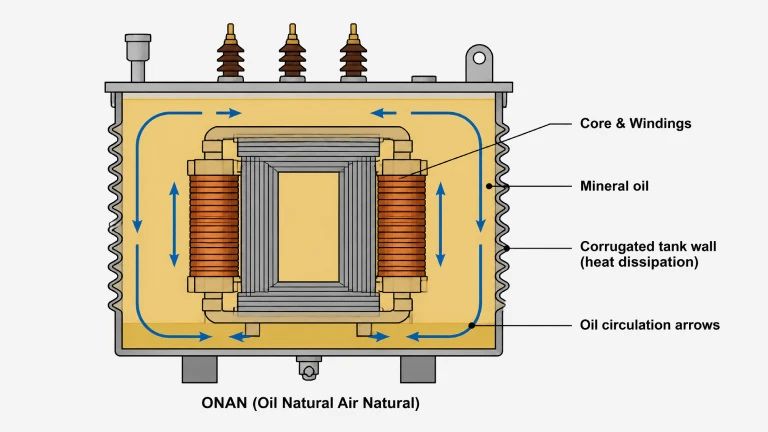
Insulating oil has two roles. As an insulator, it has a far higher dielectric strength than air, so the windings can sit close together and still hold off the voltage, which keeps the transformer compact. As a coolant, it absorbs heat from the core and copper and circulates, by natural convection, to the tank wall and the cooling fins or radiators. This dual role is why oil units run cooler and carry more overload than an equivalent air-cooled design. The oil is normally mineral oil; less-flammable ester fluids are available where fire risk must be reduced.
How It Works
The transformer steps voltage up or down by magnetic coupling between two windings on a shared core. In a distribution unit the high-voltage winding connects to the medium voltage grid, commonly 10 kV, 20 kV, or 35 kV, and the low-voltage winding delivers 400 V for local supply. As load current flows, the windings and core heat up; the oil carries that heat away so the insulation stays within its temperature limit. The whole core-and-coil assembly is dried under vacuum and the tank is vacuum-filled with oil to keep moisture out.
The S-Series: S11, S13, and S20
Chinese-standard oil immersed distribution transformers follow the S-series, where each generation lowers the loss. The S11 cut no-load loss by roughly 30% against the older S9 it replaced. The S13 lowers no-load loss again, and the S20 and S22 reach the top national efficiency grades. The choice is an economic one: a higher series costs more to buy but draws less standing loss every hour it is energised, which adds up on a transformer that runs for decades. We build S11, S13, and S20, plus the SZ series with an on-load tap changer for grids that regulate voltage under load.
Sealed, Conservator, and Corrugated Tanks
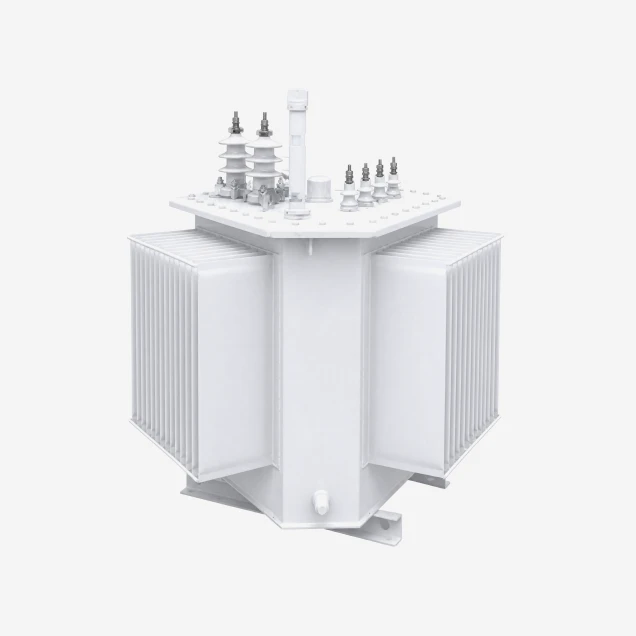
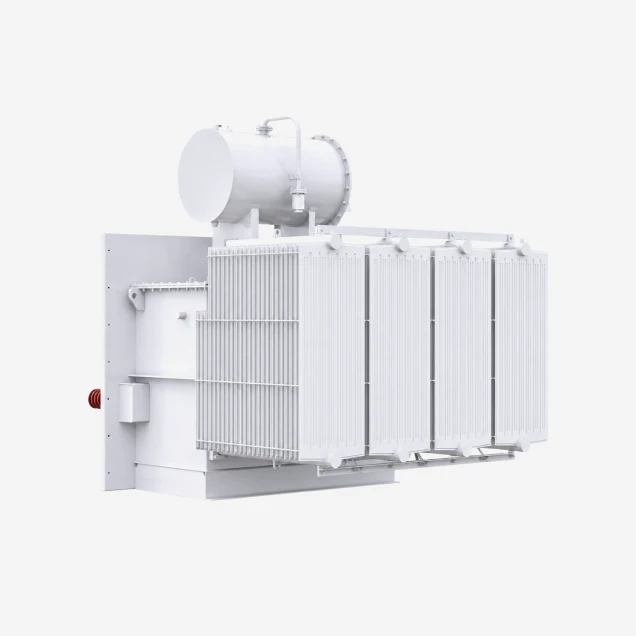
Oil expands and contracts with temperature, and the tank design handles that in one of two ways. A conservator type carries a small expansion tank above the main tank, breathing through a silica-gel breather that dries the incoming air. A hermetically sealed type has no conservator: the tank is fully sealed, and a corrugated tank wall, with flexible fins, expands and contracts with the oil. The sealed corrugated design is now standard for distribution because it needs no breather maintenance, keeps moisture out completely, and resists leaks, while the fins also serve as the cooling surface. Larger power transformers more often use a conservator with separate radiators.
Cooling: ONAN and Beyond
The standard cooling class for distribution oil transformers is ONAN, oil natural air natural: the oil circulates by convection and the air cools the tank without fans. Larger units can add fans (ONAF) or pumps and forced-oil circulation (OFAF) to push more heat out of the same tank when load is high. Most distribution ratings never need more than ONAN.
Oil Immersed vs Dry Type
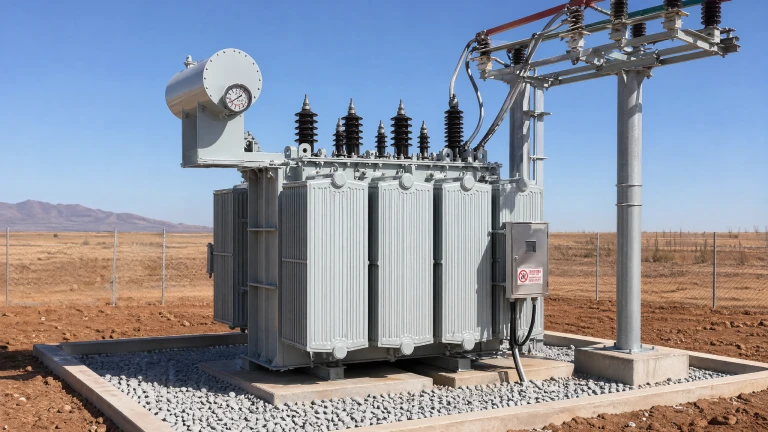
The main alternative is the dry-type transformer, which uses air and cast resin instead of oil. Oil immersed units cool better, so they carry more overload, reach higher voltages and ratings, suit outdoor substations, and cost less per kVA as size grows; the trade-off is the oil itself, which needs a bund or containment and adds a fire and environmental consideration. Dry-type transformers carry no oil, so they are the safer choice inside buildings, basements, and crowded plant rooms, at a higher price and with less overload headroom. The usual split is oil outdoors and dry-type indoors.
Amorphous Core for Lower Loss
For grids where transformers sit lightly loaded for long hours, the no-load loss, the power drawn just to keep the unit energised, dominates the energy bill. An amorphous transformer replaces the silicon-steel core with an amorphous metal core, which can cut no-load loss by around 70% against a standard unit. It costs more and is a little larger, but on a rural or standby network the saved standing loss pays it back. Amorphous cores are available in oil immersed form, so the cooling and sealing are the same as a standard oil unit.
Ratings, Sizes, and Standards
Our oil immersed distribution range covers 30 kVA up to 2500 kVA, the sizes that suit substations, industrial parks, commercial buildings, and renewable plants, with larger power transformers built to order. A common reference point, a 1000 kVA 11 kV to 400 V unit, sits comfortably in the middle of the distribution range. High-voltage classes are 10 kV, 20 kV, and 35 kV, with low voltage usually 400 V. Every unit is designed and tested to IEC 60076, equivalent to GB/T 6451-2015, with GB 1094.1-2013 for the assembly and GB 20052 for the energy-efficiency grade.