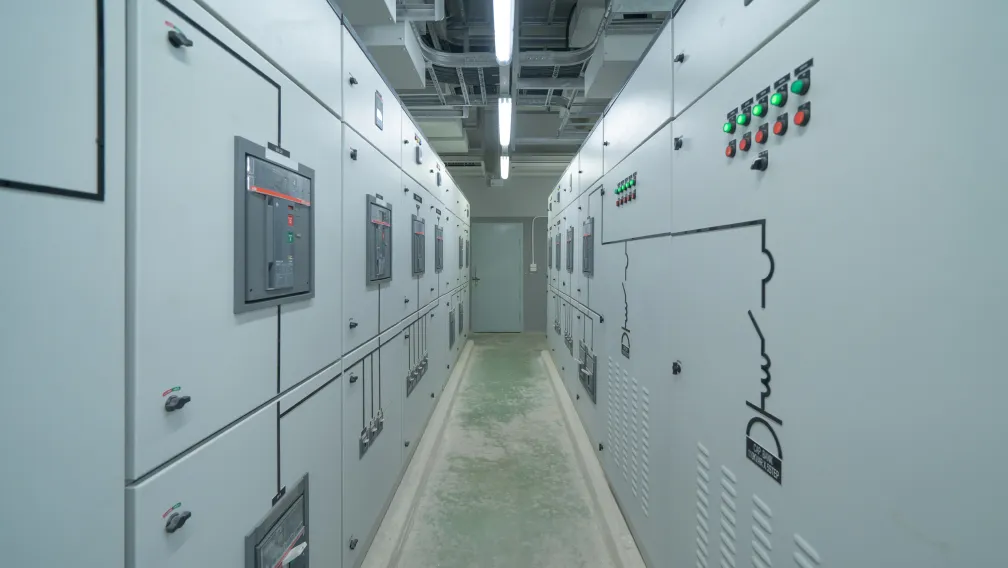


Producer price data released in early October 2026 confirms that the cost and availability of grid equipment remain the defining constraint on power infrastructure investment in North America. According to U.S. Bureau of Labor Statistics series tracked through July and August 2026, producer prices for power and distribution transformers stand 91.4 percent above January 2020 levels, while switchgear and switchboard apparatus prices are up 89.4 percent over the same period. Lead times tell the sharper story: large power transformers that required 12 to 18 months for delivery before 2021 now require 30 to 36 months, with extra-high-voltage units reaching 60 months. For utilities, data center developers, and EPC contractors scheduling 2027 and 2028 energization dates, procurement strategy now determines project feasibility more than any other variable.
Producer Prices Set New Records
The two BLS producer price series most relevant to substation procurement both reached record levels this summer. The transformer index (WPU117409) registered 381.8 in July 2026 against a January 2020 baseline of 199.5. The switchgear index (PCU335313335313) registered 411.5 in August 2026 against a baseline of 217.2. The year-on-year figures show the two product lines in different phases of the cycle: transformer prices rose 8.7 percent year-on-year in July, while switchgear prices accelerated to 13.3 percent in August, the fastest annual pace in the current cycle.
| Indicator | Latest reading | Change vs January 2020 |
| Transformer producer price index (Jul 2026) | 381.8 | +91.4% |
| Switchgear producer price index (Aug 2026) | 411.5 | +89.4% |
| Transformer prices, year-on-year | Jul 2026 | +8.7% |
| Switchgear prices, year-on-year | Aug 2026 | +13.3% |
The divergence matters for buyers. Transformer prices front-loaded their escalation in 2021 and 2022 and have since grown at single-digit annual rates. Switchgear prices reaccelerated through 2025 and 2026, which means contracts priced on older escalation assumptions now systematically underestimate the cost of the switching, protection, and control portion of a substation package.
Lead Times Are the Binding Constraint
Price inflation is manageable in a budget; delivery schedules are not. Large power transformers currently carry lead times of 30 to 36 months, roughly double the pre-2021 norm, and extra-high-voltage units extend to approximately 60 months. The bottleneck sits in components rather than final assembly. High-voltage bushings are quoted at around 130 weeks, on-load tap changers at 80 to 90 weeks, and both grain-oriented electrical steel and copper remain allocation-managed commodities.
Medium voltage equipment is in a better position, with medium voltage switchgear lead times surveyed at roughly 44 weeks, but that figure still exceeds the 20-to-26-week cycles that project schedules assumed five years ago. The practical consequence: a substation project that begins equipment specification today should treat 2028 as the earliest realistic energization window for any design dependent on large power transformers.
Import Dependence Continues to Deepen
Domestic supply gaps are being filled from overseas at an accelerating rate. U.S. imports of transformers rated above 100,000 kVA grew from 617 units valued at $0.62 billion in 2019 to 2,268 units valued at $2.77 billion in 2025, a 3.7-fold increase in unit volume. A supply chain gap analysis published by the National Laboratory of the Rockies in May 2026 found that more than 80 percent of U.S. large power transformer demand is met through imports. Export-qualified manufacturers with established type test records and logistics capability are absorbing a growing share of North American orders, and this channel will remain structurally important through the end of the decade regardless of announced domestic investment.
Announced Capacity Versus Delivered Capacity
The investment pipeline is substantial, but the commissioning dates are late. Hitachi Energy announced a $528 million transformer plant in Gallman, Mississippi on 15 September 2026, with production scheduled to begin in 2029. Its $457 million South Boston, Virginia expansion broke ground in June 2026 and is expected to add about 825 jobs. Siemens Energy committed $1 billion to U.S. manufacturing in February 2026, including a new switchgear plant in Mississippi, and Siemens with Jabil announced a $30 million switchgear expansion in Prince George County, Virginia, with production starting this fall. In April 2026, a White House determination under Section 303 of the Defense Production Act designated transformers, substations, high-voltage circuit breakers, protective relays, and electrical core steel as strategically essential, opening federal funding channels for domestic capacity.
The timing problem is consistent across all of these announcements: construction, equipment installation, workforce training, and customer qualification all precede output. Announced capacity is not delivered capacity, and no announced facility closes the supply gap before 2028 at the earliest.
What Is Driving the Price Structure
Three cost layers explain the current price structure. Materials account for the largest share: grain-oriented electrical steel and copper are both allocation-managed, and core steel was named explicitly in the April 2026 Defense Production Act determination because domestic output cannot meet transformer production requirements. Components form the second layer, with bushings and tap changers concentrated among a small number of specialized European and Asian suppliers whose own order books extend past 2028. Labor is the third layer; industry projections indicate that roughly half of the skilled utility electrician workforce in North America reaches retirement eligibility by 2027, which raises factory labor costs and extends commissioning timelines for new capacity.
These layers compound. A new transformer plant announced in 2026 must secure its own bushing and tap changer supply, hire and qualify a workforce, and complete customer witnessing and qualification programs before its output relieves the market. This is why announced investment, however large, does not translate into shorter lead times within the current procurement horizon.
Demand Shows No Sign of Easing
The demand side continues to build. The U.S. Energy Information Administration's September Short-Term Energy Outlook projects national electricity sales of 4,135 billion kWh in 2026, rising to 4,211 billion kWh in 2027, with data centers and manufacturing electrification as the principal growth drivers. Lawrence Berkeley National Laboratory's Speed to Power initiative, published in June 2026, catalogued more than 40 approaches to connecting large loads faster, a direct response to interconnection queues dominated by equipment availability rather than generation capacity.
Procurement Implications for 2027-2028 Projects
For buyers planning substation and distribution projects with 2027-2028 energization targets, the current market dictates four adjustments. First, place transformer orders before finalizing secondary design, since the transformer delivery date sets the critical path. Second, qualify at least one export-oriented supplier with documented IEC or IEEE type test records, because domestic slots are allocated years out. Third, evaluate factory-assembled compact substations that integrate the transformer, medium voltage switchgear, and low-voltage distribution into a single tested skid; a modular package compresses on-site schedules by months and reduces exposure to field labor shortages. Fourth, lock pricing with defined escalation clauses tied to published indices rather than open-ended material surcharges.
In summary, the October 2026 data describes a market where transformer and switchgear prices are roughly 90 percent above 2020 levels, large transformer lead times have doubled to 30-36 months, imports supply more than 80 percent of U.S. large transformer demand, and no announced domestic capacity arrives before 2028. Projects that treat equipment procurement as the first design task, rather than the last purchasing task, are the ones holding their schedules.
What to Watch This Month
The next BLS producer price release, covering September observations for both the transformer and switchgear series, was scheduled for 15 October 2026 and will show whether the switchgear price acceleration continued into the fourth quarter. Component lead times for bushings and tap changers, and the first funding commitments under the April Defense Production Act determination, are the other indicators that will shape 2027 procurement conditions.
Conclusion
The mid-October 2026 picture is one of sustained escalation: record producer prices, doubled lead times, deep import dependence, and domestic capacity that will not arrive in time to relieve the current cycle. Buyers who adjust procurement sequencing and qualify a broader supplier base will protect their project economics; those who wait for market normalization risk indefinite delay.
Elecstellar manufactures power transformers, medium and low voltage switchgear, and compact substations for export markets, with documented type test reports and delivery schedules calibrated to the current supply environment. To discuss equipment availability for your 2027-2028 pipeline, contact our project team.
-

STELLAR
Switchgear & Power Transformer ManufacturerSTELLAR designs and manufactures switchgear, transformers, and complete power distribution equipment from our China facility, serving utilities, contractors, and distributors in 50+ countries. Every technical article on this site is reviewed by our in-house engineers to ensure accuracy against IEC standards and real project practice.