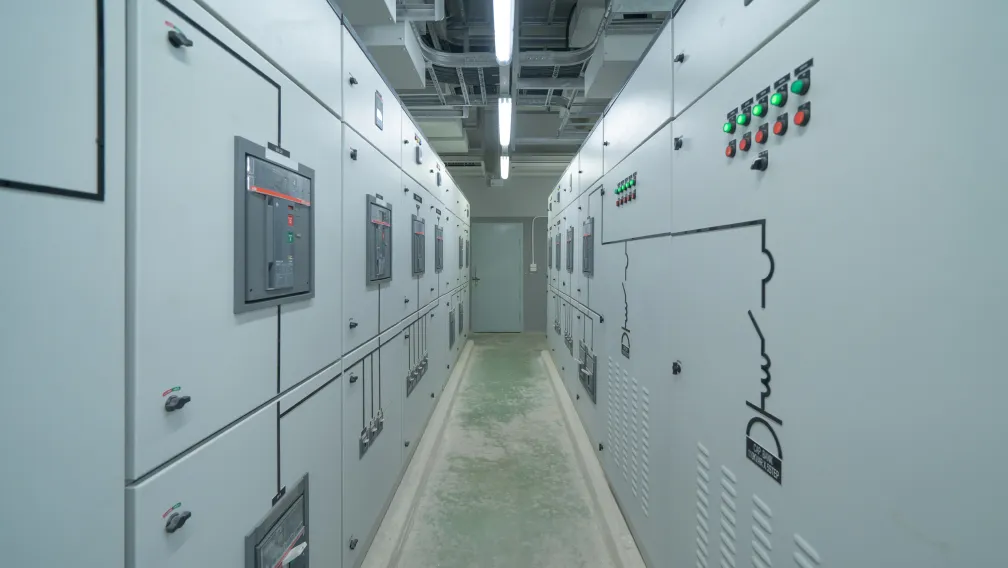


As the electrical manufacturing sector enters the fourth quarter of 2026, the procurement landscape is undergoing a massive structural realignment driven by stringent energy efficiency regulations and the rapid evolution of distribution architectures. Following the United States Department of Energy (DOE) finalization of its updated energy conservation standards for distribution transformers, with full compliance mandated by 2029, industry focus has shifted. While previous market discussions centered heavily on supply chain backlogs and lead times for physical electrical apparatus, the strategic priority has now pivoted toward material science, core efficiencies, and capitalized loss evaluations. Simultaneously, the nearly $20 billion medium voltage switchgear market is experiencing a parallel technological pivot, marked by the rising adoption of direct current (DC) architectures and hybrid solid-state fault clearing mechanisms. For EPC (Engineering, Procurement, and Construction) contractors, utility planners, and facility developers, understanding the intersection of these efficiency mandates and switching technologies is critical for navigating the next cycle of grid modernization.
Decoding the DOE 2029 Efficiency Mandates
The finalized DOE 2029 standards represent a fundamental tightening of allowable energy losses across the distribution grid. Designed to reduce long-term energy waste and alleviate base-load generation strain, the updated regulations require a reduction in total transformer losses between 10 percent and 30 percent compared to the previous 2016 baselines. For liquid-filled units, the mandated reductions vary by capacity, demanding a 5 percent loss reduction for three-phase units under 500 kVA and a 20 percent reduction for units exceeding 500 kVA. The requirements are even more aggressive for dry-type configurations, demanding up to a 30 percent reduction in low-voltage single-phase units and a 20 percent reduction across medium-voltage classes. Implementing these loss reductions across fleets of power transformers requires manufacturers to completely re-evaluate their core steel procurement strategies. The standards specifically target both no-load (core) losses, which occur continuously as long as the transformer is energized, and load (copper) losses, which fluctuate based on the electrical current drawn by the facility.
The Core Material Shift: Grain-Oriented Electrical Steel vs. Amorphous Metal
Achieving the new efficiency thresholds forces a re-evaluation of transformer core metallurgy. Historically, the industry has relied on Grain-Oriented Electrical Steel (GOES), a conventional silicon steel measuring roughly 230 microns in thickness. While standard GOES is cost-effective and structurally rigid, it exhibits higher hysteresis and eddy current losses. To meet the stringent 2029 targets, manufacturers are increasingly pivoting toward amorphous alloy transformers. Amorphous metal, technically a metallic glass, is manufactured by cooling molten alloy at extreme rates—approximately one million degrees per second. This rapid solidification prevents crystalline structures from forming, resulting in an ultra-thin ribbon approximately 25 microns thick. The absence of a crystalline lattice dramatically reduces resistance to magnetic flux reversal, allowing amorphous cores to cut no-load losses by up to 70 percent compared to standard silicon steel. While the final DOE ruling incorporated a compromise allowing approximately 75 percent of the market to continue using high-grade GOES to prevent a total supply chain collapse, amorphous steel has emerged as the definitive technical solution for high-efficiency compliance. The domestic supply chain for electrical steel remains constrained, and securing premium amorphous ribbons requires dedicated manufacturing capacity, prompting early strategic procurement by leading utility buyers.
Physical Design Impacts and Site Engineering Challenges
The transition to higher efficiency cores introduces immediate physical implications for substation design and site engineering. Achieving lower losses with GOES requires utilizing significantly more core material, larger conductor cross-sections, and enhanced winding geometries. Similarly, amorphous metal, while highly efficient, possesses a lower magnetic saturation point than conventional steel, necessitating physically larger core cross-sections to handle the same kVA rating. Consequently, 2029-compliant transformers will be larger and heavier than their 2016-compliant predecessors. For EPC contractors, this dimensional inflation demands proactive modifications to site infrastructure. Concrete mounting pads, structural steel supports, and containment vaults must be re-engineered to accommodate the increased footprint and operational weight. This is particularly challenging for indoor dry-type transformers deployed within existing commercial high-rises or densely packed data center environments, where facility ingress routes, door clearances, and elevator capacities strictly limit the maximum physical dimensions of replacement equipment.
Redefining Total Cost of Ownership (TCO) and Capitalized Cost Factors
As the capital expenditure (CapEx) for compliant transformers rises due to increased material costs and complex manufacturing processes, sophisticated buyers are shifting their procurement metrics toward Total Ownership Cost (TOC) evaluations. The TOC framework quantifies the financial impact of energy losses over the 25 to 30-year operational lifespan of the asset. The standard calculation is expressed as Purchase Price + (A × No-Load Loss) + (B × Load Loss), where the 'A' and 'B' factors represent capitalized cost multipliers measured in dollars per watt. The 'A' factor is typically much higher, reflecting the continuous nature of no-load losses regardless of facility utilization. For instance, a conventional 500 kVA transformer might cost $35,000, while its amorphous counterpart costs $45,000. If the amorphous unit saves $500 annually in avoided energy waste, the simple payback period is 20 years. However, when factoring in utility rate escalations and carbon taxation schemes over three decades, the breakeven point frequently compresses to under 12 years. Facilities with long periods of low utilization capture the fastest return on investment through aggressive no-load loss reduction.
Switchgear Evolution: DC Architectures and Solid-State Integration
In parallel with transformer efficiency advancements, the medium voltage switching sector is undergoing its own technical restructuring. While alternating current (AC) equipment maintains an overwhelming 85 percent market share, medium voltage direct current (MVDC) platforms are experiencing rapid adoption, projected to grow at a near 6 percent CAGR through the early 2030s. Because photovoltaic panels and lithium-ion batteries natively produce direct current, utilizing DC switchgear eliminates the need for multiple AC-to-DC inversion steps, cutting cooling loads and conversion losses by 10 to 15 percent. Currently, regulatory standards for DC switchgear lag behind AC equivalents, with IEEE and ANSI guidelines trailing behind established IEC 61660 directives for DC short-circuit testing. Despite this certification ambiguity, military microgrids and technology campuses are moving forward. Furthermore, the industry is accelerating the deployment of hybrid and solid-state circuit breakers. By integrating mechanical contacts with silicon-carbide semiconductor electronics, hybrid switchgear can clear massive fault currents in microseconds, drastically minimizing voltage sags for sensitive server loads. These innovations extend down the distribution chain, requiring highly coordinated low voltage switchgear to manage the intelligent, microsecond-level automated switching logic.
Modular Packaging and Substation Integration
Integrating larger, high-efficiency transformers with advanced solid-state switchgear presents complex packaging challenges for equipment manufacturers. The physical footprint of a substation is a critical constraint in urban infrastructure and renewable energy developments. To reconcile the larger dimensions of amorphous cores with strict site boundaries, engineering teams are completely redesigning the internal layouts of prefabricated compact substations. By utilizing high-density gas insulated switchgear on the primary side and optimizing the thermal ventilation pathways around the transformer compartment, manufacturers can maintain a standardized exterior enclosure while housing significantly heavier, compliant internal components. This factory-assembled approach allows developers to bypass the complex field integration of oversized components, transferring the mechanical coordination and dielectric testing processes directly to the manufacturing floor.
Conclusion
The convergence of the DOE 2029 energy efficiency standards and the rise of solid-state switching architectures marks a permanent technological shift in electrical distribution. Navigating this environment requires moving beyond traditional transactional procurement and adopting a highly technical, lifecycle-focused engineering approach. By evaluating capitalized loss factors, anticipating the physical footprint requirements of amorphous steel cores, and integrating microsecond-clearing switchgear, facility developers can ensure absolute compliance and operational stability. Elecstellar remains dedicated to engineering fully compliant, high-reliability distribution components, partnering closely with EPCs to deliver advanced renewable energy substation layouts optimized for the grid of the future.
-

STELLAR
Switchgear & Power Transformer ManufacturerSTELLAR designs and manufactures switchgear, transformers, and complete power distribution equipment from our China facility, serving utilities, contractors, and distributors in 50+ countries. Every technical article on this site is reviewed by our in-house engineers to ensure accuracy against IEC standards and real project practice.