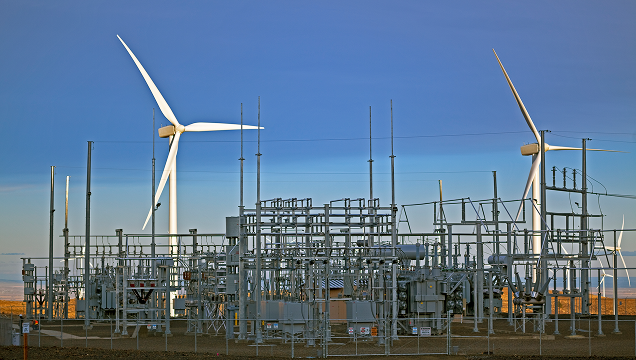


Substation equipment is the set of electrical apparatus that makes up a substation: the switchgear that switches and protects the circuits, the transformer that changes the voltage, the busbars that carry the power, and the instruments and protection that keep it all safe. A distribution substation takes power in at medium voltage, steps it down through a transformer, and sends it out to the local network, and each of those jobs is done by a specific piece of equipment. STELLAR builds the core of that equipment, the switchgear and the transformers, as a coordinated set.
What Is Substation Equipment?
A substation is a node in the power network where voltage is changed and power is switched, metered, and protected on its way from generation to the user. The equipment inside it is everything that does those jobs: the incoming and outgoing switchgear, the power or distribution transformer, the busbar system, the circuit breakers and disconnectors, the instrument transformers for metering and protection, and the surge arresters and earthing that keep faults and lightning under control. In a distribution substation the transformer is the largest single item, stepping 33 kV or 11 kV down to 400 V for local supply.
Primary and Secondary Equipment
Substation equipment splits into two groups. Primary equipment carries the main power: transformers, circuit breakers, disconnectors, busbars, instrument transformers, surge arresters, and any capacitors or reactors. Secondary equipment supports and protects it: the protection relays, the control and metering, and the DC battery supply that keeps protection working through an outage. STELLAR supplies the primary switching and transformation equipment, the switchgear and transformers, with the protection and metering built into the switchgear and configured to the scheme.
The Main Equipment of a Substation
Grouped by what it does, the core equipment of a distribution substation is as follows.
Transformers: Changing the Voltage
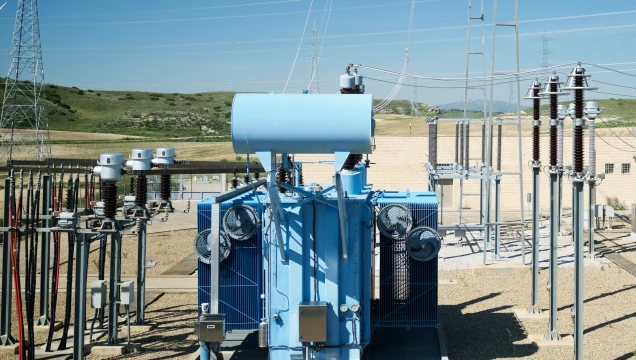
The transformer is the heart of the substation, stepping the medium voltage down to the low voltage the load uses. The common choices are the oil immersed transformer, which cools well and suits outdoor and utility duty, and the dry type transformer, which carries no oil and is the indoor, fire-safe option. For the lowest standing loss, an amorphous alloy transformer cuts no-load loss sharply on lightly loaded networks.
Switchgear: Switching and Protecting
Switchgear gathers the circuit breakers, disconnectors, busbars, and protection into one assembly that switches the circuits and clears faults. The medium voltage side uses medium voltage switchgear, and the low voltage side uses low voltage switchgear for the outgoing feeders. Inside the switchgear the breaker is usually a vacuum circuit breaker, which is clean, long-lived, and free of SF6.
Insulation: Air or Gas
The switchgear is built on one of two insulation platforms. Air insulated switchgear uses air clearances, which keeps it simple and low in cost where there is room and a clean environment. Gas insulated switchgear seals the live parts in SF6, so it fits a much smaller footprint and shrugs off pollution, which suits tight or harsh sites. For cable distribution rings, a ring main unit combines the ring switches and the transformer tee-off in one compact unit.
Busbars, Instrument Transformers, and Protection
Within the switchgear, busbars carry the current between the incoming and outgoing circuits, sized to the rated current and the fault level. Current and voltage transformers step the high values down to safe levels for the metering and the protection relays, and surge arresters divert lightning and switching overvoltages to earth. These items are built into the switchgear panels and set to the protection scheme on the single-line diagram.
AIS and GIS Substation Equipment
Substations are often described by the insulation their switchgear uses. Air-insulated equipment is the long-standing, lower-cost approach and still makes up most substations, but it needs space and a clean environment. Gas-insulated equipment seals the switching and busbar parts in SF6, cutting the footprint by a large margin and protecting the live parts from the environment, which is why it is chosen for urban, indoor, and polluted sites. The two can also be combined in a hybrid layout. For the complete picture of a sealed substation, see the gas insulated substation page.
Distribution and Power Substation Equipment
The equipment scales with the voltage. Distribution substation equipment handles the medium voltage levels that feed cities and plants, 11 kV, 20 kV, and 33 kV down to 400 V, with distribution transformers up to a few thousand kVA and medium voltage switchgear rated to 40.5 kV. Power and transmission substations work at higher voltages with much larger transformers and high-voltage switchgear. STELLAR focuses on the distribution and secondary side, the equipment that takes medium voltage and delivers usable low voltage, which is where most substations sit.
Packaged Substation Equipment
On a small or constrained site, the whole set of substation equipment can be supplied as one factory-built unit. A compact substation puts the medium voltage switchgear, the transformer, and the low voltage panel into a single weatherproof enclosure, assembled and type-tested before it ships. It is the fastest way to deploy a complete substation where there is no room or time to build one up from separate equipment.
Sourcing Substation Equipment from STELLAR
The advantage of buying the substation equipment as a set is coordination. When the switchgear and the transformers come from one base, they are engineered to work together, tested to the same standards, and delivered as one shipment with one point of accountability, which removes the interface gaps that come from sourcing each item separately. STELLAR builds the medium and low voltage switchgear, the oil, dry, and amorphous transformers, and the packaged compact substations to IEC standards, configured from your single-line diagram. Send us the voltage levels, the fault level, and the feeder schedule, and we will configure the equipment to match.
-

STELLAR
Switchgear & Power Transformer ManufacturerSTELLAR designs and manufactures switchgear, transformers, and complete power distribution equipment from our China facility, serving utilities, contractors, and distributors in 50+ countries. Every technical article on this site is reviewed by our in-house engineers to ensure accuracy against IEC standards and real project practice.