Vacuum Interrupter Technology
The switching core across all three product lines is the vacuum interrupter: a sealed ceramic or glass envelope maintaining internal pressure below 10⁻⁴ Pa. Inside, fixed and moving contacts made of copper-chromium alloy separate to interrupt current. When the contacts open under load, the arc forms from metal vapor evaporating off the contact surfaces. Because the mean free path of electrons in vacuum is extremely long, ionized particles cannot sustain the arc after current zero. The metal vapor diffuses rapidly and condenses on internal shields, restoring dielectric strength within microseconds.
This process occurs in milliseconds and produces no noise, gas discharge, or toxic by-products. Unlike SF₆ breakers that rely on gas cooling or oil breakers that decompose insulating fluid with every operation, vacuum interrupters maintain consistent performance over tens of thousands of cycles. The contact gap is small—typically 8–12mm for 12kV class—allowing compact pole assemblies and low-energy operating mechanisms.
Vacuum Circuit Breaker Design
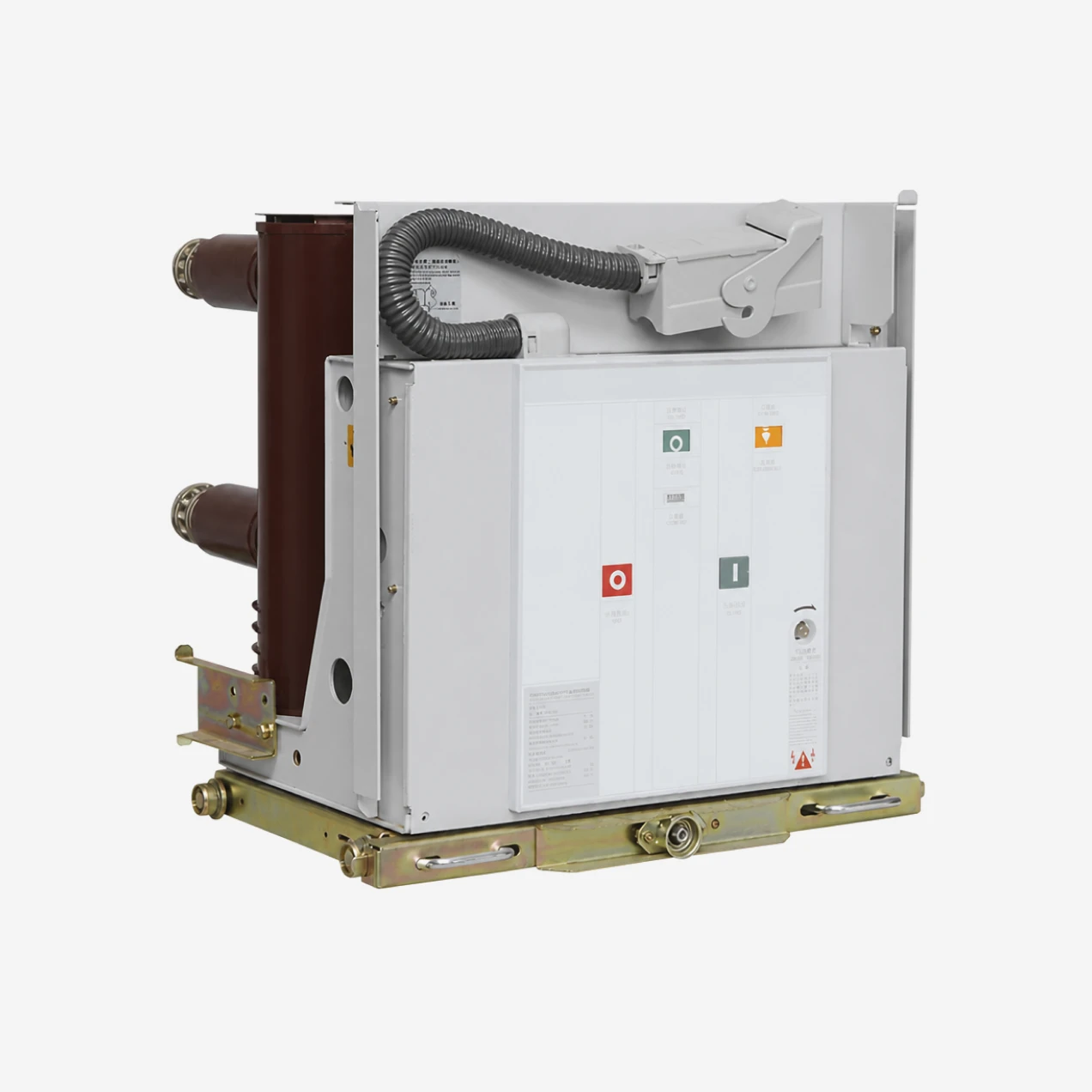
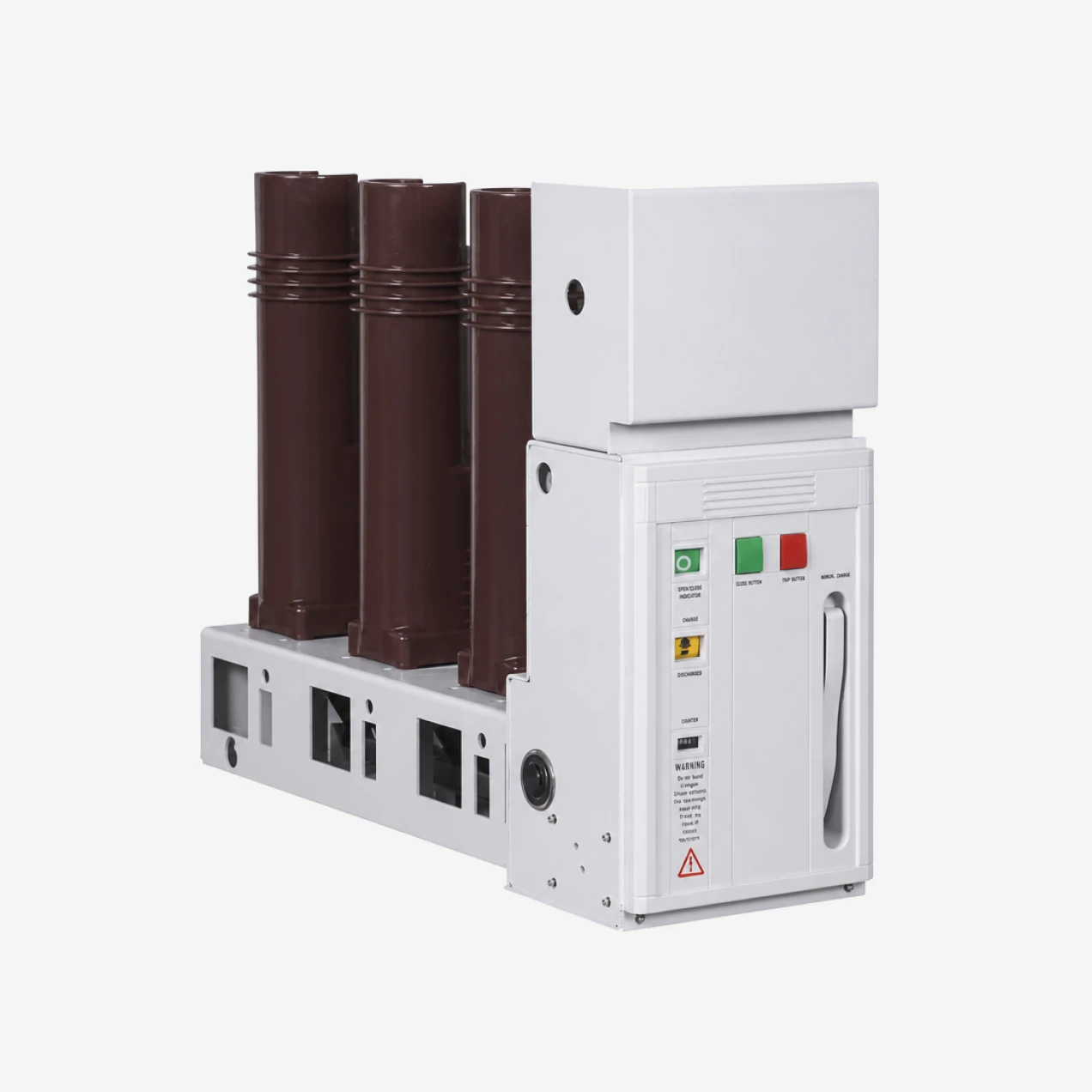
The circuit breaker line uses a spring-operated mechanism with independent closing and opening springs. Closing energy is stored manually or via a motor; opening energy is stored in the opening spring during the closing stroke. This dual-spring arrangement ensures fast and consistent fault interruption regardless of external power availability. The operating sequence conforms to IEC 62271-100: O – 0.3s – CO – 180s – CO.
Pole assemblies are available in insulating cylinder or solid embedded pole configurations. Embedded poles manufactured via APG (Automatic Pressure Gelation) technology encase the vacuum interrupter in epoxy resin, eliminating external flashover paths and protecting the interrupter from dust, humidity, and condensation. Phase distances of 150mm, 210mm, and 275mm accommodate different switchgear busbar layouts. Silver-plated copper terminals and contact arms ensure low contact resistance and long-term corrosion resistance.
Vacuum Contactor-Fuse Combination
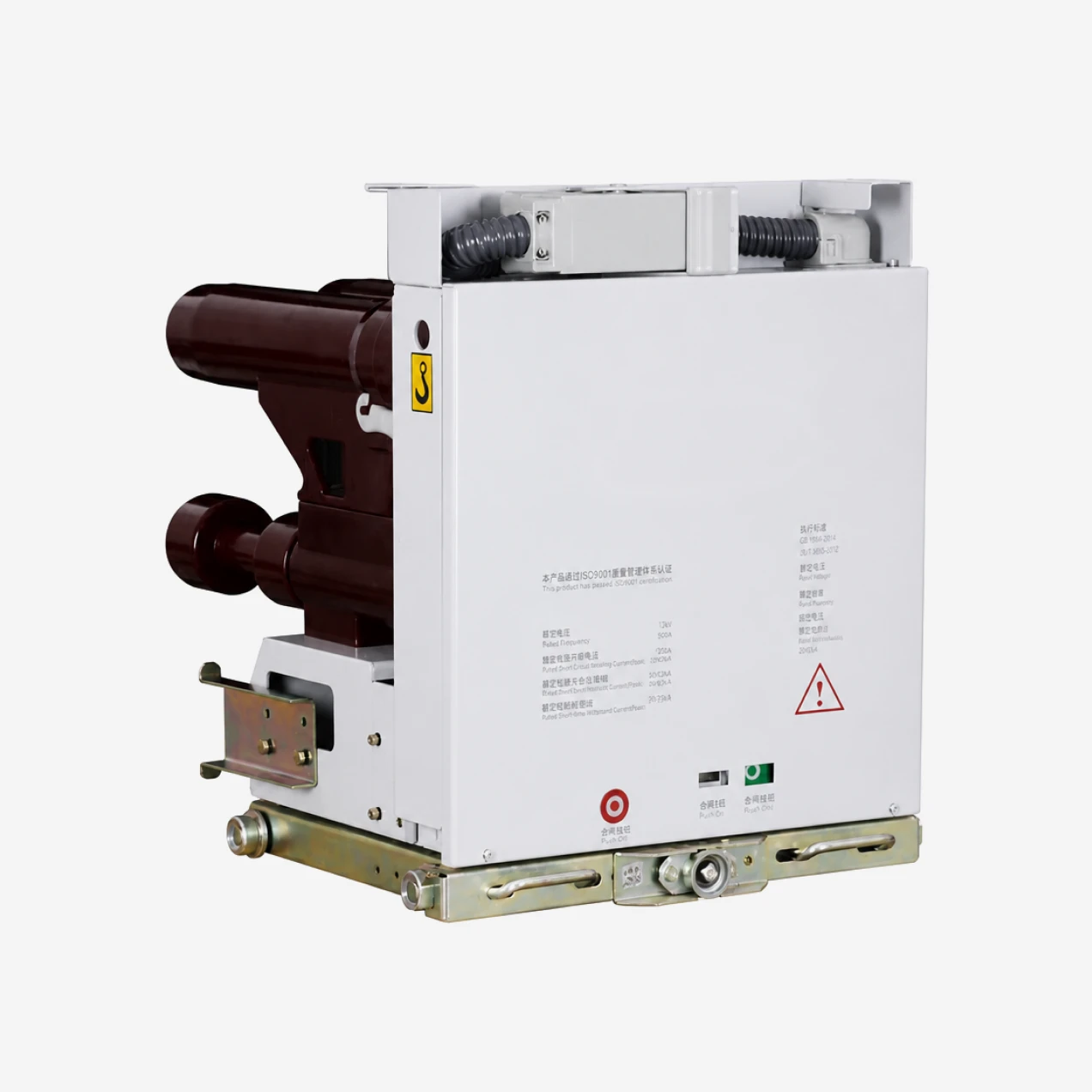
This line integrates a vacuum contactor with high-voltage current-limiting fuses in a single handcart assembly. The contactor handles normal load switching and frequent operations—up to 300 cycles per hour—while the fuse provides short-circuit protection up to 50kA. The electromagnetic operating mechanism uses a DC solenoid with mechanical latching, drawing power only during the brief closing or opening stroke. This minimizes control power consumption and heat generation in the switchgear cabinet.
The combination is designed for 650mm and 800mm center-mounted switchgear with full interchangeability against circuit breaker handcarts of identical dimensions. Applications include high-voltage motor starting, transformer energization, capacitor bank switching, and induction furnace control in metallurgical, petrochemical, and mining facilities. The fuse striker pin, when specified, provides mechanical or electrical indication for remote monitoring and three-phase trip interlocking.
Vacuum Load Break Switch-Fuse Combination
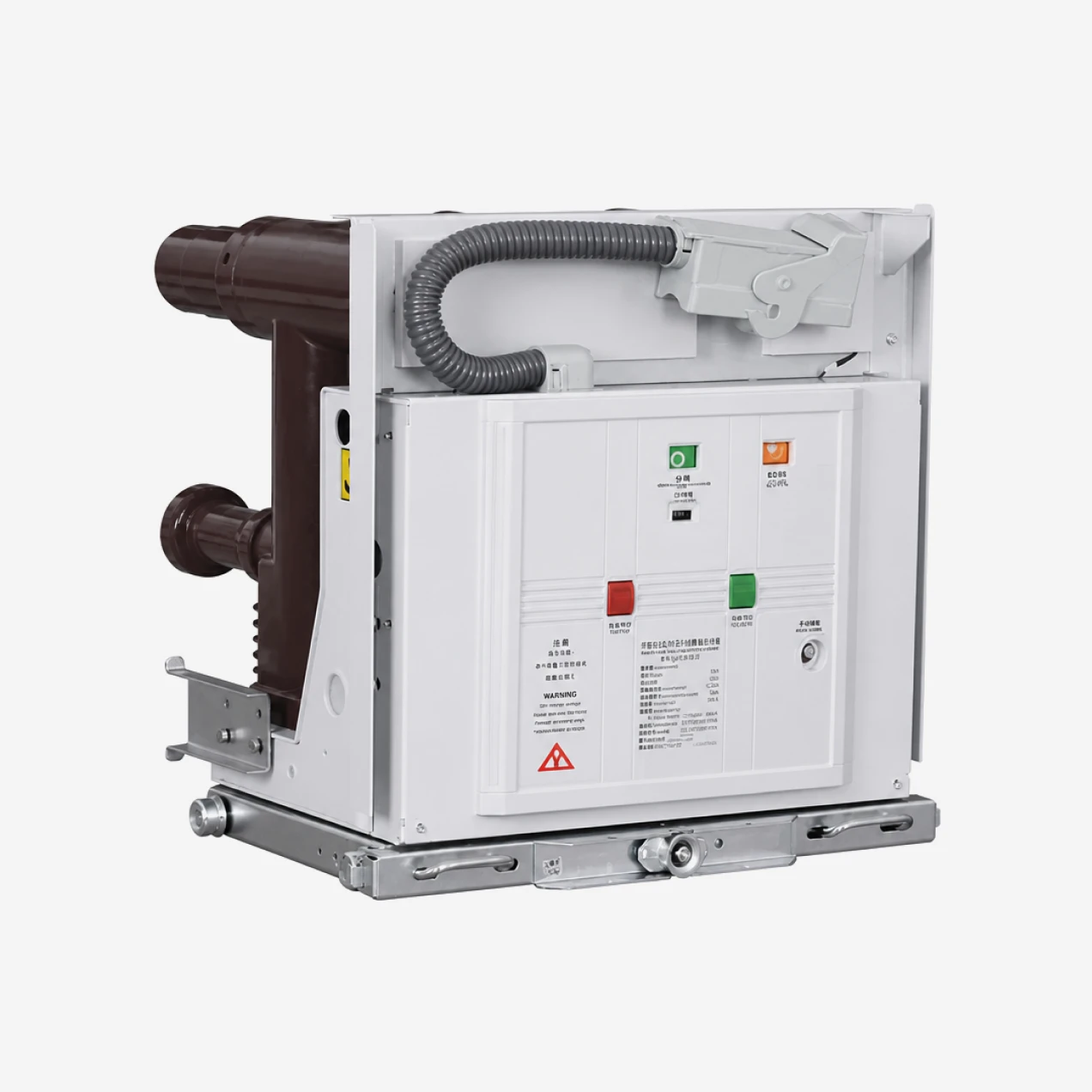
This unit combines a vacuum load break switch with a three-fuse protection assembly in a withdrawable handcart. The switch handles normal load currents up to 630A and can break transformer magnetizing currents and cable charging currents. The fuse assembly protects against short circuits up to 50kA. A built-in energy storage mechanism ensures rapid switch opening; visible mechanical and electrical indicators confirm fuse operation status.
The T-type solid-insulated pole design uses APG-molded epoxy to integrate the vacuum interrupter and terminals into a single structure. Top-mounted horizontal fuse arrangement optimizes electric field distribution inside the switchgear and simplifies site testing. Advanced interlock systems prevent closing on energized circuits when the fuses have operated, and mechanical latches block withdrawal of the handcart while the switch is closed. This combination is widely used for station transformer protection, grounding transformer switching, and compact substation feeder control.
Standards and Testing
All products are designed and tested in accordance with IEC 62271-100 (circuit breakers), IEC 60470 (contactors), IEC 62271-105 (switch-fuse combinations), and GB/T 11022 (common specifications). Routine testing includes vacuum integrity checks, contact resistance measurement, timing and travel verification, dielectric withstand tests, and mechanical endurance validation. Type tests cover short-circuit breaking and making, temperature rise, internal arc fault containment, and environmental conditioning.