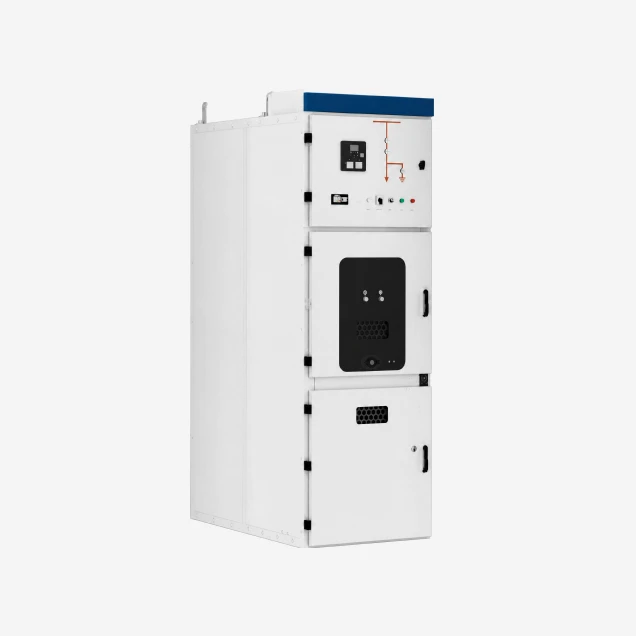
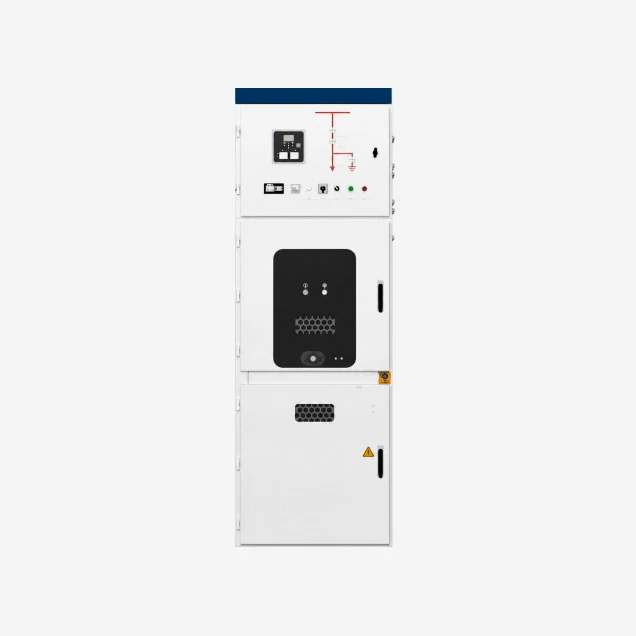
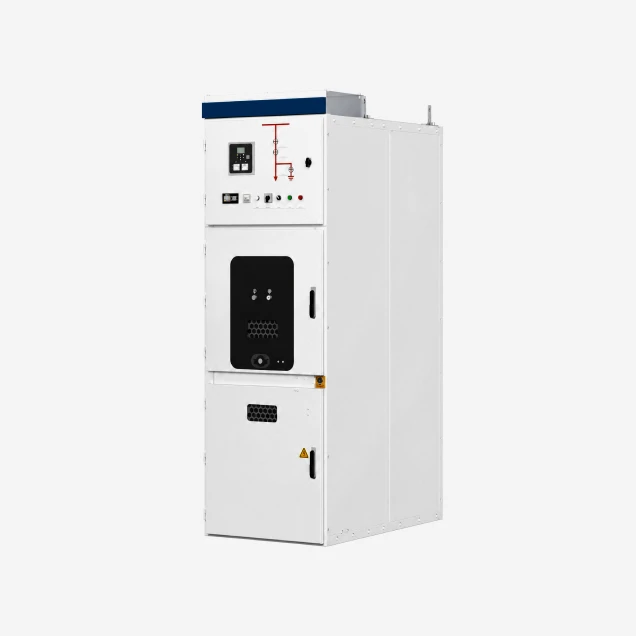
Up to 4500m Altitude — Purpose-Built for Plateau Installations
Standard medium voltage switchgear is qualified for installation at altitudes up to 2000m, at which point atmospheric pressure begins to drop the dielectric performance of air and larger clearances are required. Most enhanced designs extend qualification to 3000m or 3500m through composite insulation or oversized air clearances. This platform extends the 12 kV variant to 4500m — high enough for the plateau grid installations in western China (Tibet, Qinghai, western Sichuan, Yunnan highlands), the Andean highlands (Bolivia, Peru, northern Chile), the Ethiopian highlands and the Himalayan foothills. On those projects a standard-altitude design would need significant derating and site-specific engineering; this platform is qualified as-shipped.
Two Voltage Classes on One Physical Platform: 12 kV and 24 kV
The 12 kV and 24 kV variants share the same physical framework, so a project engineer specifying substations at both voltage levels can standardise on one platform. The 12 kV variant reaches 4000A busbar rating and internal arc fault withstand of 31.5 / 40 kA — enough headroom for large industrial incomers and heavy plateau grid feeders. The 24 kV variant reaches 2500A busbar rating and 31.5 kA internal arc — matched to the current levels typically seen at 20 – 24 kV distribution and DG interconnection substations. Cabinet dimensions and cable-entry geometry remain consistent across the two variants.
Ambient Range -15°C to +40°C with Cold-Resistant Materials
The switchgear is qualified for continuous operation from -15°C to +40°C ambient. Cold-resistant materials are applied at the parts most sensitive to low-temperature performance — polymer insulators, gaskets, cable-entry seals, mechanism lubricants — so operating reliability at -15°C matches the performance at +25°C. Coordinated features include an optimised ventilation pathway (to prevent condensation build-up), dedicated dehumidification measures (heaters or absorbent modules at the cabinet base), and seismic bracing for grid-connection substations in seismically-active plateau regions. Together these features make the platform suitable for the harshest combination of low temperature, humidity and vibration typically encountered at high-altitude sites.
Solid-Encapsulated Vacuum Circuit Breaker Poles — Maintenance-Free
The circuit breaker uses solid-encapsulated pole (SEP) technology: the vacuum interrupter, current connections and pole insulation are cast into a single epoxy resin body. Compared to conventional vacuum breakers with exposed poles, the encapsulated design eliminates the internal air path that collects dust, humidity and pollution over service years — so the pole assembly delivers maintenance-free operation across the design service life. Combined with high operating stability and strong interrupting capacity, this gives the substation operator a breaker platform that does not need periodic pole cleaning or dielectric re-testing.
Digital Layer: Remote Monitoring and Fault Diagnosis
The switchgear is instrumented for remote monitoring and fault diagnosis from the design stage. Sensor packages read breaker mechanical characteristics, cabinet temperature and switch position, and can be extended for partial discharge and gas density on request. Data streams to a central monitoring platform via standard fieldbus protocols. On high-altitude and remote installations — where a routine site visit means a long trip in demanding conditions — this converts scheduled inspection cycles into condition-based visits triggered only when data indicates an emerging issue.
Optional Next-Generation Digital Vacuum Circuit Breaker
The withdrawable trolley accepts an optional next-generation digital vacuum circuit breaker with integrated protection, metering and communication functions in the breaker itself. This shifts the intelligence layer down to the primary switching device, cutting the wiring count between the breaker and the low-voltage compartment and simplifying commissioning. On new substation projects where digital transformation is a primary specification driver, this option delivers a lower-integration-cost path than retrofit-style sensor packages on a conventional breaker.
GB and IEC Compliance for Domestic and International Deployment
The platform is designed and type-tested to both Chinese national standards (GB) and international IEC standards. This dual-standard compliance means the same physical product can ship to Chinese State Grid tenders and to international IEC-based tenders without a separate certification cycle for each destination. Full type-test reports are available under NDA before order placement, so procurement teams can verify compliance ahead of design approval.
Applications: Power Plants, Renewables, Infrastructure and Construction
Typical deployment segments include power plant auxiliary distribution (both thermal and hydro plants, many of which are at altitude), renewable energy plants (wind and PV farms, especially plateau wind and mountain-basin PV), infrastructure projects (rail electrification substations, tunnel systems, high-altitude highway supply) and construction projects (site power for major infrastructure builds in demanding environments). Any 12 – 24 kV project where site altitude, low temperature, or logistics for future maintenance is a hard specification constraint should default to this platform rather than a standard-altitude alternative.