Digital-Ready Modular Design
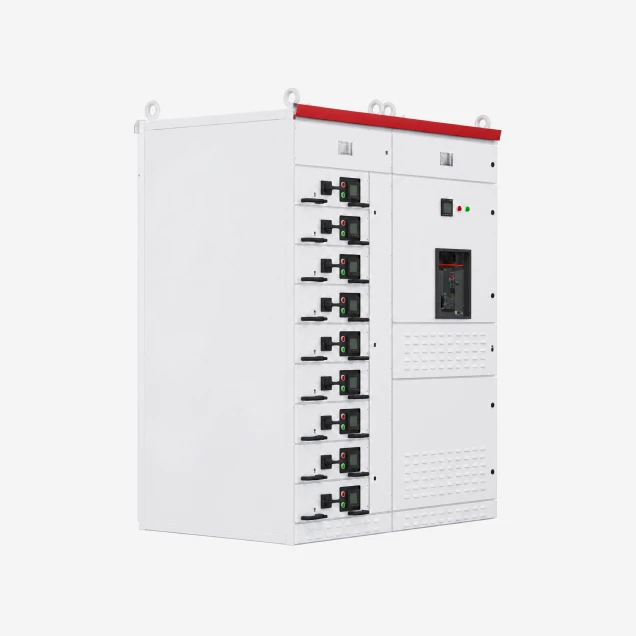
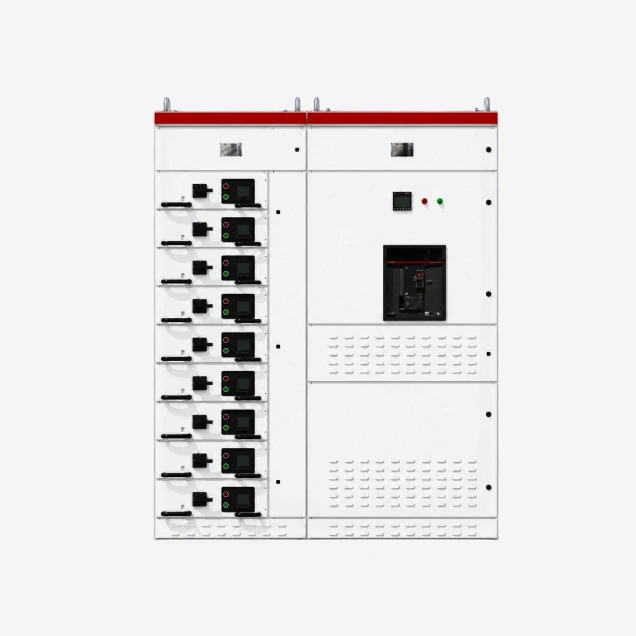
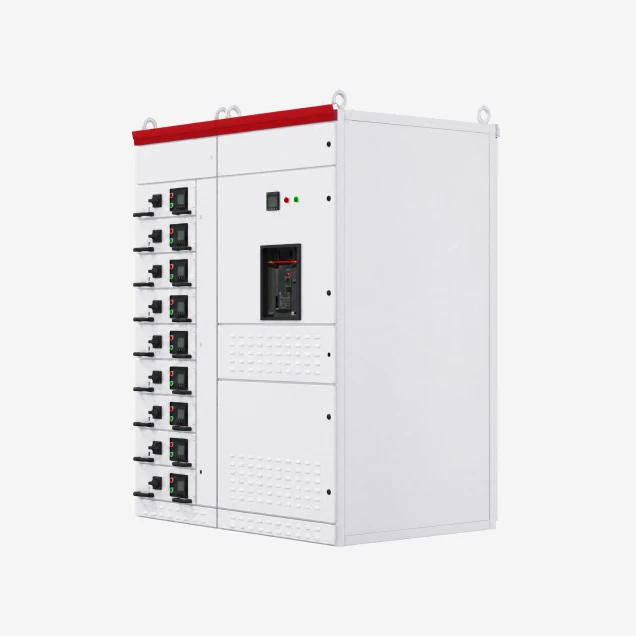
STELLAR digital low voltage switchgear is designed on a modular framework for both the electrical circuit and the mechanical enclosure. Every functional element — busbar, drawer body, shutter, instrument panel — is drawn from a standardised component catalogue rather than customised per project. On top of the mechanical modularity, a digital measurement and communication layer is designed into the assembly from the outset, not bolted on afterwards. Cabinet layouts stay compact, project engineers get a wider set of variants to specify, and the factory can build a heavily customised order within the same throughput window as a stock configuration.
Feeder-Level Digital Metering and Communication
Every feeder can be equipped with digital metering — current, voltage, energy, power factor, harmonics and breaker status. Data is routed through a standard fieldbus (Modbus RTU, Modbus TCP or Profibus DP) to a building management system, plant SCADA or utility DMS. Protocol, metering resolution and reporting interval are configured to the project requirement, so integration with the site's existing power monitoring platform does not need a gateway. For data center and hospital main-distribution roles, this delivers per-feeder power quality visibility with no added rack space.
E-Series Withdrawable Drawers — More Feeders Per Cabinet
Functional units are housed in fully withdrawable drawers using the European E-size profile: 8E/4, 8E/2, 8E, 16E and 24E. The 8E/4 and 8E/2 drawers occupy a quarter and half of a standard 8E slot, so small feeders such as single-motor starters and small breaker outgoers can share a single 8E slot. In practice this means two to four times more small feeders per cabinet compared with an M-series layout. On data center power rooms, PDU rooms and compact motor control centers, this translates directly into fewer cabinets for the same feeder count, and less floor area committed to switchgear.
Hand-Crank Three-Position Drawer Mechanism
Each drawer is driven in and out by a multi-turn hand-crank interlocking mechanism. The crank ratio breaks the primary contact insertion force down over dozens of turns, so the operator applies only a light continuous torque even on large drawers with heavy primary contacts. Three-position stopping — Connected, Test, Isolated — is mechanically indexed, visually displayed and lockable. Because the crank drives the drawer along guided rails, the drawer body cannot shift or tilt during operation, which eliminates the mis-alignment failures common with lever-operated designs.
Hinged Automatic Shutter, IP40 With Drawer Withdrawn
The vertical distribution busbar is protected by a hinged automatic shutter. When a drawer is withdrawn, the shutter closes automatically to IP40, preventing finger contact with the busbar even though it remains live. When the drawer returns to the Test or Connected position, the shutter opens automatically. A dedicated shutter key stored on the back of the drawer base allows deliberate manual opening for inspection and commissioning, but no unintended access is possible during a routine drawer swap.
Door-Mounted Instrument Panel with Hybrid Frame
The instrument panel uses a hybrid plastic-and-steel frame construction. Instruments and control devices are mounted on the steel backing sheet for structural rigidity, while the surrounding plastic frame provides the finished front face. The whole panel swings open on a hinge, which speeds up inspection and wiring work behind the panel. Custom cut-outs for HMIs, multi-function meters and pushbuttons can be added at the factory without cutting the cabinet door itself, so field modifications during commissioning are minimised.
Environmental Verification and Applications
The assembly is verified for design altitudes up to 4000m (with air-density derating applied), 192-hour salt spray exposure, Level 9 seismic loading and pollution degree 3 indoor environments. Typical applications include data center power rooms and PDU cabinets, hyperscale campus main distribution, compact urban substations, hospital main and sub-distribution boards, rail transit and metro traction auxiliaries, commercial high-rise electrical rooms and industrial process plants where digital monitoring and high circuit density are both project drivers.