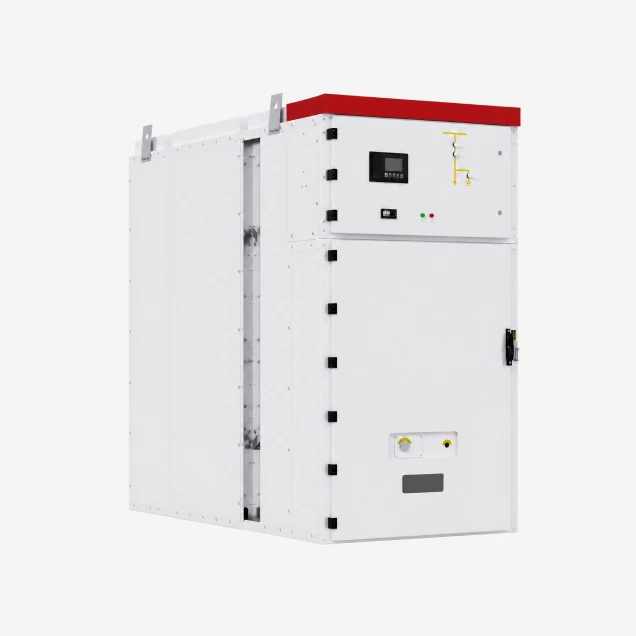
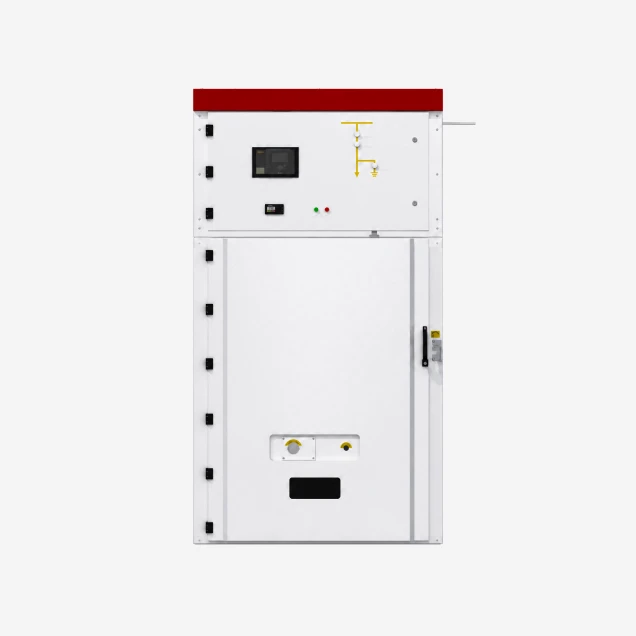
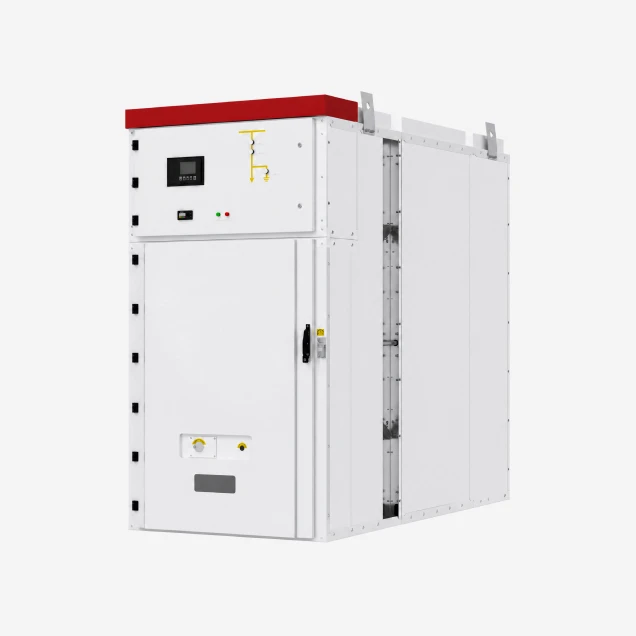
Metal-Clad Withdrawable Structure with Multi-Brand Breaker Compatibility
The primary breaker is housed in a withdrawable trolley (handcart) that racks between Connected, Test and Isolated positions. The trolley interface is compatible with vacuum circuit breakers from all leading international brands, so specifying engineers can match the project's preferred breaker brand without design rework at the panel level. Because the trolley geometry is standardised, a future breaker replacement or upgrade is a same-day activity, and shared trolley models across a fleet reduce the spares inventory carried by the site operator.
4000A Withdrawable Rating with 40kA Breaking Capacity
Busbar rated current runs from 630A to 4000A on the withdrawable trolley. Short-circuit breaking current reaches 40kA — enough headroom for grid-connection substations and heavy industrial incomers at the 40.5kV level. Short-time withstand tracks the breaking rating (25-40 kA / 4s) with a matching 63-100 kA peak withstand, so the platform sits at the fault-level range that a 35kV / 40.5kV incomer typically encounters.
IAC AFLR 31.5kA/1s Internal Arc Verified
The assembly is type-tested to internal arc classification IAC AFLR 31.5kA / 1 second, with accessibility verified on all sides — Front (A), Lateral (L) and Rear (R). Pressure-relief pathways vent expanding gases upward, keeping the operator zones at the front, sides and rear clear of blast during an internal arc fault. This is the standard against which operator safety is verified at the cabinet.
60Hz Qualification and German TÜV Certification
The assembly is separately qualified for 60Hz operation and has been certified by TÜV Germany. This makes the platform directly usable in 60Hz-region markets — North America, parts of South America, and the Philippines — without a bespoke re-test cycle for each project. TÜV certification also removes a step from the technical bid evaluation on European utility and industrial tenders.
State Grid Eighteen Measures Compliance — No Insulation Board, ≥300mm Clearances
The design complies with State Grid's Eighteen Measures on medium voltage switchgear: phase-to-phase and phase-to-earth air clearances meet or exceed 300mm, and no phenolic or resin insulation board is used inside the primary cabinet. Removing the in-cabinet insulation board eliminates a known ageing mechanism (surface tracking on solid insulation over 20+ years of service), while the enlarged air clearances handle voltage transients without dependence on solid insulation performance.
Low Partial Discharge (<3pc at 1.2Ur) and 3000m Altitude Capability
Partial discharge on internal insulation components stays below 3pc at 1.2 times rated voltage — an important quality signal on any 40.5kV design, because partial discharge is the first observable indicator of insulation degradation. Long creepage distance on the insulating supports qualifies the assembly for site altitudes up to 3000m without applying composite insulation. That means the same base design ships to plateau and mountainous substations without an environmental derating letter.
Wall-Through Bushing — Stainless Steel Fixing and Shielded Bushing Box for Corona Suppression
The wall-through bushing between compartments is fixed with a stainless steel plate rather than a coated carbon steel plate, and the bushing box carries a shielding conductor. The stainless fixing eliminates corrosion at the bushing mounting interface — a common source of long-term insulation degradation — while the shielding conductor suppresses corona discharge at the bushing box, both extending insulation life and reducing radio-frequency interference around the panel.
Digital Sensing Layer for Smart-Factory Applications
The switchgear is instrumented for smart-factory integration. Sensor packages perform digital data acquisition, state monitoring, temperature measurement, fault pre-warning and equipment health-state assessment. Rather than relying on time-based inspection cycles, the operations team gets condition-based signals — a rising temperature trend at a bus joint, a change in breaker mechanical timing, a drift in insulation partial discharge — so maintenance activity is targeted to the panels that actually need it.