Sealed Stainless Steel Gas Tank — Maintenance-Free by Design
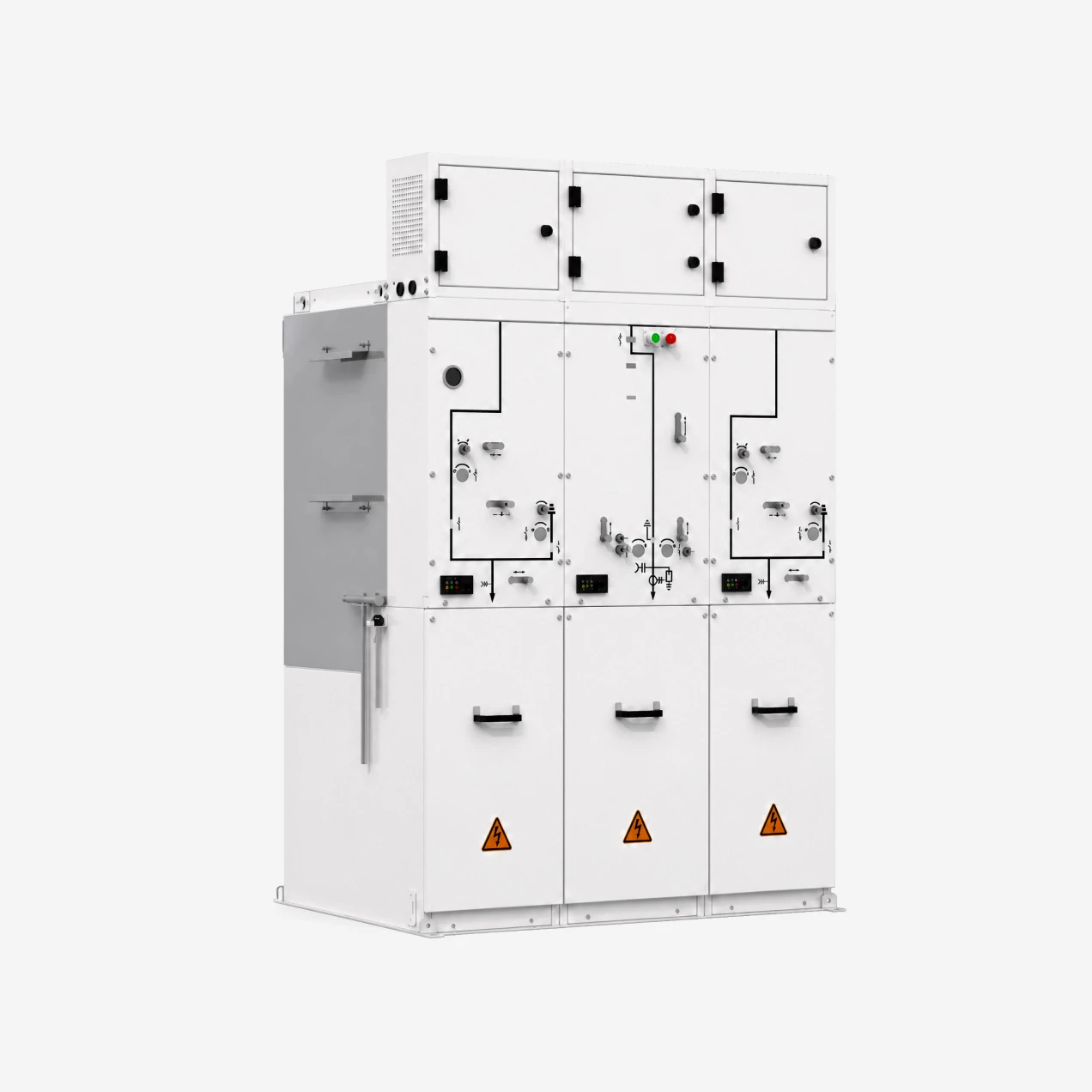
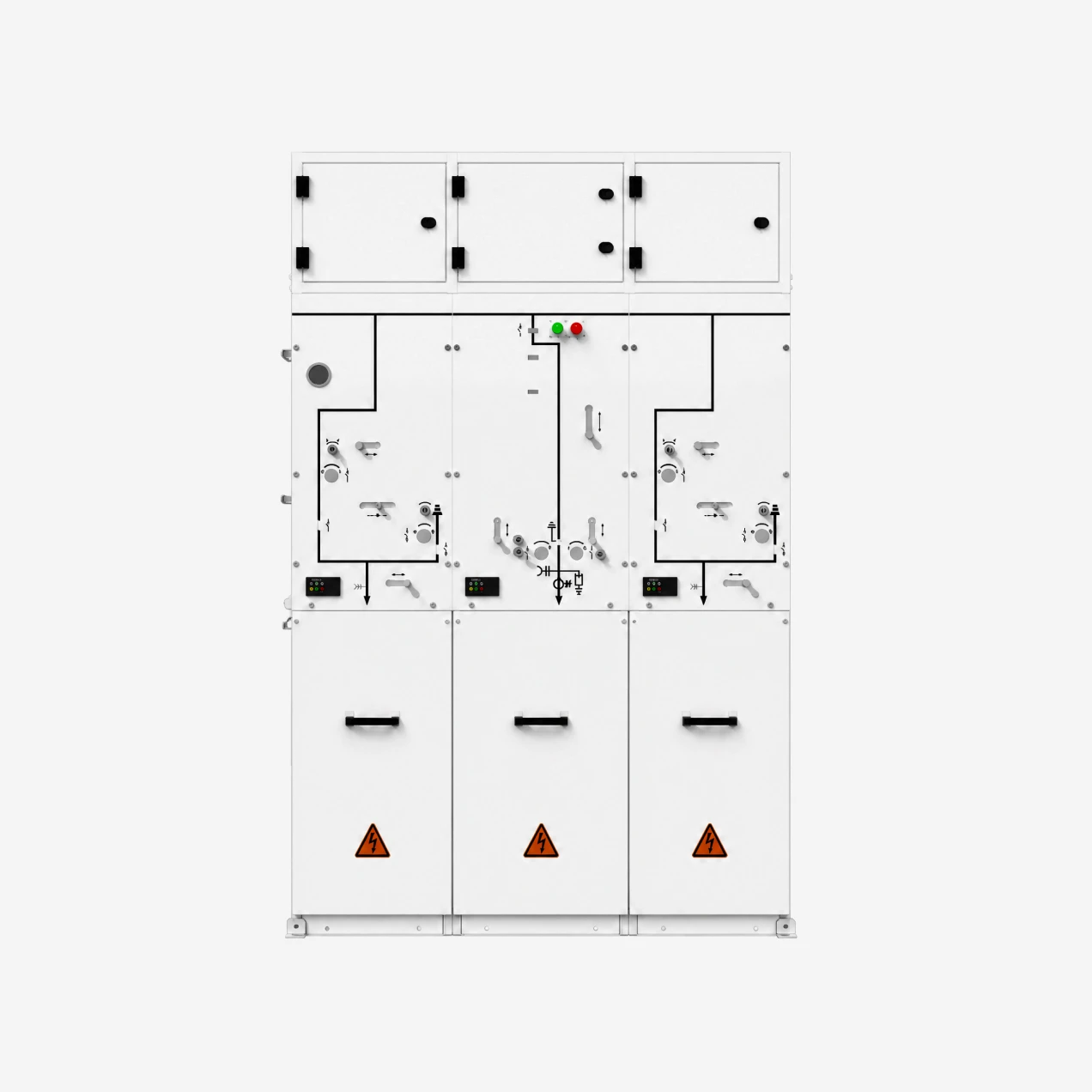
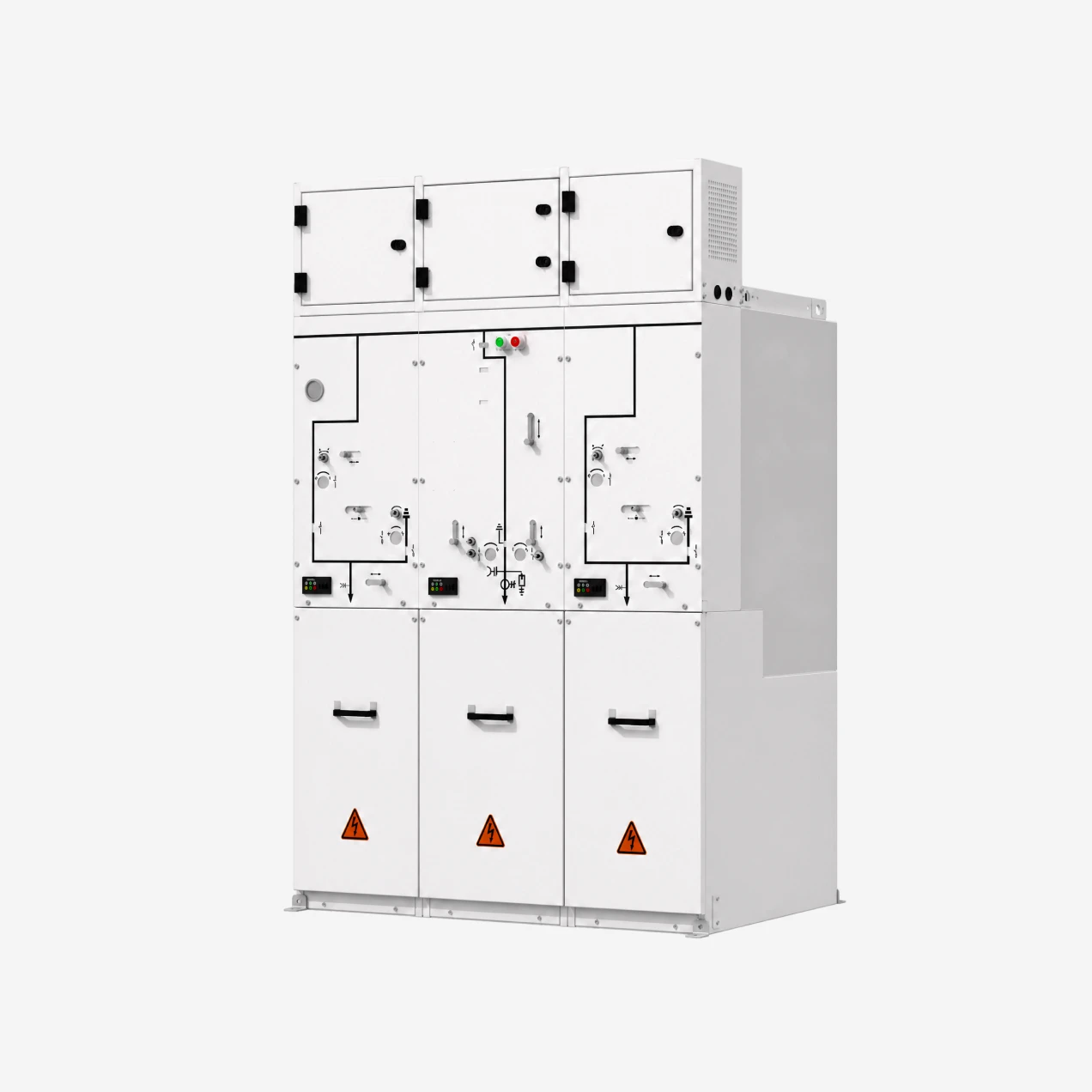
All primary live components and switching devices are sealed inside a stainless steel gas tank. Once the tank is closed and pressurised at the factory, the internal environment is fully isolated from outdoor air, dust, humidity, UV radiation and corrosive atmospheres. This is what makes the assembly a true maintenance-free medium voltage switchgear: no routine cabinet cleaning, no internal insulation inspection cycle, no annual dry-out procedure — the tank interior is not accessible in service and does not need to be.
3mm 304 Stainless Steel Tank, Laser-Welded on TRUMPF Systems
The gas tank is built from 3mm 304 stainless steel plate and welded on 3D five-axis laser welding systems imported from TRUMPF (Germany). Laser welding gives a narrow, uniform seam with much lower heat-affected zone distortion than conventional MIG or TIG welding, which directly translates into better long-term gas tightness. It also produces a smoother external appearance without post-grinding — an important detail when the panel is mounted in a visible location such as a wind turbine tower base.
Verified ≤0.01% Annual Gas Leakage with SEILER Helium Detection
Every finished tank is leak-tested on a SEILER (Germany) automatic helium leak detection line. Helium mass spectrometry can detect leak paths several orders of magnitude smaller than pressure-decay methods, so the ≤0.01% per year annual leakage rating is a verified factory number, not an extrapolation. The tank normal service life is more than 30 years — for the site operator, that is a switchgear installation designed to never need a gas top-up under normal operation.
Compact Modular Layout for Wind Turbine Towers and Prefabricated Substations
The physical footprint is optimised for confined installation environments. Typical deployment sites are the base of wind turbine towers, prefabricated (skid-mounted) substations, rooftop electrical rooms and any distribution room where floor and headroom are both tight. Non-extendable 2-unit and 3-unit combinations are offered so the exact number of feeders matches the enclosure size — no wasted cabinet volume, and no oversized factory footprint on a project where every square metre is engineered.
Fully-Insulated Solid Extension Busbar
Extension busbars use fully-insulated, screened solid busbar construction. All conductive surfaces are covered by a bonded insulation layer with an outer earthed screen, so the busbar surface can be safely touched during connection work and there is no exposed live metal even when the tank is open for line connection. This is what allows the switchgear to be commissioned safely in cramped installation spaces where the operator is close to the equipment.
Two-Direction Pressure Relief and AFLR 25kA/1s Internal Arc Classification
Pressure relief can be configured to vent upward or downward, so the venting path can be routed away from the operator regardless of installation orientation. In the event of an internal arc, the pressure relief flaps direct the expanding hot gases along the configured path while the tank contains the mechanical shock. The assembly is classified AFLR 25kA / 1s — accessibility on all sides (Front, Lateral, Rear) verified for a 25kA arc fault sustained for 1 second.
Reliable Operating Mechanism and Puffer Load-Break Switch
The operating mechanism is engineered for high cycle count: 5000 mechanical operations for load-break switches, 10000 for vacuum circuit breakers. The load-break switch itself is a puffer (compressed-air) type: when the contacts open, a piston compresses air through a nozzle onto the arc, driving arc interruption without SF6 chemistry. The load-break switch – fuse combination has a rated transfer current of 840A, so it can safely commutate feeder loads onto the fuse element at industrial-scale current levels.
Simple Interlocking and Automated Assembly for Product Consistency
A simple and effective mechanical interlock prevents the common mis-operations — closing an earthing switch onto a live circuit, or opening a compartment door while the busbar is live. Because the interlock is mechanical rather than software-mediated, it operates without control power and cannot be bypassed by procedure. Cabinets are built on a fully-automated assembly line, so unit-to-unit dimensional variance is measured, not estimated, giving predictable interchangeability across a delivered batch.
Global Certifications — ASTA, KEMA, IECEE
The switchgear holds ASTA, KEMA and IECEE certifications — the three certification bodies most commonly required on international tender documents in the utility, wind and industrial sectors. Test certificates are available under NDA for tender submission before order placement, so procurement teams can verify compliance ahead of design approval rather than after it.