search
Search

Search for equipment models, voltage specifications, or project references.


Home > KYN28-24 Metal-Clad Medium Voltage Switchgear (4000A, 40kA/4s Short-Time)

KYN28-24 Metal-Clad Medium Voltage Switchgear (4000A, 40kA/4s Short-Time)

KYN28-24 Metal-Clad Medium Voltage Switchgear (4000A, 40kA/4s Short-Time)

Product Description:
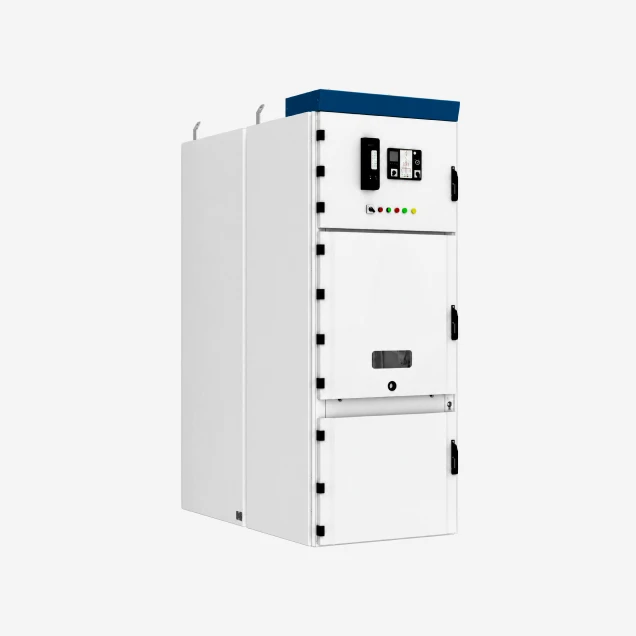
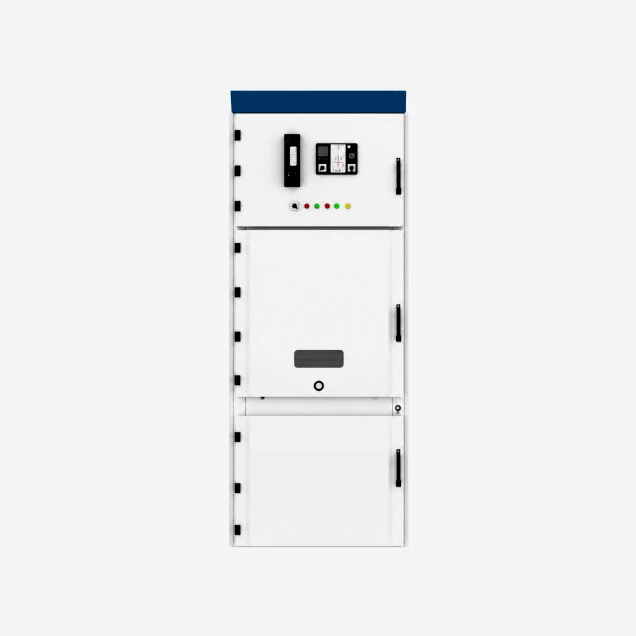
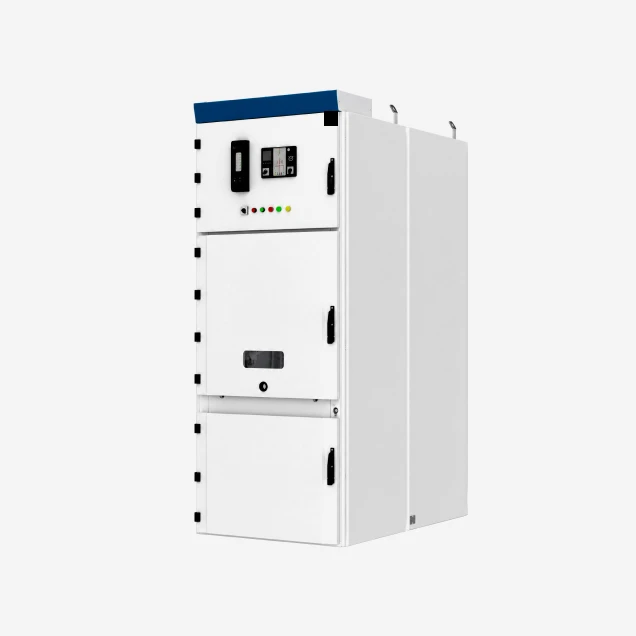
STELLAR 24kV metal-clad medium voltage switchgear is an armored metal-enclosed digital assembly designed for three-phase AC 50Hz, 24kV single-busbar and single-busbar sectioned power systems. It performs power reception, distribution, control, protection and monitoring at the primary distribution layer of substations, industrial plants, urban distribution networks and commercial buildings.
The assembly is fully internal-arc-resistant, verified up to 31.5kA for 1 second. Seismic performance reaches AG5 — the 9-degree earthquake intensity level under the Chinese national criteria — the highest standard-tier seismic rating for medium voltage switchgear. A comprehensive five-prevention interlock system ships as-standard. The pressure-relief pathway is engineered so internal arc containment and normal thermal ventilation are both satisfied at the same time. State Grid and China Southern Power Grid technical requirements are met, and the assembly holds full type-test certification from nationally authorised testing institutions.
Available Configurations
• Rated voltage: 24kV
• Rated frequency: 50 Hz
• Rated current (main and branch busbar): 4000 A
• Power frequency withstand: 65 kV / 1min
• Lightning impulse withstand: 125 kV
• Short-time withstand: 40 kA / 4s
• Peak withstand: 100 kA
• Internal arc fault withstand: 31.5 kA / 1s
• Enclosure IP41; mechanical impact IK10
• Modular breaker trolley — vacuum circuit breaker, vacuum contactor or load-break switch trolley selectable
• Motorised operating module for remote breaker and earthing switch drive
• Digital sensing package: breaker mechanical characteristics, one-key sequential control, visualised operation, temperature and partial discharge monitoring
• Dimensions (W × D × H, excluding doors): 1000 (1200) × 1800 (2200) × 2360 mm
• Weight: 800 – 1450 kg per panel
Ordering Information
Send us your single-line diagram, feeder ratings, incoming direction, seismic zone, short-circuit level at the busbar and any preferred main switching device (vacuum breaker, vacuum contactor, load-break switch trolley). Our engineering team will return a customised panel layout and general arrangement drawing for your approval before production.

Technial Parameters

TECHNICAL PARAMETERS (BASIC DATA)UNITSVALUE / PARAMETERS
Insulation voltagekV24
Rated power frequency withstand voltagekV / 1min65
Rated lightning impulse withstand voltagekV125
Rated frequencyHz50
Rated short-time withstand current (4s)kA40
Rated peak withstand currentkA100
Busbar rated currentA4000
Branch busbar rated currentA4000
Internal arc fault withstand currentkA / 1s31.5
IP rating/IP41
IK rating/IK10
Dimensions: Width × Depth × Height (excluding front and rear door dimensions)mm1000 (1200) × 1800 (2200) × 2360
Weightkg800 - 1450

Product Details

Armored Metal-Clad Enclosure — Fault Containment by Design

The cabinet is built as an armored metal-clad structure that physically isolates the busbar, circuit breaker and cable compartments from each other. If a fault develops inside one compartment, the metal partitions contain the event to that compartment and stop it propagating to adjacent cells. This is the same containment principle that lets the panel carry its 31.5kA / 1s internal arc rating, and it is why metal-clad construction remains the accepted standard for 24kV primary distribution rather than metal-enclosed alternatives.

Complete HV / LV Compartment Separation with Double-Sided Maintenance Access

The high-voltage compartments (busbar, breaker, cable) and the low-voltage control compartment are separated by grounded metal barriers with sealed cable transitions. Control wiring, protection relays and communication modules in the low-voltage compartment can be worked on with the panel energised on the HV side. The cabinet is dimensioned for double-sided access: cable terminations, current transformers and the low-voltage compartment are all reachable from the appropriate side without disturbing adjacent panels in a line-up, keeping the overall footprint compact.

4000A Main and Branch Busbar with 40kA / 4s Short-Time Withstand

The main busbar and the branch busbar are both rated at 4000A, so the assembly handles heavy incomer duty and heavy outgoing feeder duty in the same physical framework. Short-time withstand reaches 40kA for 4 seconds with a matching 100kA peak withstand — a fault-level headroom that suits 24kV grid-connection points and industrial plants where upstream protection may take several cycles to clear a bus fault.

IAC 31.5kA / 1s Internal Arc Resistance

The assembly is type-tested to internal arc classification 31.5kA / 1 second. Pressure-relief flaps direct expanding gases upward, away from the operator zones at the front, rear and sides of the panel. The ventilation pathway is co-designed with the pressure-relief path, so normal thermal air movement and abnormal arc pressure relief share a coordinated exhaust route — this is why the cabinet can carry a full internal arc rating without derating current under normal service.

AG5 (9-Degree) Seismic Rating — Highest Standard-Tier

Seismic performance reaches AG5, corresponding to the 9-degree earthquake intensity level under the Chinese national criteria. This is the highest standard seismic tier for medium voltage switchgear and applies to the most demanding seismic-zone installations without additional structural bracing at the switchgear line-up. Trolley interlocks, door hinges and busbar supports have all been type-tested to remain functional after the seismic loading test cycle.

Modular Breaker Trolley with Selectable Main Switching Device

The breaker truck follows a modular design with a simple, high-endurance mechanical structure. Main switching device is selectable per project: vacuum circuit breaker for standard duty, vacuum contactor for high-cycle motor switching duty, or load-break switch trolley for cable network switching. Because the trolley interface is standardised across the switching options, a future upgrade or type change (for example, replacing a contactor with a full breaker when load characteristics evolve) is a same-day activity.

Comprehensive Five-Prevention Interlocking with Closed-Door Operation

A complete mechanical and electrical five-prevention interlock is built into the breaker trolley, earthing switch, cable compartment door and shutter mechanism. Operators cannot rack the breaker in or out with the primary contacts closed, cannot close the earthing switch onto a live circuit, and cannot open the cable compartment door until the circuit is isolated and earthed. Full closed-door operation is supported, so routine switching does not require the operator to open any high-voltage compartment.

Motorised Operating Module for Remote Drive

A motorised operating module can be fitted to both the breaker trolley and the earthing switch. This allows remote or scheduled operation of the primary switching devices from the substation SCADA — useful in unmanned or lightly-attended substations, and essential in installations where operator access to the front of the panel is restricted (elevated platforms, hazardous-atmosphere rooms).

Full-Stack Digital Layer — Mechanical, Thermal and Partial Discharge Monitoring

The assembly is instrumented as a digital medium voltage switchgear from the design stage. The sensor stack covers breaker mechanical characteristics (travel curve, coil current, operating timing), one-key sequential control, visualised HMI operation, cabinet temperature monitoring, and partial discharge measurement. Data is automatically collected, stored and analysed, feeding into power monitoring, energy consumption management and equipment health-state assessment. The operations team gets condition-based signals — rising temperature at a bus joint, changed mechanical timing, drifting partial discharge — so maintenance activity is targeted to panels that actually need it, extending the useful service life of the installation.

FAQs

What voltage system and applications is this 24kV switchgear designed for?

The assembly is designed for three-phase AC 50Hz, 24kV single-busbar and single-busbar sectioned systems. Rated current on the main and branch busbar is 4000A, short-time withstand is 40kA / 4s and short-circuit peak withstand is 100kA. Typical applications include primary distribution substations at the 24kV level, industrial plant main distribution, urban distribution networks and commercial building main electrical rooms.

What does the AG5 (9-degree) seismic rating actually cover?

AG5 is the highest standard-tier seismic rating for medium voltage switchgear under the Chinese national criteria, corresponding to a 9-degree earthquake intensity level. The rating applies to the panel as a whole — trolley interlocks, door hinges, busbar supports, ventilation pathway and cable termination points all remain functional and mechanically intact after the seismic loading test cycle. Panels rated at AG5 install in the most demanding seismic-zone substations without additional structural bracing at the line-up.

Which main switching devices can be installed inside the trolley?

The trolley accepts a modular main switching device. Three standard options: vacuum circuit breaker for general distribution duty; vacuum contactor for high-cycle-count motor switching applications; and load-break switch trolley for cable network switching where a full breaker is not needed. Because the trolley interface is standardised across the three options, a future upgrade or type change is a same-day activity on installed panels — for example, replacing a contactor with a full breaker when load characteristics evolve.

How does the digital monitoring package extend switchgear service life?

The digital layer covers five monitored parameter families: breaker mechanical characteristics (travel curve, coil current, operating timing), one-key sequential control, visualised HMI operation, cabinet temperature and partial discharge. Data is automatically collected, stored and analysed. The operations team gets condition-based signals — a rising temperature trend at a bus joint, a drift in breaker mechanical timing, a slow rise in partial discharge — years before the underlying issue becomes a fault. Maintenance activity is targeted to the panels that actually need it, which is what extends useful service life.

What is the difference between this cabinet and a standard 24kV metal-enclosed panel?

The main differences are structural containment, current headroom, seismic rating and digital instrumentation. Metal-clad construction physically isolates the busbar, breaker and cable compartments, so a fault in one compartment cannot propagate to the others. The 4000A main and branch busbar rating and 40kA / 4s short-time withstand give more fault-level headroom than a standard 24kV metal-enclosed panel. AG5 seismic covers 9-degree earthquake intensity — the highest standard tier. The digital layer covers five monitored parameter families with automatic collection, storage and analysis.

What information do you need to prepare a customised offer?

Send us your single-line diagram, feeder ratings, target rated current and fault level at the busbar, incoming direction (cable or overhead), seismic zone, and any preferred main switching device (vacuum breaker, vacuum contactor, load-break switch trolley). Our engineers return a panel layout, general arrangement drawing and section view for your approval before we release the order to production.