search
Search

Search for equipment models, voltage specifications, or project references.


Home > GTXGN-12 Solid-Insulated Medium Voltage Switchgear (Compact SIS RMU)

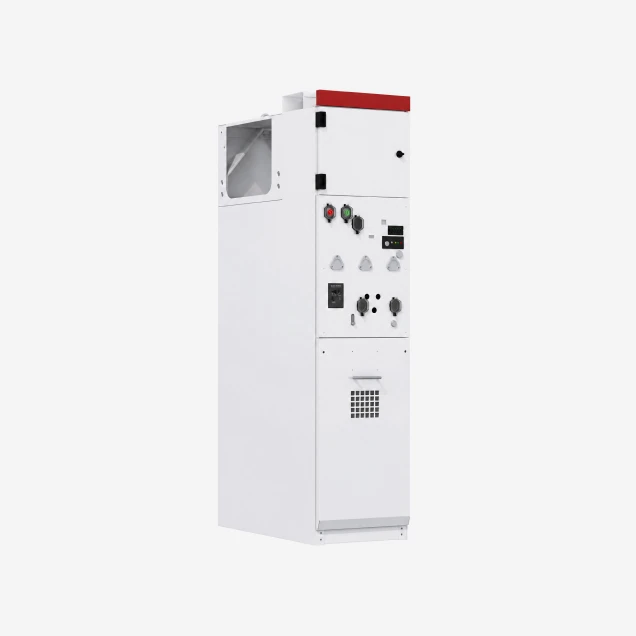
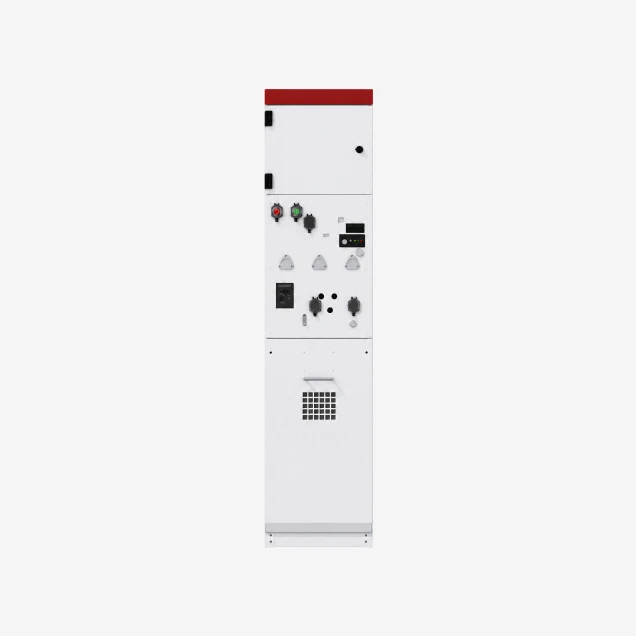
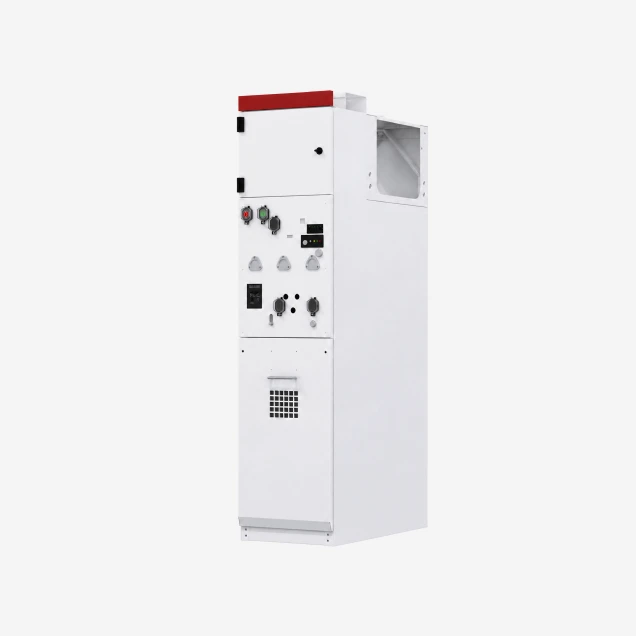
GTXGN-12 Solid-Insulated Medium Voltage Switchgear (Compact SIS RMU)

GTXGN-12 Solid-Insulated Medium Voltage Switchgear (Compact SIS RMU)

Product Description:
STELLAR 12kV solid-insulated medium voltage switchgear is a new-generation ring main unit (RMU) built around epoxy resin solid encapsulation of all live parts. Compact, maintenance-free, safe to operate and stable in performance, the platform is specifically engineered for distribution network construction and renovation projects that demand insulation performance independent of altitude, humidity or short-term water ingress — plateau substations, tropical humid installations, flood-risk areas, urban network green renovation, industrial substations, load-center stations, high-rise buildings, outdoor switching stations and prefabricated substations.
Live parts (main busbar and the moving parts of the high-voltage switching devices) are encapsulated inside an epoxy resin cast shell. Cable connections are made through DIN 47636-compliant bushings, mated with fully-insulated and screened separable cable connectors (elbow connectors). Main circuit protection reaches IP67 at the switching body, which means the switching mechanism inside the encapsulation withstands condensation and short-term water immersion — a real distinction versus air- or gas-insulated designs where similar exposure would compromise dielectric performance.
Available Configurations
• Rated voltage: 12kV
• Rated frequency: 50 Hz
• Rated current: 630 A
• Rated short-circuit breaking / short-time withstand: 20 kA (4s)
• Rated peak withstand: 50 kA
• Internal arc classification: AFLR 25kA / 1s
• Partial discharge at 14.4 kV: < 10 pC
• Enclosure IP4X; switching body IP67
• Insulation medium: epoxy resin (fully solid, zero gas)
• Cable bushings: DIN 47636 standard
• Fully-insulated and screened separable cable connectors (elbow connectors)
• Modular unit types: C (load-break switch), V (circuit breaker), S (bus-section switch), M (metering), PT (bus PT)
• Vacuum breaker / load-break switch mechanical endurance: 10 000 operations
Ordering Information
Send us your single-line diagram, unit combination requirement (C / V / S / M / PT mix), the site conditions (installation altitude, ambient humidity, flood-risk category), destination market and any specific certification requirements. Our engineering team will return a customised panel layout and general arrangement drawing for your approval before production.

Technial Parameters

TECHNICAL PARAMETERS (BASIC DATA)UNITSVALUE / PARAMETERS
Rated voltagekV12
Rated frequencyHz50
Rated currentA630
Rated power frequency withstand voltagekV42 / 48 (isolation gap)
Rated lightning impulse withstand voltagekV75 / 85 (isolation gap)
Partial discharge (at 14.4 kV)pC< 10
Mechanical enduranceoperations10 000
Rated short-circuit breaking currentkA20
Rated short-circuit making currentkA50
Main circuit rated short-time withstand currentkA / 4s20
Main circuit rated peak withstand currentkA50
Internal arc classification/AFLR, 25kA, 1s
Enclosure protection class/IP4X
Switching body protection class/IP67
Insulation medium/Epoxy resin (solid)
Cable bushing standard/DIN 47636

Product Details

Solid-Insulated Design — Epoxy-Encapsulated Live Parts

The primary conductive parts — main busbar and the moving parts of the high-voltage switching devices — are fully encapsulated inside an epoxy resin cast shell. There is no gas involved in the insulation function. Practically this means three things at once: there is no gas leakage pathway to monitor, the insulation performance is not tied to a gas pressure gauge, and the switchgear qualifies as a genuinely zero-GWP alternative to SF6-insulated designs. For utilities and industrial operators subject to the EU F-Gas Regulation (Regulation EU 2024/573), a solid-insulated RMU is an SF6-free replacement path — one of two mainstream SF6-alternative technologies in medium voltage, alongside gas-insulated dry-air designs.

IP67 Switching Body — Condensation and Short-Term Flood Resistance

The switching body itself is rated IP67. In practice this means the encapsulated switching mechanism can be exposed to condensation for extended periods without dielectric degradation, and can withstand short-term water immersion during an unexpected flood event without permanent damage to the insulation system. This is a real distinction versus air- or gas-insulated RMUs: in those designs, an outer IP4X cabinet is the only barrier between the outside environment and the live-parts compartment, so any water ingress into the cabinet compromises insulation performance immediately. Applications include below-grade substations in coastal cities, distribution stations in tropical humid climates and installations in flood-risk floodplains.

Altitude-Independent Performance for Plateau Installations

Gas-insulated switchgear derates with altitude, because atmospheric pressure drops and the dielectric strength of the gas insulation drops with it — typically the standard qualification runs to 2000m before a composite-insulation or oversized-clearance variant is required. Solid insulation does not have this problem: the epoxy resin encapsulation is a fixed-density solid, and its dielectric strength is independent of ambient pressure. That is why the platform is specifically flagged as suitable for high-altitude installations. On plateau grid projects in western China, the Andean highlands, the Himalayan foothills and other elevated regions, this saves the derating study, the enlarged cabinet footprint, and the specialised commissioning that gas-insulated alternatives require.

Low Partial Discharge (<10pC at 14.4kV) — Verified Insulation Quality

Partial discharge measured at 14.4 kV (1.2 times rated voltage) stays below 10 pC. Partial discharge is the first observable indicator of insulation degradation in a solid-insulated design — years before a full insulation failure — so a low pc reading on the factory acceptance test is a durable predictor of long service life. Below 10 pC is a strict internal quality gate; testing beyond the standard requirement filters out any epoxy castings with micro-voids or dielectric weaknesses before shipment.

Modular Unit Types — C / V / S / M / PT Any Combination

Five standard functional unit types are available: C-unit (load-break switch), V-unit (vacuum circuit breaker), S-unit (bus-section switch), M-unit (metering cabinet) and PT-unit (bus voltage transformer). Any combination can be assembled through the dedicated busbar connection pieces, so an RMU line-up matches the single-line diagram exactly rather than forcing the diagram to fit a fixed catalogue of pre-built units. This flexibility matches the diversity of Chinese distribution designs and is equally useful on export projects where the utility's connection standard differs from the manufacturer's default.

DIN 47636 Cable Bushings with Fully-Insulated Screened Connectors

Cable connections use DIN 47636-standard bushings, mated with fully-insulated and screened separable cable connectors — the elbow-connector interface familiar to European utilities and IEC-market EPCs. Every conductive surface at the cable interface is covered by an earthed screen, so the interface is safe to touch during connection work and there is no exposed live metal even when the panel is energised. This is an important detail on retrofit projects: existing cable stocks with standard elbow-connector terminations plug straight into the new RMU without adapter engineering.

AFLR 25kA / 1s Internal Arc Classification

Internal arc classification reaches AFLR 25kA / 1 second — with accessibility verified on Front (A), Lateral (L) and Rear (R) sides. This is a stricter rating than the AFLR 20kA / 0.5s common to compact gas-insulated RMU designs, and reflects the mechanical robustness of the epoxy-encapsulated construction under fault energy release. The solid-insulation geometry itself contains a large portion of the arc energy before pressure-relief mechanisms activate.

Applications: High-Altitude, Humid, Flood-Risk and Green Renovation

Four demand segments drive the case for a solid-insulated RMU. First, high-altitude installations where gas-insulated designs derate and become uneconomical — plateau grids, mining sites, mountain wind farms. Second, high-humidity and condensation-prone environments — coastal utilities, tropical cities, below-grade substations. Third, flood-risk zones where short-term water immersion is a credible scenario — river-basin cities, monsoon-region industrial sites. Fourth, utilities and grid operators pursuing SF6 phase-out under F-Gas Regulation, national green renovation programmes or corporate ESG commitments — solid-insulated equipment is one of the two mainstream SF6-free technologies (alongside dry-air/nitrogen-insulated designs), and typically the more compact choice at 12kV.

FAQs

What is a solid-insulated ring main unit and how does it compare with SF6 and dry-air designs?

A solid-insulated RMU encapsulates the primary live parts — main busbar and switching device moving parts — inside an epoxy resin cast shell. There is no insulating gas involved. Compared with an SF6-insulated design, it eliminates the fluorinated gas emission risk and the F-Gas Regulation compliance burden. Compared with a dry-air or nitrogen-insulated SF6-free design, it removes the need to monitor gas pressure and delivers insulation performance that is fully independent of altitude, humidity and short-term water ingress. In practice, gas-insulated designs are still competitive on cost at very high current ratings; solid-insulated designs win on environmental and installation-condition robustness for the 12kV / 630A distribution segment.

Why is solid-insulated switchgear preferred for high-altitude installations?

Gas-insulated switchgear derates with altitude because atmospheric pressure drops and the dielectric strength of the gas insulation drops with it. The standard qualification typically runs to 2000m before a composite-insulation or oversized-clearance variant is needed. Solid insulation does not have this problem — the epoxy resin encapsulation is a fixed-density solid and its dielectric strength is independent of ambient pressure. This makes the RMU a natural fit for plateau distribution grids, mountain wind farms, high-altitude mining projects and similar installations where a gas-insulated alternative would need derating, an oversized cabinet or specialised commissioning.

What does the IP67 switching body rating actually cover — including condensation and flood scenarios?

IP67 at the switching body means the encapsulated switching mechanism can be exposed to condensation for extended periods without dielectric degradation, and can withstand short-term water immersion during an unexpected flood event without permanent damage to the insulation system. In an air- or gas-insulated RMU, the outer IP4X cabinet is the only barrier between the outside environment and the live-parts compartment — any water ingress into the cabinet compromises insulation performance immediately. The solid-encapsulated switching body pushes that barrier all the way to the live conductors, which is a real difference in below-grade substations in coastal cities and in flood-risk floodplains.

What partial discharge level does the switchgear achieve and why does that matter?

Partial discharge measured at 14.4 kV (1.2 times rated voltage) stays below 10 pC. Partial discharge is the first observable indicator of insulation degradation in a solid-insulated design — years before a full insulation failure — so a low pc reading on the factory acceptance test is a durable predictor of long service life. Testing at 14.4 kV rather than the rated 12 kV filters out any epoxy castings with micro-voids or dielectric weaknesses before shipment, and the 10 pC ceiling is a strict internal quality gate.

Which functional units can be combined in the modular architecture?

Five standard functional unit types are available: C-unit (load-break switch), V-unit (vacuum circuit breaker), S-unit (bus-section switch), M-unit (metering cabinet) and PT-unit (bus voltage transformer). Any combination can be assembled through dedicated busbar connection pieces, so an RMU line-up matches your single-line diagram exactly. Fully-insulated screened separable cable connectors (DIN 47636 elbow-connector interface) at each cable termination point make the cable interface safe to touch during connection work.

What input do you need to prepare a customised offer?

Send us your single-line diagram with the required unit combination (C / V / S / M / PT mix), the site conditions (installation altitude, ambient humidity range, flood-risk category), incoming direction, destination market and any specific certification requirements. Our engineers return a panel layout, general arrangement drawing and section view for your approval before we release the order to production.