search
Search

Search for equipment models, voltage specifications, or project references.


Home > FN16 12/24kV 630A Indoor Vacuum Load Break Switch and Fuse Combination

FN16 12/24kV 630A Indoor Vacuum Load Break Switch and Fuse Combination

FN16 12/24kV 630A Indoor Vacuum Load Break Switch and Fuse Combination

Product Description

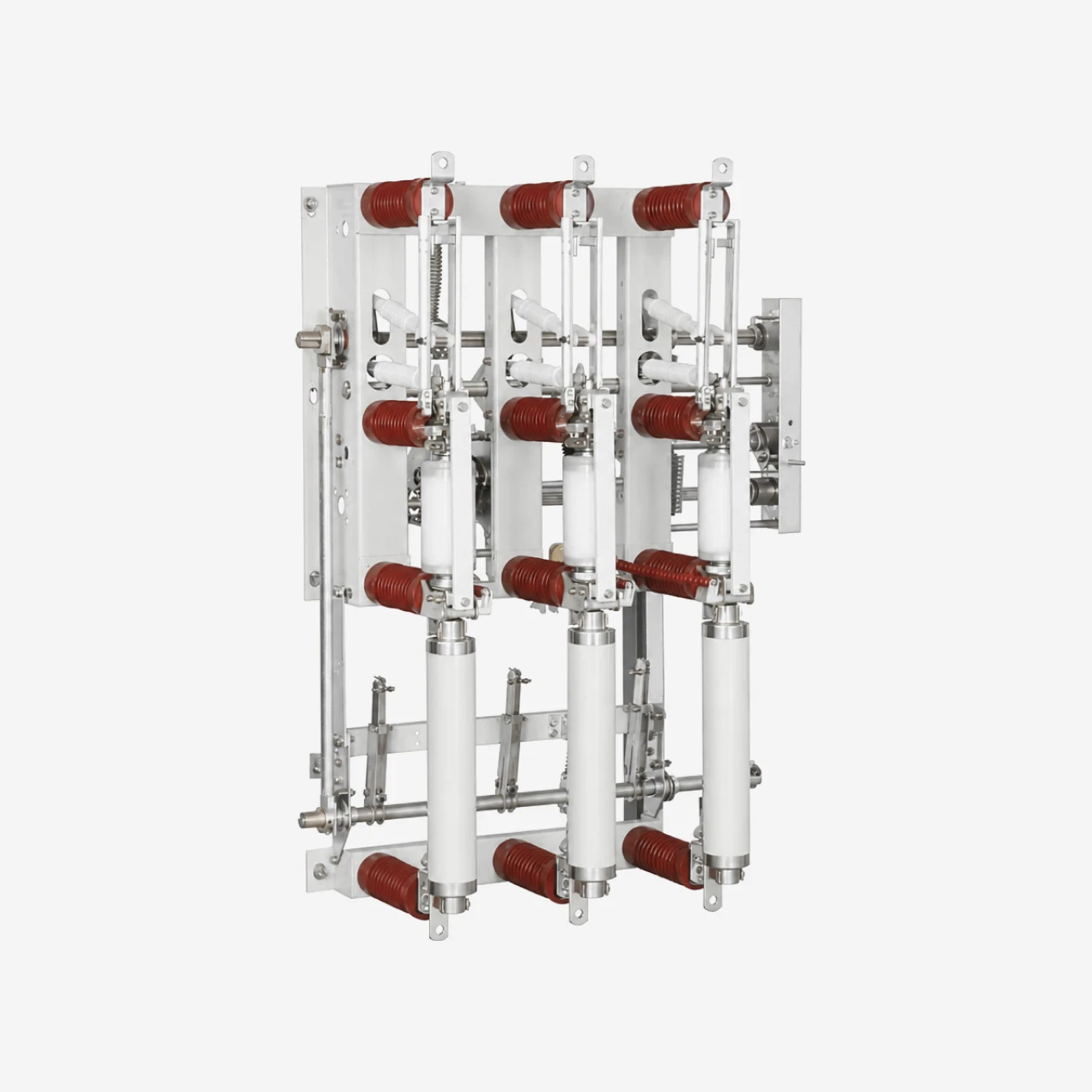
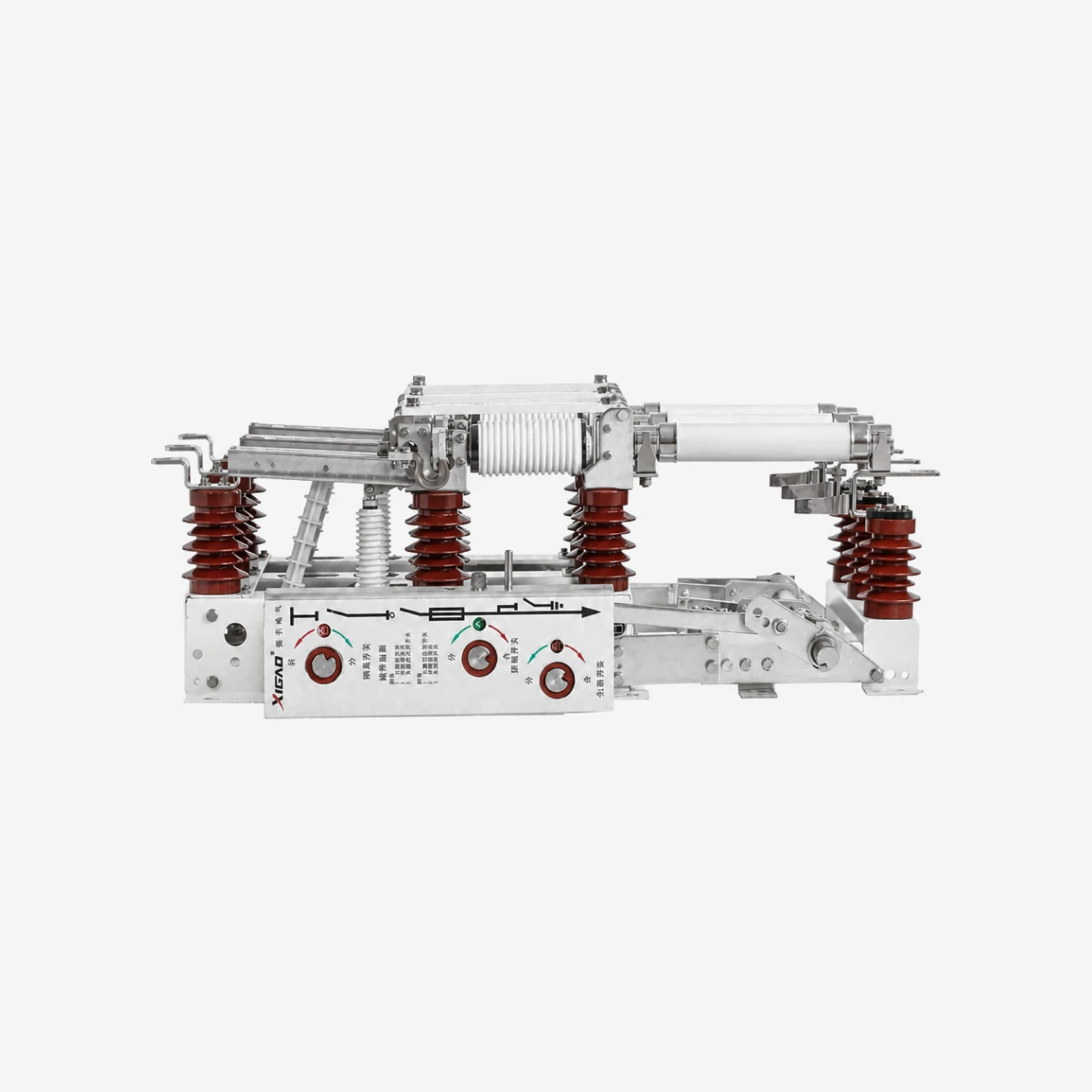
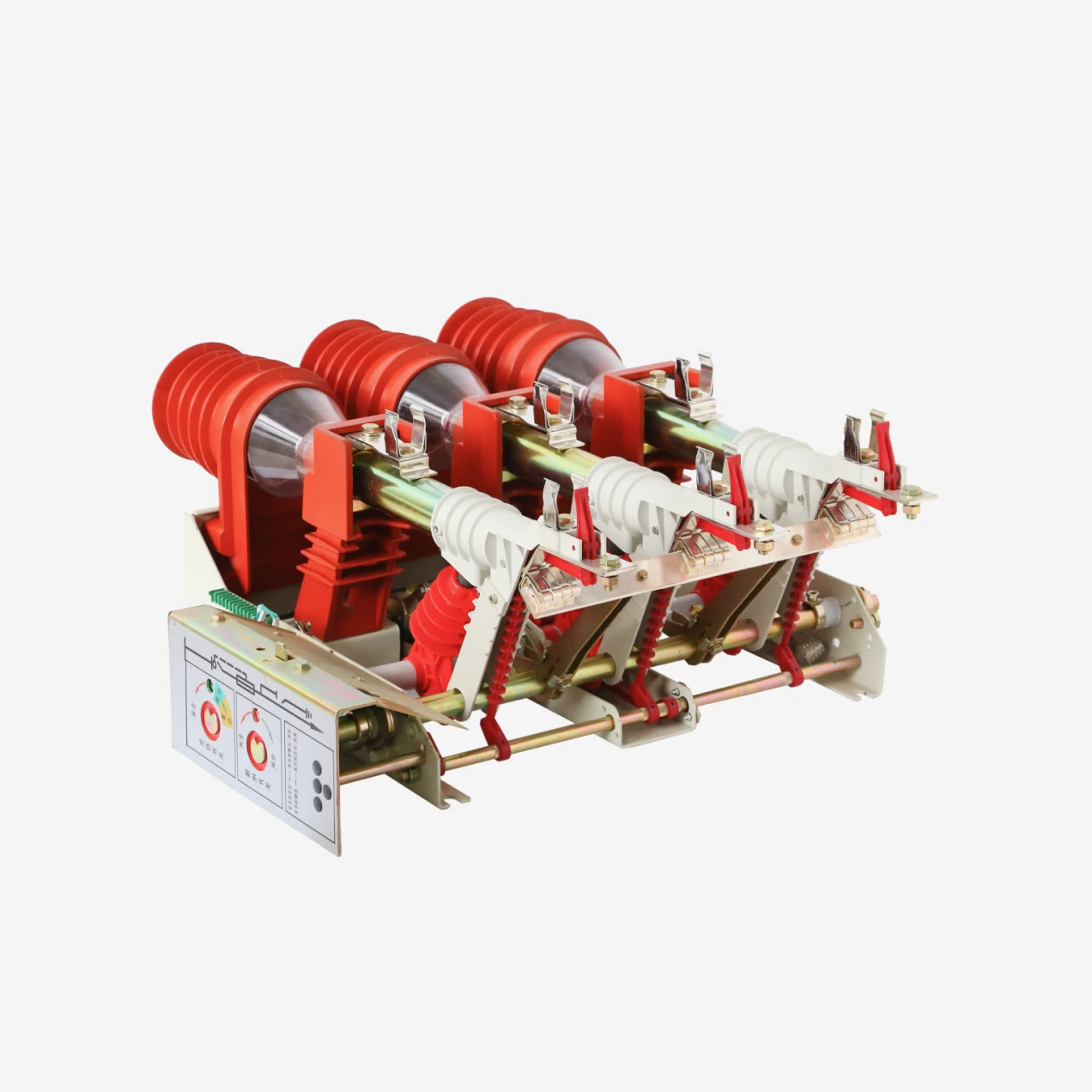
STELLAR 12/24kV indoor vacuum load break switch and fuse combination apparatus is a three-phase switching device for 50Hz or 60Hz medium-voltage distribution networks. It uses a vacuum interrupter as the primary arc-quenching medium, delivering a verified mechanical endurance of 10000 operations for the vacuum tube and 2000 cycles for the main switch and earthing switch assembly.

The vacuum interrupter houses the main contacts inside a sealed ceramic-and-metal envelope with a high vacuum. When the contacts separate, the arc burns in the vacuum environment where metal vapour from the contacts is rapidly condensed on the surrounding shield, extinguishing the arc within milliseconds. Because the arc is contained inside the sealed tube, contact wear is minimal and the unit maintains consistent breaking performance over thousands of operations.

The standard configuration integrates a visible isolation gap that opens when the switch is in the off position, giving maintenance crews direct visual confirmation that the circuit is de-energised. When paired with a high-voltage current-limiting fuse, the combination unit protects distribution transformers against overload and short-circuit faults. A fuse striker mechanically trips all three phases of the load switch whenever any fuse blows, ensuring full isolation of the faulted circuit.

The conductive path is built from high-conductivity copper with silver-plated contact surfaces. Operating mechanisms include a spring-assisted manual handle as standard, with motorized actuators available for remote control via AC/DC 110V or 220V. The unit is type-tested to IEC 62271-105 for load switch-fuse combinations and GB 3804 for insulation, temperature rise, short-time withstand and mechanical endurance.

Typical installations include 10kV/12kV and 20kV/24kV indoor transformer substations, cable distribution boxes, ring main units and factory switchgear lines where frequent switching and long service life are required.

Technial Parameters

TECHNICAL PARAMETERSUNITS12 kV24 kV
Rated voltagekV1224
Rated currentA630630
Rated frequencyHz50 / 6050 / 60
Rated short-circuit making current (peak)kA5031.5
Rated peak withstand currentkA5050
Rated short-time withstand current (1 s)kA25
Rated short-time withstand current (2 s)kA2020
Rated short-time withstand current (3 s)kA20
Max. breaking capacity with fuses (IEC 62271-105)A20002000
Max. fuse current (XRNT type)A200200
Mainly active load breaking capacityA630630
Cable charging breaking currentA1010
1-min power frequency withstand voltage (to earth / between poles)kV4265
1-min power frequency withstand voltage (across isolating distance)kV4879
Lightning impulse withstand voltage (to earth / between poles)kV75125
Lightning impulse withstand voltage (across isolating distance)kV85145
Mechanical endurance (vacuum interrupter)cycles1000010000
Mechanical endurance (main switch / earthing switch)cycles20002000
Operating mechanism/Manual / MotorizedManual / Motorized
Conductive material/Copper (silver-plated contact)Copper (silver-plated contact)
Ambient temperature range°C-25 to +40-25 to +40
Max. installation altitudem10001000
Standard compliance/IEC 62271-105, IEC 60265, GB 3804

Product Details

12/24kV Dual-Voltage Vacuum Platform

The switch is built on a common frame that accepts either 12kV or 24kV insulation components. At 12kV the unit withstands 42kV power frequency and 75kV lightning impulse across the main gaps. At 24kV these ratings rise to 65kV and 125kV. The same vacuum interrupter assembly, operating mechanism and mounting pattern are used for both voltages, which simplifies inventory and panel design for switchgear builders who serve multiple grid standards.

Vacuum Interrupter with 10000-Cycle Mechanical Endurance

The heart of the switch is a ceramic vacuum interrupter with copper-chrome contacts sealed inside a high-vacuum envelope. When the contacts separate under load, the arc burns in the vacuum where metal vapour is rapidly condensed on the surrounding shield, extinguishing the arc within the first current zero. Because the arc is contained inside the sealed tube, contact erosion is minimal and the dielectric recovery strength is high. The vacuum interrupter is rated for 10000 mechanical operations, which suits applications that switch feeders daily or run automated capacitor-bank or load-transfer schemes. The main switch and earthing switch assembly is rated for 2000 cycles, covering the mechanical life of the external linkage and isolation gap.

2000A Fuse-Combination Breaking Capacity

In the fuse-combination version, high-voltage current-limiting fuses mount directly above the switch body. The fuses carry normal load current and clear short-circuit faults inside their rated breaking range. The combined breaking capacity reaches 2000A at both 12kV and 24kV, which covers transformer feeder protection for most secondary substations up to about 12.5MVA. A fuse striker mechanically trips the three-phase load switch whenever any fuse blows, ensuring full isolation without needing a separate circuit breaker. The maximum XRNT fuse current is 200A, matching standard high-voltage fuse dimensions.

Visible Isolation Gap and Safe Operation

After the vacuum interrupter opens, the moving contact continues its travel to create a clear, visible air gap between the fixed and moving conductors. This physical separation gives maintenance crews direct visual confirmation that the circuit is isolated, which is a requirement in many industrial safety procedures. The earthing switch closes a grounded blade on the load side after the main contacts open, providing a physical ground connection before work begins on downstream cables or transformers. Mechanical interlocks prevent closing the main switch while the earthing switch is engaged.

Graded Short-Time Withstand for Protection Coordination

The switch provides graded thermal ratings to match different upstream protection coordination schemes. At 12kV it carries 25kA for 1 second and 20kA for 2 seconds. At 24kV it carries 20kA for 2 seconds and 3 seconds. These ratings suit networks where breaker clearing is delayed by selective coordination or cascading protection schemes. The copper conductive path and frame are verified at all durations, giving system designers flexibility in relay setting and breaker selection.

Manual and Motorized Operating Mechanisms

The standard mechanism is a spring-assisted manual handle that applies consistent force regardless of switching duty. For automated networks, a motorized actuator bolts onto the manual mechanism without panel modifications. Motor options cover AC/DC 110V and AC/DC 220V. The motorized version maintains the same mechanical interlocks as the manual unit, so remote operation cannot override safety sequences.

Application Scope

This vacuum load break switch is intended for indoor 10kV/12kV and 20kV/24kV distribution systems in power stations, industrial plants and commercial buildings. It controls power flow to distribution transformers, isolates feeders for cable maintenance, sections industrial busbars, and switches capacitor banks where frequent operation is required. The 630A rating covers secondary substation transformers up to about 6.3MVA, and the fuse-combination version extends protection to transformers up to 12.5MVA depending on fuse selection.

FAQs

What voltage and current ratings does this vacuum load break switch cover?

The switch covers 12kV and 24kV voltage tiers. Rated current is 630A at both voltage levels. Rated frequency is 50Hz or 60Hz. At 12kV the short-circuit making current is 50kA peak and the short-time withstand current is 25kA for 1 second or 20kA for 2 seconds. At 24kV the short-circuit making current is 31.5kA peak and the short-time withstand current is 20kA for 2 seconds or 3 seconds. Mechanical endurance of the vacuum interrupter is 10000 cycles; the main switch and earthing switch assembly is rated for 2000 cycles.

What is the advantage of a vacuum interrupter over compressed-air arc quenching?

A vacuum interrupter houses the contacts inside a sealed ceramic envelope with a high vacuum. When the contacts separate, the arc burns in the vacuum where metal vapour condenses rapidly on the surrounding shield, extinguishing the arc within the first current zero. This produces minimal contact wear, no oxidation, and consistent breaking performance over thousands of operations. Compressed-air arc quenching exposes contacts to atmospheric oxygen and moisture, which accelerates wear and requires more frequent inspection and replacement of arc chutes.

How does the integrated fuse protection work?

High-voltage current-limiting fuses mount above the switch body and carry normal load current. When a short-circuit occurs, the fuse clears the fault inside milliseconds. The fuse striker then mechanically trips all three phases of the load switch automatically. At both 12kV and 24kV the combined breaking capacity is 2000A. The maximum XRNT fuse current is 200A.

Can this switch break short-circuit current on its own?

No. The load break switch is designed to make, carry and break normal load current. It can close onto a short circuit safely, but it cannot break fault current. Short-circuit protection must be provided by the integrated high-voltage fuses in the combination version, or by an upstream circuit breaker.

What maintenance does a vacuum load break switch require after 10000 operations?

Very little for the vacuum interrupter itself. The sealed vacuum tube is maintenance-free for its electrical life. After 10000 operations, inspect the external operating linkage for wear and lubricate the mechanism. Check the visible isolation gap alignment and measure contact resistance. The earthing switch blades and mechanical interlocks should be tested annually. Because the arc is contained inside the vacuum tube, there are no arc chutes to clean or replace, which is the main maintenance advantage over air-type load switches.