search
Search

Search for equipment models, voltage specifications, or project references.


Home > FN18 12/24kV Indoor Air-Insulated Load Switch and Fuse Combination 400/630/1250A

FN18 12/24kV Indoor Air-Insulated Load Switch and Fuse Combination 400/630/1250A

FN18 12/24kV Indoor Air-Insulated Load Switch and Fuse Combination 400/630/1250A

Product Description

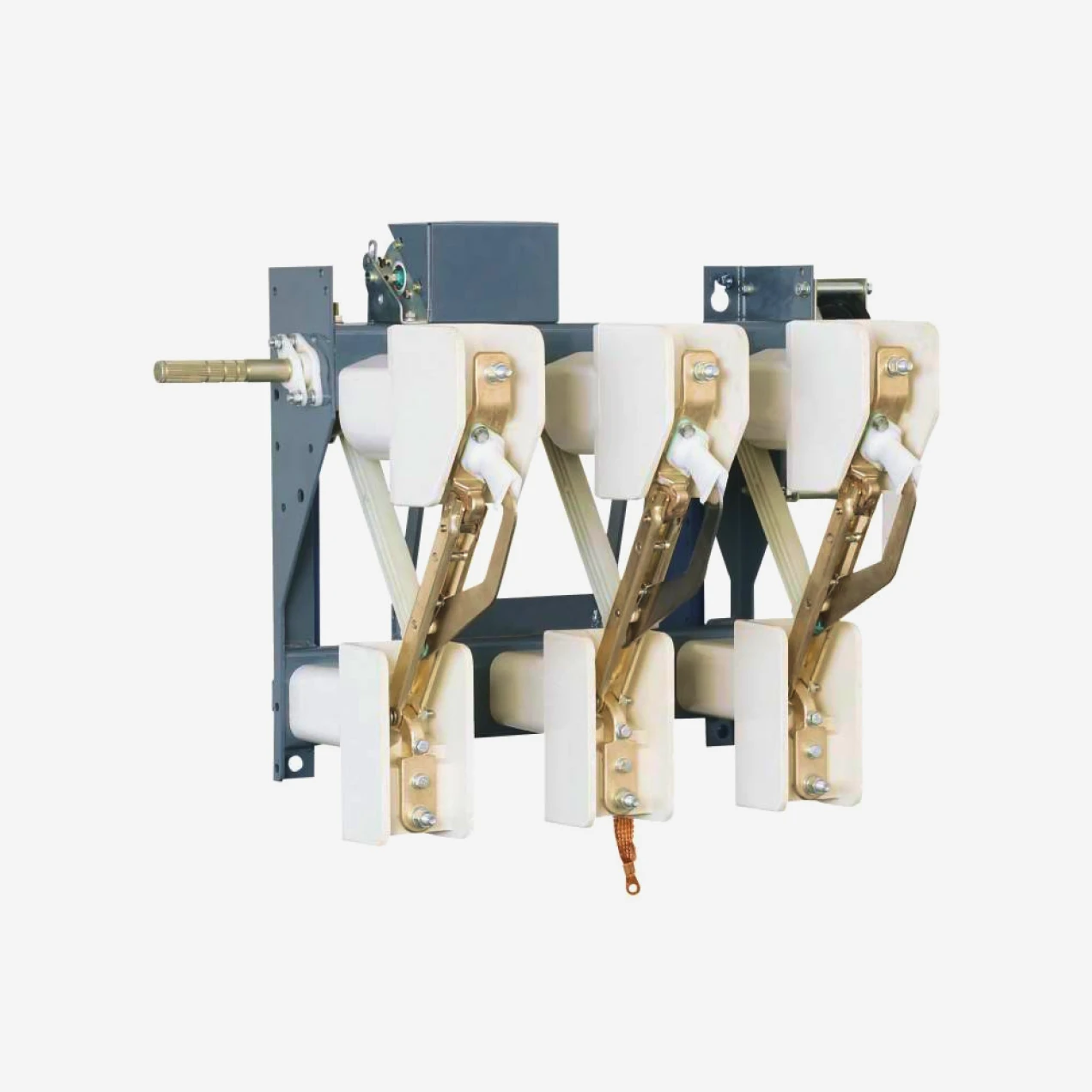
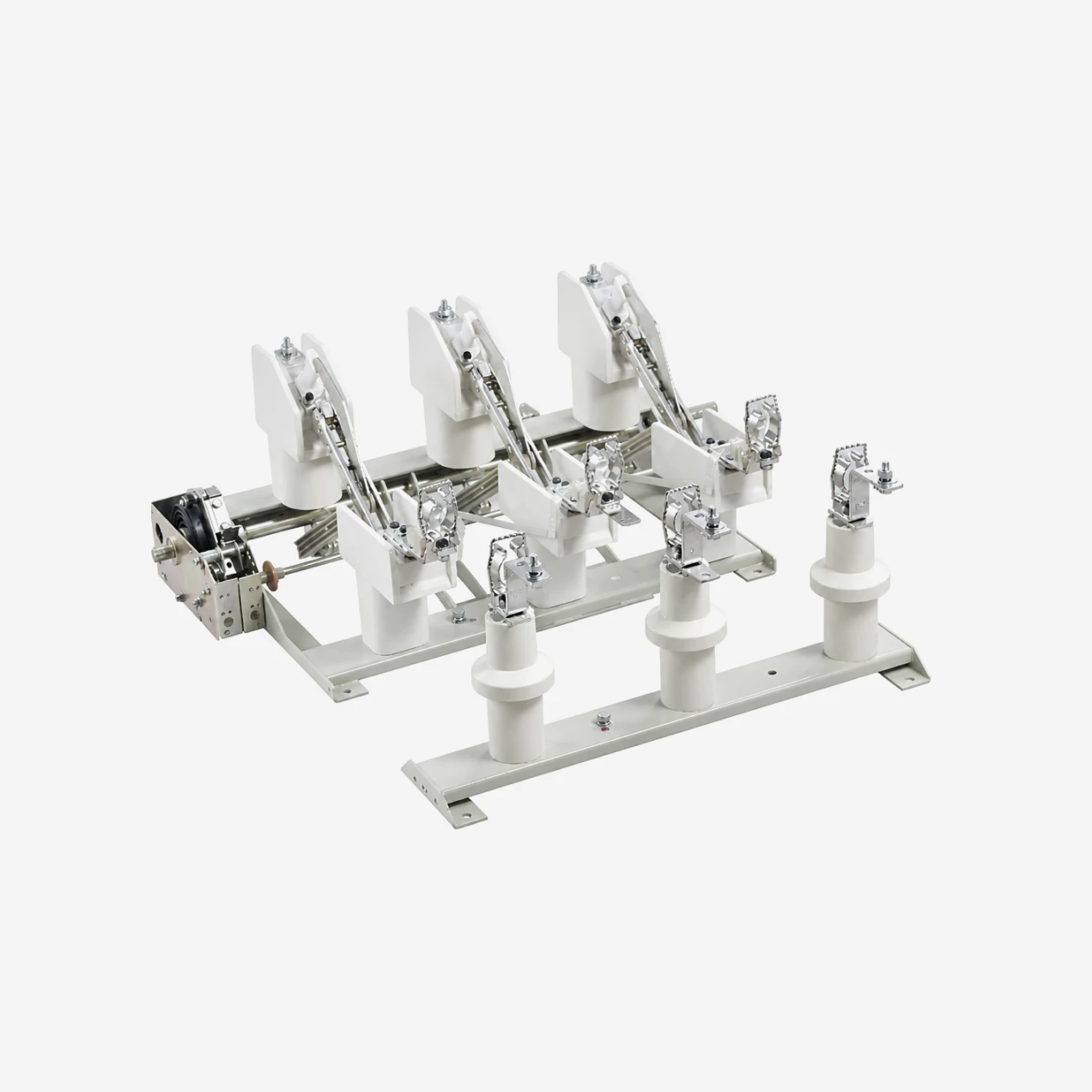
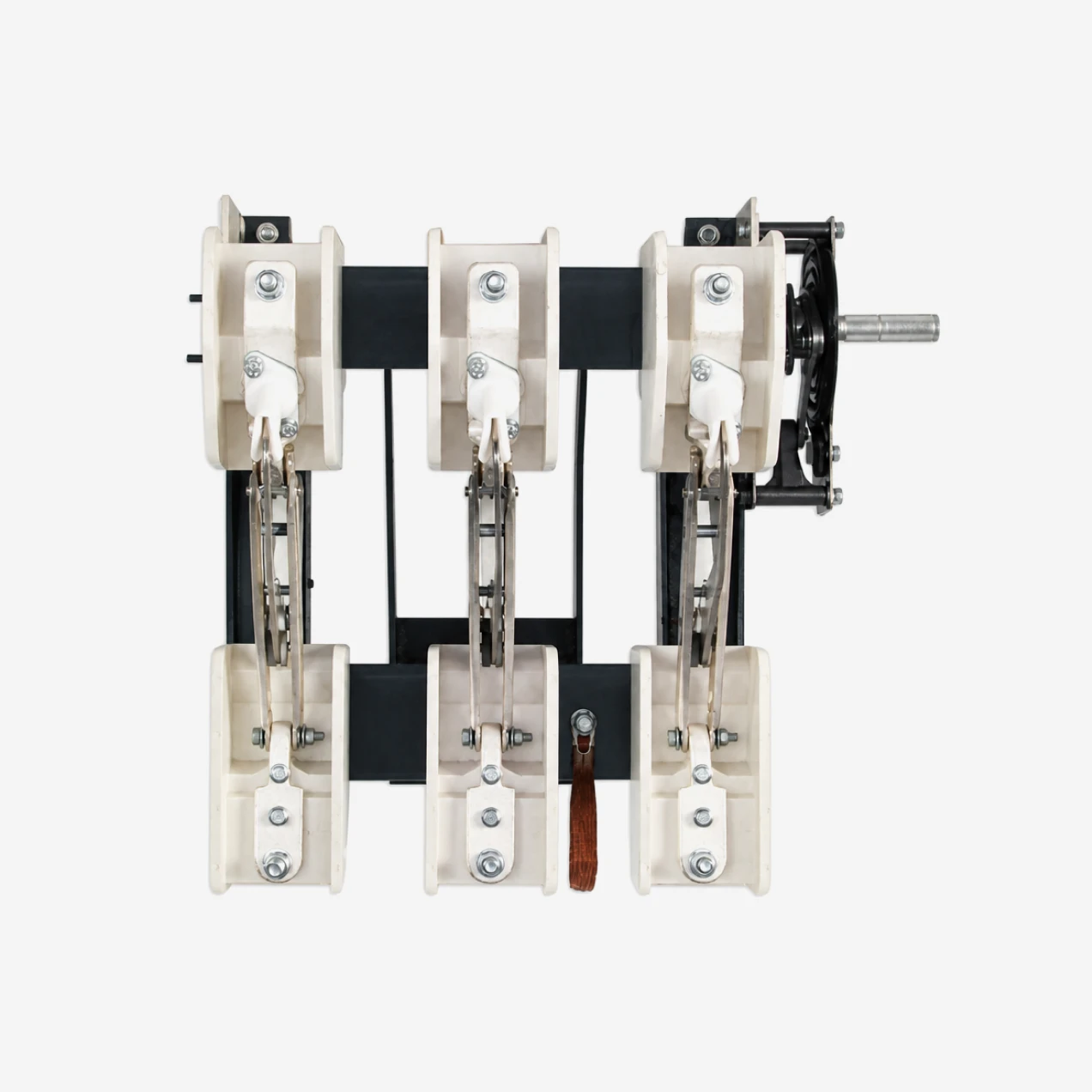
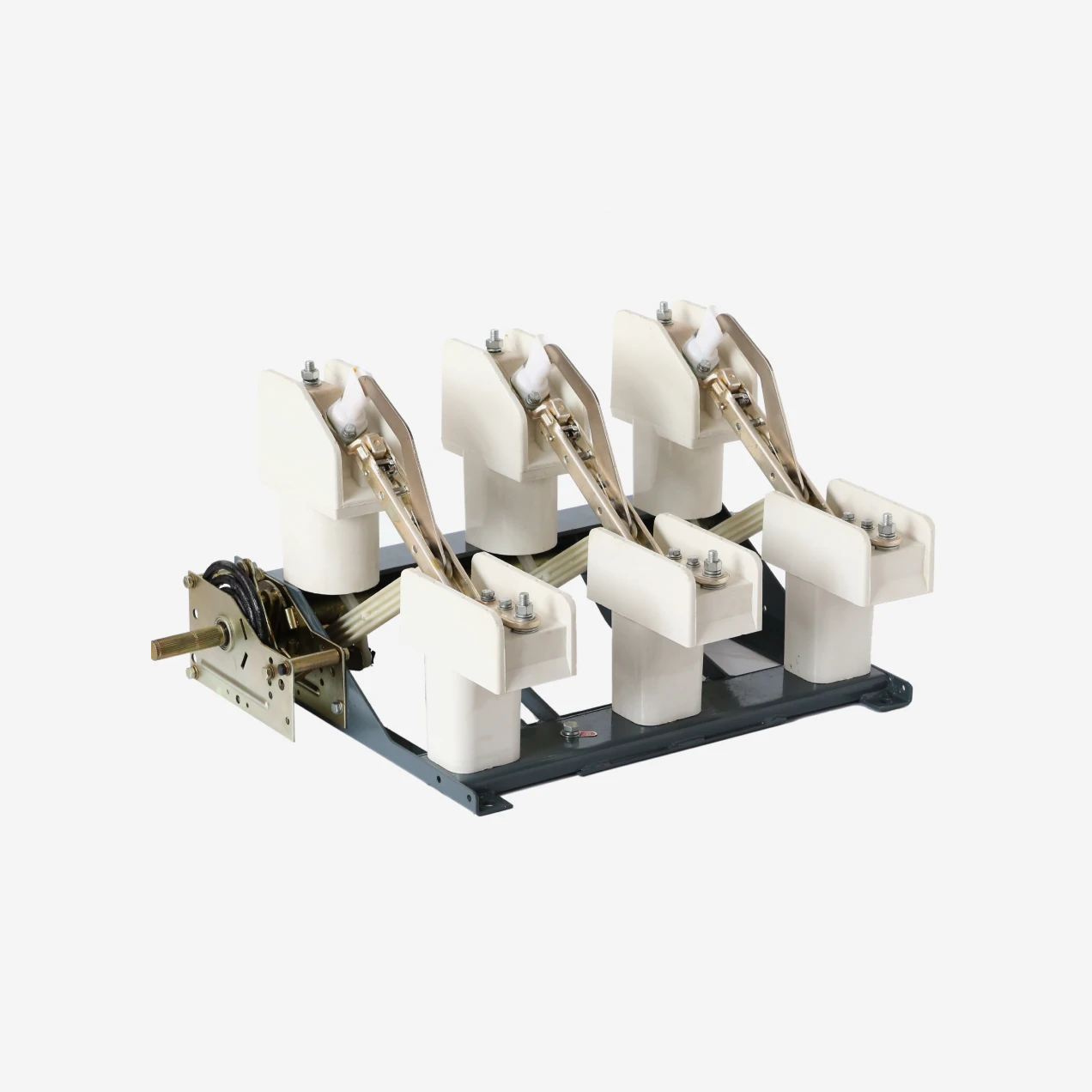
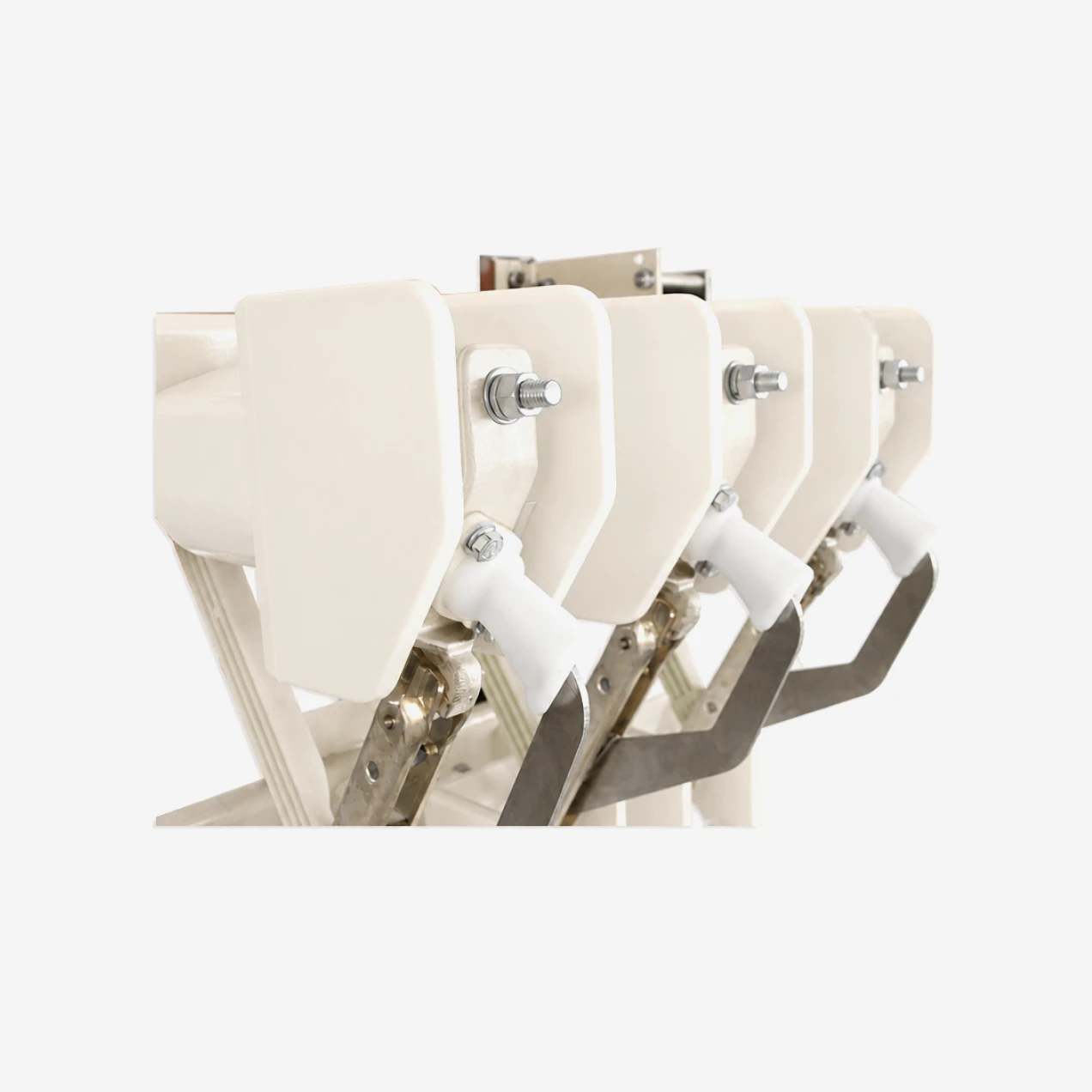
STELLAR indoor air-insulated load switch and fuse combination apparatus is a modular three-phase switching system for 12kV and 24kV medium-voltage distribution networks at 50Hz or 60Hz. It covers continuous current ratings of 400A, 630A and 1250A, with short-circuit making capacity up to 67kA peak at 12kV and 50kA peak at 24kV.

The switch is built on a heavy-duty steel frame with stand-off insulators and blade-type interruptors. A puffer-type arc-extinguishing system uses dual air-blast action: a current-independent blast starts automatically during the opening stroke, and a current-dependent gas blast occurs when the arcing nozzle walls are exposed to the hot arc. This ensures reliable interruption across the full range of load and fault conditions.

Two operating mechanism types are available. Type K is a snap-action mechanism for rapid tripping with an opening torque of 120Nm. Type A is a stored spring-energy mechanism that delivers consistent operating force with a closing torque of 115–120Nm and an opening torque of only 3Nm. The shaft rotates through 130 degrees with an opening time of 40–60ms.

The 400A and 630A versions can be fitted with high-voltage current-limiting fuse bases for transformer protection, delivering combined breaking capacity up to 1600A at 12kV and 900A at 24kV. The 1250A version is configured as a high-current feeder switch without fuse combination. Optional accessories include a motor operator, auxiliary switches, shunt trip devices, earthing switches, mechanical fuse tripping, mechanical door interlocking and key interlocking.

The unit is type-tested to IEC 60265-1 and IEC 62271-105 for insulation, temperature rise, short-time withstand, mechanical endurance and switching performance. Typical applications include metal-enclosed switchgear, pad-mounted transformers, ring main units and compact substations.

Technial Parameters

TECHNICAL PARAMETERSUNITS12 kV / 400 A12 kV / 630 A12 kV / 1250 A24 kV / 400 A24 kV / 630 A24 kV / 1250 A
Rated voltagekV121212242424
Rated currentA40063012504006301250
Max. rated currentA40063012504006301150
Rated frequencyHz50 / 6050 / 6050 / 6050 / 6050 / 6050 / 60
Short-circuit making capacitykA peak676767505050
Peak withstand currentkA peak828282828282
Short-time withstand current (1 s)kA31.531.531.5252531.5
Short-time withstand current (2 s)kA252525252525
Short-time withstand current (3 s)kA202020161616
Mainly active load breaking capacityA40063012504006301250
Mainly capacitive breaking (12 kV)A150150150
Mainly capacitive breaking (24 kV)A808080
Mainly inductive breaking cosφ=0.15A161616161616
Earth fault breaking capacity (12 kV)A150150150
Earth fault breaking capacity (24 kV)A757575
Capacitive breaking capacity (12 kV)A909090
Capacitive breaking capacity (24 kV)A31.531.531.5
Max. breaking with fuses (12 kV, IEC 62271-105)A16001600
Max. breaking with fuses (24 kV, IEC 62271-105)A900900
Max. fuse size (12 kV)A125125
Max. fuse size (24 kV)A8080
1-min power frequency withstand (to earth / between poles)kV424242555555
1-min power frequency withstand (across isolating distance)kV454545707070
Lightning impulse withstand (to earth / between poles)kV757575125125125
Lightning impulse withstand (across isolating distance)kV858585145145145
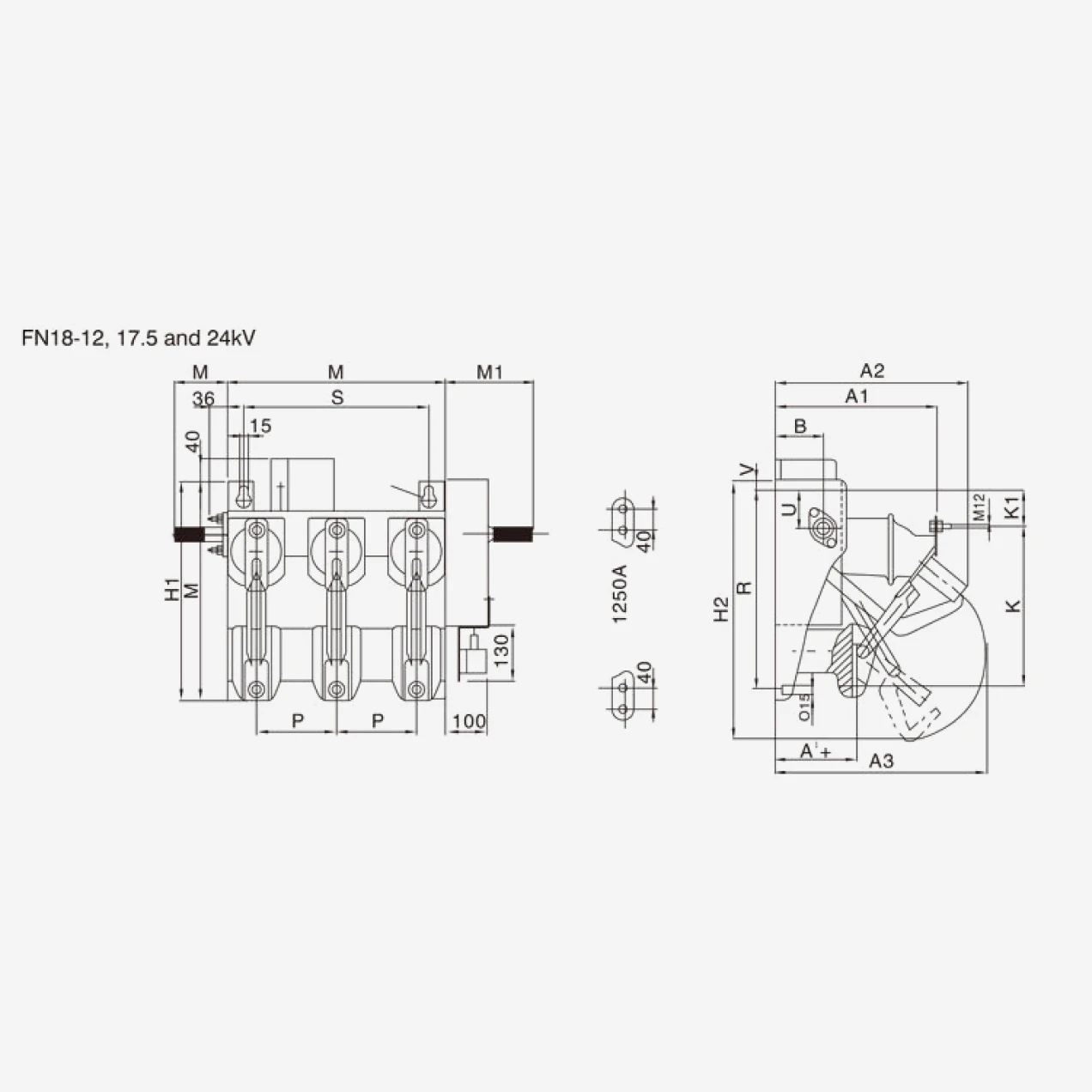
Pole distancemm150 / 170150 / 170150 / 170235 / 250 / 275235 / 250 / 275235 / 250 / 275
Operating angle on shaftdegree130130130130130130
Opening timems40 – 6040 – 6040 – 6040 – 6040 – 6040 – 60
Max. operating torque (closing)Nm115 – 120115 – 120115 – 120115 – 120115 – 120115 – 120
Max. operating torque (opening K / A mech.)Nm120 / 3120 / 3120 / 3120 / 3120 / 3120 / 3
Standard compliance/IEC 60265-1, IEC 62271-105

Product Details

12/24kV Dual-Voltage Platform with 1250A High-Current Option

The switch covers two standard medium-voltage tiers: 12kV for urban and industrial distribution, and 24kV for higher-voltage distribution feeders and rural networks. Within each voltage tier, rated current options of 400A, 630A and 1250A allow the same frame and mounting pattern to serve secondary substation transformers, high-current busbar sections and capacitor-bank feeders. The 1250A version uses reinforced blade-type contacts and wider pole spacing to handle continuous currents up to 1250A without excessive temperature rise, making it suitable for large transformer feeders or main incomer switches in compact substations.

Puffer-Type Dual Arc-Extinguishing System

The arc-extinguishing system uses a puffer principle with two sequential air blasts. As the moving contact withdraws, a piston compresses air in the extinction chamber. A current-independent blast starts automatically at the correct point in the opening stroke, cooling and stretching the arc column. When the arc intensifies, a current-dependent gas blast is generated as the hot arc erodes the arcing nozzle walls. The combined action interrupts load currents up to 1250A, capacitive currents up to 150A at 12kV, and earth-fault currents up to 150A at 12kV. Because the system uses ambient air rather than sealed vacuum or SF6, the arc chutes and nozzles are field-replaceable after long service periods.

Modular Configuration and Optional Functions

The basic unit consists of a frame, insulators and current-carrying parts. Factory-fitted or field-installed modules expand the function without changing the mounting footprint. Fuse bases mount current-limiting fuses above the switch body for transformer protection; a mechanical fuse tripping link drives all three phases open when any fuse blows. An earthing switch closes a grounded blade on the load side after the main contacts open. Auxiliary switches, shunt trip devices and motor operators bolt onto the standard mechanism housing. Mechanical door interlocks and key interlocks prevent access to live compartments or unsafe operating sequences. This modularity lets switchgear builders stock one frame and configure variants to order.

Dual Operating Mechanism Types

Type K is a snap-action mechanism that releases stored energy instantaneously for rapid contact separation. It is used where fast opening is required for motor switching or capacitor-bank control. Type A is a stored spring-energy mechanism that charges a spring through the manual handle or motor drive, then releases it to drive the contact system. Type A provides a consistent operating force regardless of operator strength, with a closing torque of 115–120Nm and an opening torque of only 3Nm. Both mechanisms rotate the operating shaft through 130 degrees and achieve an opening time of 40–60ms. Motor operators for AC/DC 110V or 220V mount directly on either mechanism type without panel modifications.

Extended Switching Capabilities Beyond Active Load

In addition to standard active load breaking at full rated current, the switch is tested for capacitive current switching (150A at 12kV, 80A at 24kV), inductive load switching at low power factor (16A at cosφ=0.15), and earth-fault interruption (150A at 12kV, 75A at 24kV). These ratings allow the switch to control capacitor banks, unloaded cables and small motors without requiring separate dedicated contactors or circuit breakers. The capacitive earth-fault breaking ratings (90A at 12kV, 31.5A at 24kV) cover resonant-grounded network conditions where earth-fault currents have a significant capacitive component.

Application Scope

This load switch is intended for indoor metal-enclosed switchgear, pad-mounted transformers, ring main units, cable distribution boxes and compact substations. The 12kV version serves urban distribution networks, industrial plants and commercial building substations. The 24kV version extends coverage to higher-voltage rural distribution and utility secondary substations. The 1250A rating suits main incoming feeders and large transformer protection, while the 400A and 630A fuse-combination versions protect distribution transformers up to about 12.5MVA at 12kV and 10MVA at 24kV depending on fuse selection.

FAQs

What voltage and current ratings does this load switch cover?

The switch covers two voltage tiers: 12kV and 24kV. Rated current options are 400A, 630A and 1250A at both voltage levels. Short-circuit making capacity is 67kA peak at 12kV and 50kA peak at 24kV. Peak withstand current is 82kA across all ratings. Short-time withstand current is 31.5kA/1s, 25kA/2s and 20kA/3s at 12kV; at 24kV it is 25kA/1s, 25kA/2s and 16kA/3s.

How does the puffer-type arc-extinguishing system work?

The puffer system uses two sequential air blasts. A current-independent blast starts automatically during the opening stroke as a piston compresses air in the extinction chamber. When the arc intensifies, a current-dependent gas blast is generated as the hot arc erodes the arcing nozzle walls. The combined action stretches and cools the arc until it cannot sustain itself. This method uses ambient air rather than sealed vacuum or SF6, so arc chutes and nozzles are field-replaceable.

Is the 1250A version available with fuse combination for transformer protection?

No. The 1250A version is designed as a high-current feeder switch for main incoming lines and large transformer feeders. Fuse combination is available only on the 400A and 630A versions, with combined breaking capacity up to 1600A at 12kV and 900A at 24kV. The 1250A version relies on upstream circuit breakers for short-circuit protection.

What is the difference between Type K and Type A operating mechanisms?

Type K is a snap-action mechanism that releases stored energy instantaneously for rapid contact separation. It is preferred for motor switching and capacitor-bank control where fast opening limits switching over-voltages. Type A is a stored spring-energy mechanism that charges a spring through the handle or motor drive, then releases it to drive the contacts. Type A provides consistent force with a closing torque of 115–120Nm and an opening torque of only 3Nm, making it easier to operate manually. Both types rotate the shaft through 130 degrees with an opening time of 40–60ms.

What are the extended switching capabilities for capacitive and earth-fault currents?

In addition to active load currents up to 1250A, the switch is rated for capacitive current switching (150A at 12kV, 80A at 24kV), inductive load switching at low power factor (16A at cosφ=0.15), and earth-fault interruption (150A at 12kV, 75A at 24kV). Capacitive earth-fault breaking is rated at 90A for 12kV and 31.5A for 24kV. These ratings allow direct control of capacitor banks, unloaded cables and small motors without separate contactors.